2026-09-20

The strange account of a doctor who claims to have seen the soul of a deceased woman watching over her dying husband

The strange account of a doctor who claims to have seen the soul of a deceased woman watching over her dying husband

It begins as an ordinary drive. Jeff Olsen is heading home to Bountiful, Utah, after visiting family in the southern part of the state. Beside him, his wife Tamara has dozed off. In the back seat, their seven-year-old son Spencer plays quietly while their toddler, Griffin, sleeps in his car seat. The road stretches on, night falls, and Jeff feels his eyelids grow heavy.

What he later describes as "a blink that lasted a second" is enough to upend four lives. The car leaves the road and rolls over several times in a crash of shattering glass and flying gravel. When it finally comes to rest, Jeff regains consciousness for a moment, overwhelmed by pain, hearing Spencer crying before blacking out again.

The outcome will be devastating: Tamara and young Griffin do not survive the crash. Jeff himself is found in critical condition — his legs crushed, his abdomen torn open, his right arm nearly severed. According to the account he gave years later, it is at this exact moment that his story shifts from a roadside tragedy into something he still cannot fully explain.

"I was hovering above the wreck"

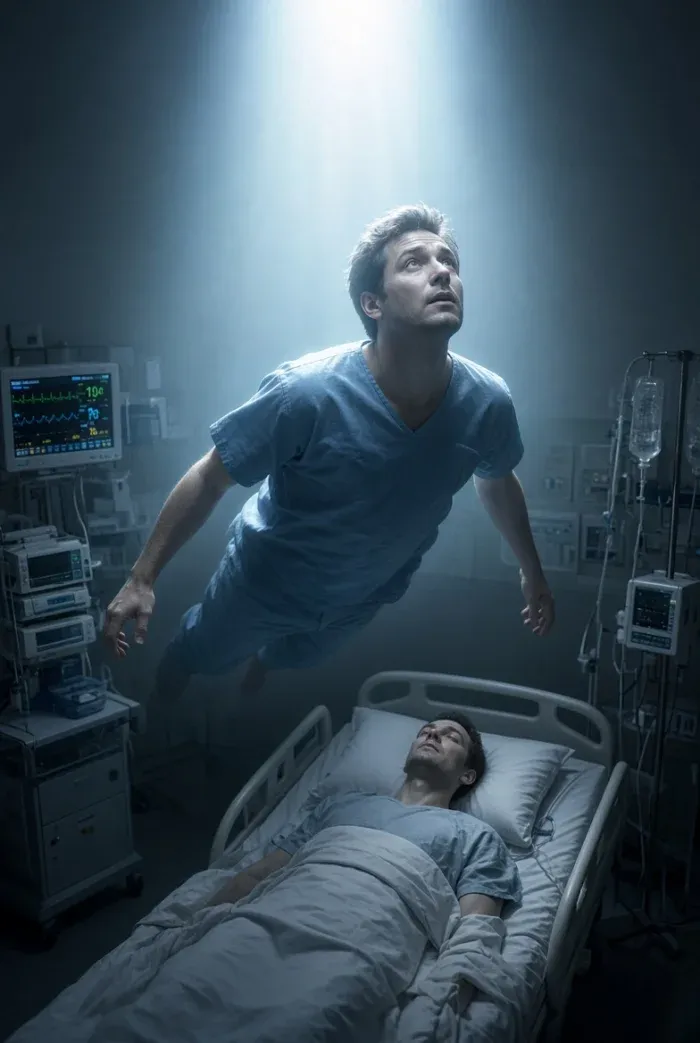
Jeff Olsen says he left his body at the very moment of impact. Free of pain, in a state of total calm, he says he found himself floating above the wreckage, where a familiar presence joined him: Tamara, enveloped with him in what he describes as "a bubble of light" radiating complete peace.

According to his account, his wife then spoke to him in no uncertain terms: he could not stay, he had to go back. Spencer, still alive, needed him. Jeff says he said goodbye to Tamara before feeling himself "drift" away from her — only to find himself, moments later by his account, floating through the halls of the hospital he had just been rushed to, watching the patients and staff around him without pain or judgment, before recognizing, in horror, his own unrecognizable body on a gurney.

"Tamara looked at me, her face serious. 'Jeff, you cannot be here,' she said. 'You have to go back.'"

Across the corridor, a doctor who "sees" too

This is where the story takes a rare turn for this kind of account: there is a second witness, and that witness is an emergency room doctor. Dr. Jeff O'Driscoll had just finished his rounds when a nurse, Rachel — with whom he had spent months quietly confiding experiences neither of them dared mention to colleagues — pulled him aside: "Come see this. His wife is... here."

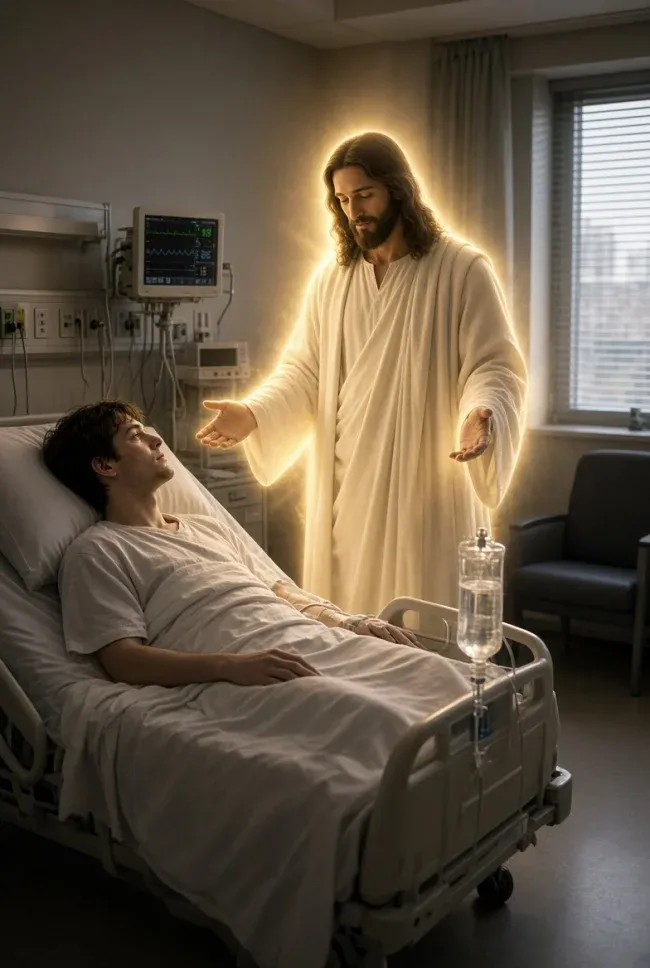
Dr. O'Driscoll says he had already lived through episodes he himself calls irrational, even before entering medicine — including a premonition at sixteen that he believes spared him from a worse car accident, and later, as a physician, a hunch that led him to order a CT scan that turned out to be lifesaving for a patient with no apparent symptoms. That day, in the room where staff were working to stabilize Jeff Olsen, he says he sensed a presence, then made out, floating above the bed, the translucent figure of a woman with curly blonde hair, dressed in white, her face serene — a figure he "knew," without being told, to be the patient's wife.

According to his account, the figure gave him a look filled with gratitude toward the medical team before fading away. Nurse Rachel, present at the same moment, immediately turned to him and asked: "Did you see her too?"

The meeting at the hospital

A few weeks later, according to both men's accounts, Dr. O'Driscoll visited Jeff Olsen's bedside — by then in rehabilitation following the amputation of a leg — to tell him, with nurse Rachel's help, what they believed they had witnessed. Jeff Olsen reportedly replied that the description matched Tamara exactly, before sharing in turn his own experience from the day of the crash. The two men now point to this moment as the start of a friendship that has lasted more than twenty years.

A phenomenon far from isolated

The Olsen/O'Driscoll case belongs to a much broader body of near-death experience (NDE) testimony, reported by patients and, more rarely, by the medical staff around them. Among the most cited documented cases is that of Don Piper, declared clinically dead after a car accident in Texas in 1989, and that of surgeon Mary Neal, herself a physician, who nearly drowned in an accident in Chile in 1999.

Psychiatrist Bruce Greyson, professor emeritus at the University of Virginia and author of a rating scale still used today to assess the depth of these experiences, has catalogued thousands of accounts since the 1970s that share striking common features: leaving the body, a tunnel, light, a feeling of peace, encounters with deceased loved ones, and a "chosen" or forced return to the physical body.

What science says: the residual-consciousness hypothesis

On the clinical side, the researcher who has pushed this debate furthest is arguably Dr. Sam Parnia, a pulmonologist and resuscitation specialist now at New York University. Between 2008 and 2012, his AWARE study, conducted across several hospitals in the United Kingdom, the United States and Austria on more than 2,000 cardiac arrest patients, sought to objectively test out-of-body reports — notably by hiding objects on high shelves in resuscitation rooms — without any patient managing to identify them convincingly.

A follow-up study, AWARE-II, published in 2023 in the journalResuscitation, instead detected, in some cardiac arrest patients, electrical brain signatures — delta, theta, alpha and beta waves, normally associated with higher states of consciousness — up to an hour after resuscitation began, even though the brain was presumed starved of oxygen. For Dr. Parnia, this data suggests that"consciousness may separate from the brain at the point of death,"a hypothesis that nonetheless remains a minority view and is fiercely debated within the scientific community.

The critical view: the neurological hypothesis

Against these interpretations, several neurologists offer strictly physiological explanations. Dr. Kevin Nelson, of the University of Kentucky, showed in a study published in the journalNeurologythat 60% of people who had experienced an NDE had a history of "REM intrusion" — a state in which dream mechanisms bleed into wakefulness — compared with only 24% in a control group. According to him, the brainstem of certain individuals may simply be more prone to blending sleep and wakefulness under extreme stress, producing luminous visions and a sense of bodily dissociation with no supernatural explanation required.

Other researchers also point to an acid-base imbalance caused by excess carbon dioxide in the blood (hypercapnia), which can trigger hallucinations and out-of-body sensations. Still, these neurological models currently struggle to account for one specific aspect of the Olsen/O'Driscoll case: the overlap between the vision reported by the patient and the independent, unprompted one reported by a member of staff present in the room — a detail that, if accurate, falls outside purely intracranial explanations, since it involves two distinct nervous systems at the same moment.

A case that remains open

Neither a proven miracle nor a fully explained hallucination: the testimony of Jeff Olsen and Dr. Jeff O'Driscoll illustrates the current limits of science when faced with experiences lived at the edge of clinical death. Twenty years after the crash, the two men say they have remained close, and credit this improbable meeting with part of their recovery — Jeff Olsen having notably gone through a deep depression before finding, he says, meaning in what he had lived through.

Absent any protocol capable of objectively verifying a perception shared by two separate people at the critical moment, this kind of testimony will most likely remain, for a long time to come, a matter of personal account rather than scientific proof.

Légende - Photo
Grok, CC0,
Sources
TagsThanatology

2026-09-17

UFO filmed in a small town in central France

UFO filmed in a small town in central France

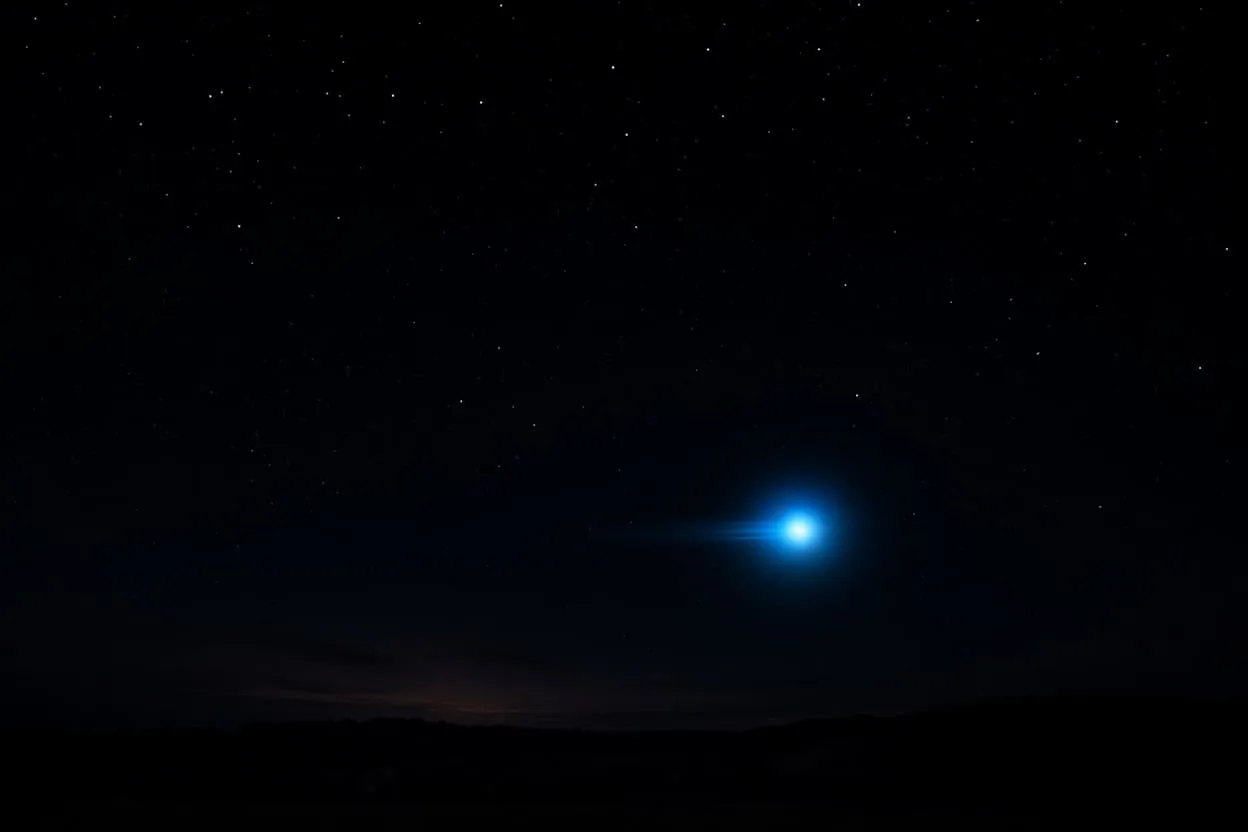
On September 12, 2026, at exactly 9:14 p.m., the sky above Les Aix-d'Angillon, a small town in the Cher department of central France, became the stage for a brief but intense phenomenon. The main witness describes a sequence in three distinct stages. First, a motionless blue point of light, smaller than a satellite. Then, almost immediately, what resembled a shooting star — except this one seemed to "explode" in the sky rather than simply fade out. Finally, emerging from the distance, a third object of indefinite shape but with a white brilliance far exceeding that of an aircraft, crossing the sky from south to west at a speed the witnesses judged well beyond that of a commercial plane.

The entire event lasted only two minutes. But the witness stresses a detail that recurs in nearly all sightings of this kind: total silence. No engine roar, no audible blast, even though the object was described as closer and faster than an airliner.

Six Witnesses, a Video Despite a Damaged Phone

Notably, this was not a lone observation but one shared by a small group of six people, including several direct neighbors, who could potentially corroborate the account independently — a detail investigators generally consider valuable, since multiple independent observers reduce the likelihood of a purely individual misperception.

The witness tried to film the scene on an iPhone 11 whose rear camera is damaged and normally struggles to capture faint, distant sources such as stars or satellites. Despite this technical limitation, the object was reportedly still recorded — a sign, some argue, of its exceptional brightness. An original video does exist, though it has not yet undergone independent authentication.

A Strikingly Methodical Sighting Report

The witness places the azimuth of the appearance at roughly 66° (northeast), with an angular elevation of about 25° above the horizon. The trajectory ran broadly from south to west before the object vanished. It is described as egg-shaped on the sighting form, though the narrative account emphasizes a diffuse, blinding white light more than any sharply defined outline — a common discrepancy between the box ticked on a form and what is actually experienced, where glare often prevents a clear silhouette from being distinguished.

The color is uniformly reported as an intense luminous white with no chromatic variation, which rules out certain leads such as ball lightning, typically associated with more orange or bluish hues. No sound was associated with the main object; only the silent "explosion" following the shooting star hints at a noise that, notably, no one actually heard.

The Cher: A Quiet Region, Not Entirely Free of Aerospace Sightings

Unlike regions such as Lorraine or the Larzac plateau, historically tied to France's major waves of sightings, the Centre-Val de Loire region has no particular reputation as a hotspot for unidentified aerospace phenomena. GEIPAN, the French space agency's dedicated study group, nonetheless logs a steady stream of reports there, as elsewhere in the country, classified on a scale from PAN A (fully explained) to PAN D (remaining unexplained after thorough investigation). The citizen-science network Vigie-Ciel, tied to the FRIPON fireball-monitoring program, also covers this part of the country. The nearby Bourges-Avord air base is another factor that serious investigators always weigh before entertaining more exotic explanations.

"It wasn't a plane, a star, or a satellite. It was faster, closer, and completely silent. I had never seen anything like it in my life."
— Account gathered from the main witness

The Scientific Angle: Fireball, Space Debris, or Optical Effect?

The three-stage sequence described by the witness — a static point, an "exploding" shooting star, then a bright object streaking by in silence — strongly evokes a bolide, the technical term for a meteor whose brightness exceeds that of the planet Venus. The Vigie-Ciel network notes that such events, while spectacular, occur several times a year across France, consistently producing very similar testimonies: intense light, apparent high speed, and no sound heard at the moment of passage — since any sound from atmospheric fragmentation can take dozens of seconds to reach the ground.

A second hypothesis worth considering is the atmospheric reentry of space debris or a batch of Starlink satellites, an increasingly common occurrence since the deployment of low-orbit megaconstellations. Such reentries typically produce a slow-moving "train" of lights, sometimes with a brighter flash as a component breaks apart. However, the brevity of the event described here — two minutes — and its clear change of direction point, according to several amateur astronomers consulted on similar cases, more toward an isolated fireball.

What Researchers Have to Say

GEIPAN's classification carefully separates explained cases (PAN A) from those that remain wholly unexplained after a full investigation (PAN D) — a category that, contrary to popular belief, has historically accounted for only a minority of cases examined. Researchers such as astrophysicist Jacques Vallée and astronomer J. Allen Hynek argued for the scientific value of this residual category of unresolved cases, seeing in it a reason to question our perceptual categories rather than evidence of extraterrestrial visitation. In this instance, the lack of expert video analysis and the still-limited number of independently gathered testimonies call for caution: at this stage, the case looks more like a report awaiting investigation than a confirmed mystery.

Légende - Photo
Grok, CC0,
Sources
TagsU.F.O.

2026-09-04

"Jesus is real": a dying man's last three words that circled the globe

"Jesus is real": a dying man's last three words that circled the globe

On July 6, 2024, a father in Cebu, Philippines, published a Facebook post that would go on to be shared worldwide, circulating for two years across TikTok, X (formerly Twitter) and countless evangelical pages before resurfacing periodically in social media feeds. Joel Sia recounted the final moments of his son Jonathan, a 23-year-old student at the University of San Carlos in Cebu, who died one week before he was due to graduate Magna Cum Laude in Business Administration.

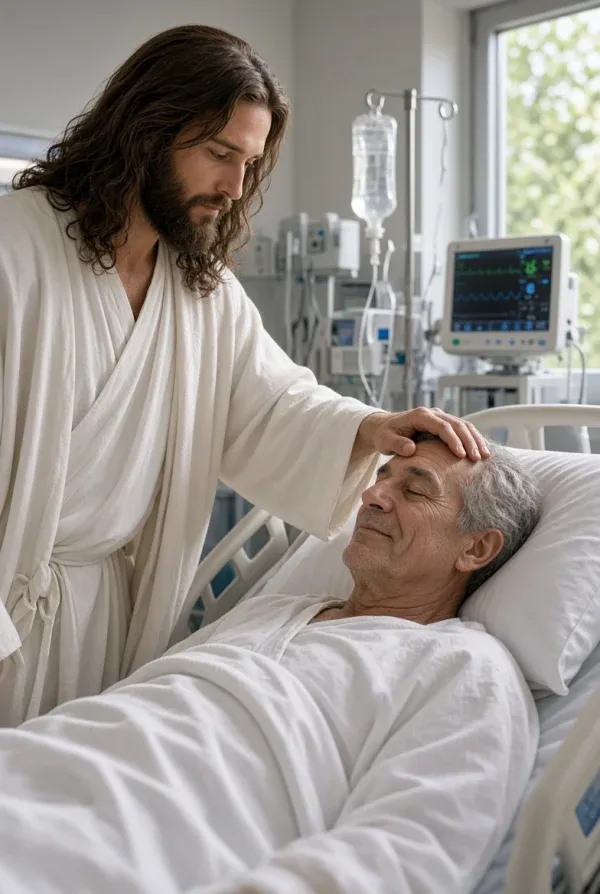
According to the father's account, since widely repeated, Jonathan had been hospitalized with a kidney disorder. Intubated as his condition worsened, he reportedly lost the ability to speak. In his final moments, he is said to have gestured toward his father as though he could see a presence in the room. Joel Sia says he handed him a pen and paper. Though extremely weak and trembling, the young man reportedly managed to write, in what his father described as perfectly legible handwriting, three words: "Jesus is real." Seconds later, he is said to have gone into cardiac arrest. His mother, at his bedside, says she saw a light and a hand lifting her son as he passed, a smile on his face.

A young man remembered for his faith

Jonathan Sia's relatives, quoted in the numerous social media retellings of the story, describe him as a young man of deep faith since childhood, nicknamed a "prayer warrior" by those close to him, who reportedly kept speaking about his faith to hospital staff even from his bed. A high-achieving student, he was about to graduate with honors when his health suddenly deteriorated.

It is this trajectory — the promise of a bright future, publicly professed religious devotion, and the suddenness of the kidney illness — that fueled the story's virality, elevating it through countless shares into a "testimony" and, for a significant portion of the English-speaking evangelical public and beyond, empirical proof of God's existence.

Reconstruction of the message shared by the family

What follows is a reconstruction, based on the consistent versions circulating publicly, of the testimony originally posted by Joel Sia on social media. It is not an official document but an illustrative synthesis of the reported statements.

"Before my son Jonathan was resuscitated, he signaled to me as though he was seeing someone, but I couldn't understand what he was trying to tell me. So I gave him a piece of paper and a pen so he could write it down. He was already very weak, shaking, barely able to hold the pen. Yet before the nurses called a Code Blue, he managed to write one final message: 'Jesus is Real.' It amazed me, because the words were so clearly legible. I believe he saw Jesus. My wife Aidy also witnessed a bright light and a hand lifting our son as he ascended. He was smiling."

"He could no longer speak because of the intubation. Yet in a matter of seconds, he traced three perfectly legible words." — Joel Sia, Jonathan's father

Terminal lucidity: a phenomenon documented by medicine

Jonathan Sia's case falls into a category of phenomena the medical literature calls "terminal lucidity," or paradoxical end-of-life lucidity. German psychiatrist Michael Nahm and Bruce Greyson, professor emeritus of psychiatry at the University of Virginia and a leading researcher on near-death experiences, have published several studies cataloguing cases of patients with advanced dementia, deep comas, or prolonged agonal states who unexpectedly regain mental clarity and the ability to communicate in the hours before death — a state seemingly at odds with their clinical condition.

This resurgence remains poorly understood physiologically. Proposed hypotheses include terminal neural discharges, sudden shifts in cerebral oxygenation, or a transient redistribution of cortical activity in the process of dying. None of these has achieved scientific consensus, and the rarity of the phenomenon — difficult to document in real time in an intensive care setting — severely limits the possibility of rigorous clinical study.

End-of-life visions as a research field in their own right

Alongside terminal lucidity, "end-of-life visions" or "deathbed visions" form a distinct field of research, notably explored by British neuropsychiatrist Peter Fenwick, whose studies examine perceptions reported by hospice patients. His work shows that dying patients frequently report perceiving presences, deceased relatives, or religious figures in the hours before death, regardless of their culture or prior beliefs.

Explanations proposed by the scientific community center mainly on neurological mechanisms: cerebral hypoxia, hypercapnia (carbon dioxide buildup in the blood), the release of neurotransmitters such as serotonin or dopamine during the dying process, and residual activity in the visual cortex in the absence of external stimulation. These mechanisms are documented in various clinical contexts, notably cardiac arrest, and have been studied extensively by American cardiologist Sam Parnia as part of the AWARE research program on consciousness after cardiac arrest.

What critical analysis of the account calls into question

Beyond the medical framework, several elements specific to this testimony's viral spread call for journalistic caution. First, no independently verifiable primary source — a medical record, a hospital statement, or a Filipino press article contemporaneous with the events — could be located beyond the social media posts and their successive reshares. The account rests entirely on the father's testimony, relayed second- or third-hand by faith-based accounts aimed at edification, a format that structurally favors the homogenization and embellishment of a story as it spreads.

Second, the versions of the testimony recorded over its spread show minor but notable variations: the exact nature of the kidney condition, the precise wording attributed to the father, and the description of the "hand" perceived by the mother all differ from one retelling to another — a classic sign of an oral or semi-oral account that sediments and dramatizes with each new transmission, a phenomenon folklorists know as narrative chain drift.

Finally, on a clinical level, the fine motor control required to write three legible words as an intubated patient in terminal multi-organ failure remains a rare but not impossible event: it precisely matches the clinical definition of terminal lucidity discussed above, without in itself constituting proof of the nature of the patient's subjective experience at that moment.

A phenomenon that extends beyond religious framing

It is worth noting that this type of testimony is not unique to evangelical Christianity. Researchers such as Icelandic psychologist Erlendur Haraldsson and American anthropologist Karlis Osis have documented similar end-of-life visions among Hindu, Buddhist, and non-religious patients, each perceiving figures consistent with their own cultural and symbolic framework — a point that proponents of a universal neurological explanation cite in their favor, while proponents of a transcendent explanation instead read it as evidence of a genuine experience simply translated into the language of each culture.

Conclusion: between neurology and transcendence

Jonathan Sia's case illustrates the persistent difficulty, given the current state of knowledge, of choosing between a strictly neurophysiological explanation of end-of-life phenomena and the transcendent interpretation defended by the families and faith communities involved. Neither mainstream medicine nor academic parapsychology currently offers a definitive explanatory framework for this type of episode — documented for centuries across every culture, yet whose rigorous scientific study remains, by its very nature, hampered by the unique, unpredictable, and non-reproducible character of each case.

Légende - Photo
Grok, CC0,
Sources
TagsSect / Religion