2026-10-23

Bruno Amadio: The Painter Who Allegedly Made a Pact with the Devil

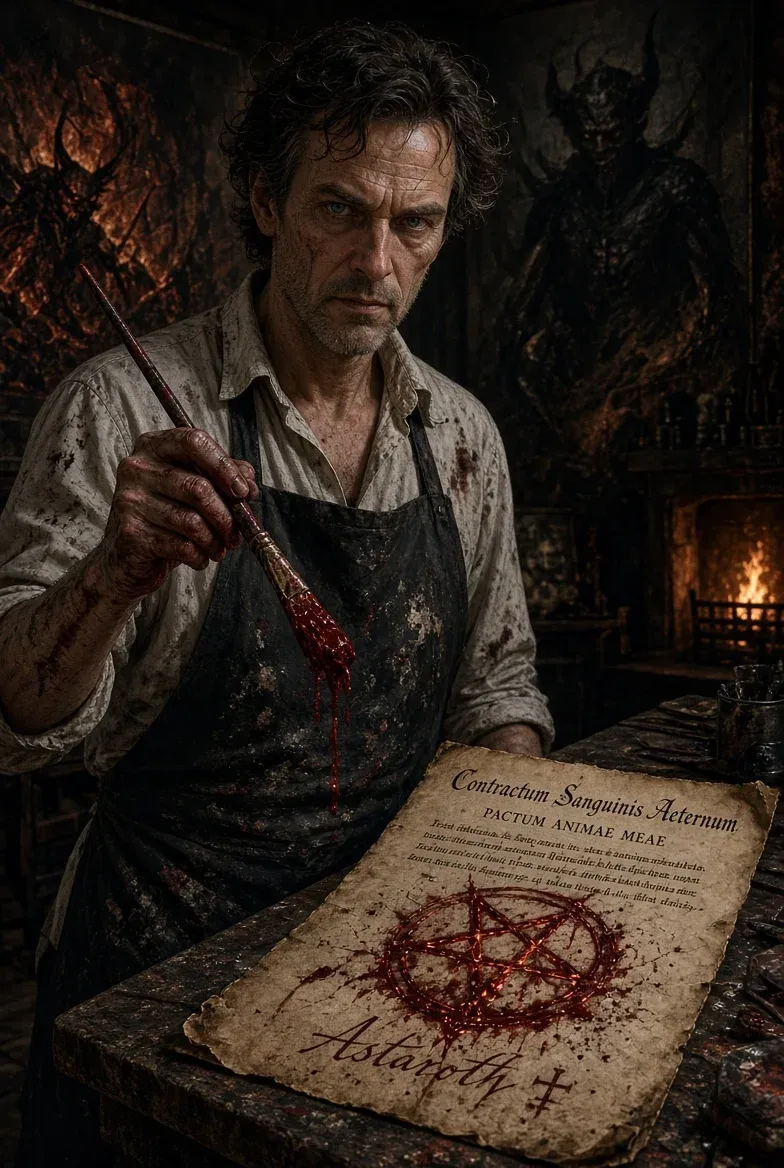
Bruno Amadio: The Painter Who Allegedly Made a Pact with the Devil

Behind the glistening eyes of "The Crying Boy," once hung in millions of living rooms, lies one of the most persistent urban legends of the twentieth century: an artist, an orphan nicknamed "Diablo," and a curse said to spare the paintings while the houses around them go up in flames. An investigation into a myth born in a British tabloid.

A Weeping Child in Millions of Homes

You have almost certainly seen him: a child with a fixed gaze, cheeks wet with tears, lips turned down, often dressed in a dark jacket against a black or ochre background. In a grandmother's hallway, in a hotel corridor, on the wall of a flea market stall. Reproduced in the hundreds of thousands from the 1950s onward, the image became a monument of European kitsch. In some countries it hung in practically every household: an Israeli columnist, recalling his youth, says it was hard to find a home without this tearful boy on the wall.

But since 1985, the portrait has also carried a far more sulfurous reputation: that of a cursed object, drawn to fire, signed by a painter who supposedly sold his soul.

Who Was Bruno Amadio, Really?

The "Crying Boys" are generally signed "Bragolin," sometimes "Giovanni Bragolin" or "Angelo Bragolin." Yet no painter ever existed under that name. According to the available biographies, the pseudonym hides Bruno Amadio, born in Venice in 1911 (on November 9 according to some sources, January 15 according to others) and died in Padua on September 22, 1981. He also used other pen names, including "Franchot Seville."

Trained at the academy, Amadio worked in postwar Venice as a painter and restorer, producing for tourists these portraits of tearful children. At least sixty variants are attributed to him, in boy and girl versions, which the image industry then reproduced worldwide without always paying him properly. Another detail contradicts the legend: in the 1970s he is found alive and well, fairly prosperous, and still at his easel in Padua.

The Legend: An Orphan, a Priest, and a Pact

Here the popular tale takes a frankly diabolical turn. In the most widespread version, Amadio fled Italy for Spain after the war. There he met a small vagrant boy, an orphan whose family had supposedly died in a fire. A priest warned the painter: wherever the child went, fire followed. The boy's nickname, "Don Bonillo" or, more dramatically, Diablo, completed his reputation as a little demon.

Amadio, out of pity or pride, ignored the warning, took the child in, and painted his series of portraits. Then his studio supposedly burst into flames. Convinced that the boy was responsible, the painter drove him away. In most versions the child then dies in a car accident or a fire, and his portraits, now steeped in his curse, begin spreading fire through homes. The painter himself is said to have perished in the flames.

That is the "pact": an artist who agrees to share his roof, and his glory, with a child the rumor calls damned.

1985: "Blazing Curse of the Crying Boy"

Yet the curse was not born in Spain, but in the columns of the British press. In early September 1985, a local newspaper in Rotherham, South Yorkshire, reported a house fire. Two days later, the national tabloid The Sun seized on the story. On September 4, on page 13, it ran an article titled "Blazing Curse of the Crying Boy": a couple, Ron and May Hall, blamed a painting of a weeping child for the destruction of their home, with the picture supposedly the only object to have survived the flames. Ron's brother, a Rotherham firefighter, allegedly added that similar cases were circulating at the fire station. (Some sources date the publication to September 5.)

The research of folklorist David Clarke shows that the affair was blown out of proportion by the newspaper. Its editor at the time, Kelvin MacKenzie, sensed a good story. Weeks of letters from terrified readers, accounts of fires, and new "victims" followed. The legend grew to the point that families who owned a copy no longer wanted to keep it in the house.

The Sun's Bonfire

Faced with the flood of letters, the paper offered to take readers' reproductions off their hands and destroy them. On Halloween night 1985, around 2,500 prints were burned on a bonfire in Oxfordshire. A firefighter present mocked the ceremony: they had expected stifled screams, but heard only the crackle of paper. The tabloid then declared the spell broken.

"I always say it's the tears that put the fire out." – the wife of firefighter Alan Wilkinson, quoted by David Clarke in Fortean Times.

What Rational Criticism Says

The case is rich in mundane explanations, which skeptical investigators lay out without difficulty. First, the argument from numbers. The Sun itself estimated that around 50,000 copies were in circulation in the United Kingdom. When an object decorates that many homes, it mechanically turns up in a share of domestic fires. The bias is pure statistics: comedian Ray Peacock, in an episode of The ParaPod, ironically sums it up by saying that any popular record, present in as many living rooms, would be "cursed" too.

Then there is selection bias. No one reports "a fire where the Crying Boy burned": only the cases where it survives make the story. Investigators also noted that the paintings were not identical: "a motley assortment," in David Clarke's words, of cheap prints sold in British department stores in the 1960s and 1970s. The only thing they shared was mass marketing.

To explain why the frames survived, commentators generally point to how these reproductions were hung and the backing they were mounted on, but this hypothesis, common in the skeptical literature, remains a plausible explanation rather than definitive proof. It was in any case not taken up by The Sun, which, as Clarke notes, had no interest in looking for a rational cause.

Finally, the genealogy of the myth. David Clarke points out that the story of the orphan "Diablo" does not appear until 2000, from the pen of Liverpool author Tom Slemen. This storyline, which explains who the child is and why the painter would have come to a bad end, therefore postdates the 1985 panic by fifteen years. As for Amadio, far from perishing in the flames, he died of illness in Padua: broadcaster and comedian Steve Punt traced his story for BBC Radio 4 (Punt PI, 2010), then published his conclusions in The Sun. The legend of a Spanish exile and a burned orphanage could not be confirmed. Italian skeptic Massimo Polidoro, in the Skeptical Inquirer (November-December 2012), likewise files the affair under urban legends.

Why the Myth Survives

The story of the diabolical pact endures because it ticks every box of the gothic tale: an artist on the margins, a cursed child, an ignored warning from the clergy, an innocent-looking object that spreads misfortune. It also works as a remnant of the folklore of "haunted objects," in which a painting becomes the vessel of a presence. The internet has only revived the rumor: forums, videos, and dealers' listings swearing they hold "the original cursed one."

The mystery, in the end, is how a myth gets manufactured. A portrait of a sad child, sold by the dozen to tourists in Venice, was enough to feed four decades of fear, with a well-oiled media cycle as its only "devil." Bruno Amadio never signed a pact. He painted, he sold, and without knowing it he left behind one of the finest case studies in crowd psychology.

Légende - Photo
Grok, CC0,
Sources
TagsSatanism

2026-10-18

A "Time Traveller" Back From the Year 5,000 Shows a Photo of Los Angeles Under Water

A man calling himself "Edward" claims to have returned from the year 5,000 with a photograph of a submerged Los Angeles. His story, first circulated in 2018, is resurfacing in the British press.

In a video broadcast by Apex TV, a YouTube channel specialising in paranormal stories, a man known only by the first name Edward holds up what he presents as a photograph of Los Angeles entirely under water, taken in the future. His face remains hidden and his voice is digitally altered, officially to protect his identity. The Express is here picking up an account originally published by the Daily Star.

The story: a secret experiment in 2004

Edward says he took part in a secret time-travel experiment in 2004. Working at a Los Angeles laboratory, he claims he was asked to travel into the future to take photographs. He says he was sent 3,000 years ahead, to around the year 5,000.

On arrival, he says, he found himself standing on a huge wooden platform, as were the houses and buildings around him. He gradually realised it was Los Angeles, but covered by water. He adds that he spoke with inhabitants of Atlantis, the legendary sunken city, who allegedly blamed the flood on climate change.

The "bad news": rising seas

According to Edward, this is not merely a warning but an unavoidable reality. His account draws on a very real concern: the warming of the atmosphere is melting the polar ice caps and gradually raising sea levels. Environmental campaigners fear that, without curbs on fossil fuels and pollution, major cities around the world could face devastating flooding.

An old story

This story is not new. It was already circulating in February 2018, when several outlets, including The Sun and IBTimes, relayed the same video, the same masked man and the same photograph. The account is therefore several years old, and is regularly put back into circulation.

What science says

The kind of time travel Edward describes has never been validated. Many people have declared themselves time travellers, but no claim has ever been confirmed. NASA itself says that this type of travel, to the distant past or future, "only happens in books and movies".

The agency does point out, however, that clocks on aeroplanes and satellites run at a different rate from those on Earth, an effect predicted by relativity that GPS satellites must account for. These are minuscule differences, with no connection to a leap of several millennia.

An unverifiable photograph

In Edward's case, nothing allows the picture to be authenticated: the author is anonymous, the laboratory and the 2004 experiment are not identified, and the image cannot be tied to any date or place. The references to Atlantis, a myth of Platonic origin with no archaeological evidence, add nothing verifiable. As it stands, the testimony amounts to an unsubstantiated claim.

Légende - Photo
Grok, CC0,
Sources
Tagstime travel, Mystery

2026-10-11

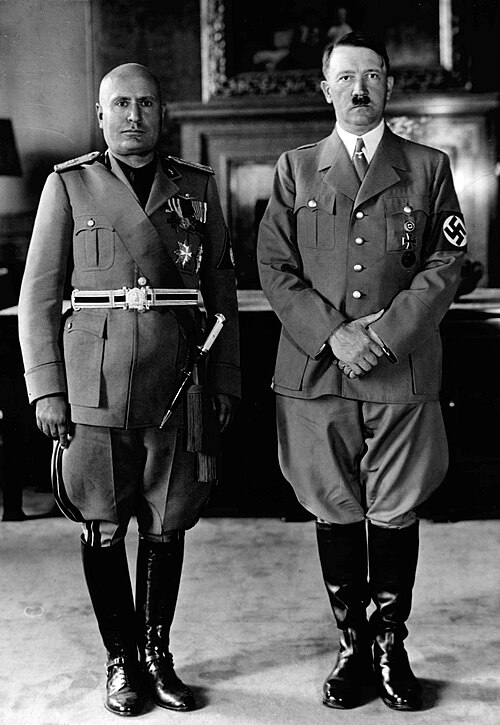
Hitler Mussolini Takes Office: In the Peruvian Andes, a Village of 730 Souls Elects a Mayor with an Impossible Name

Hitler Mussolini Takes Office: In the Peruvian Andes, a Village of 730 Souls Elects a Mayor with an Impossible Name

With a 25-vote lead, Hitler Mussolini Simeón Flores, 45, won the municipal election in Queropalca, tucked away in the department of Huánuco. Cosmic coincidence, a prank of fate, or simply a naming fashion? We look into one of the most baffling electoral stories of the year.

On Sunday, October 4, 2026, Peru went to the polls to renew its regional and municipal authorities, a few months after Keiko Fujimori's victory in the presidential election. Among thousands of lists competing across the country, one ended up crossing borders: that of the district of Queropalca, in the province of Lauricocha, north of Lima.

In this district of barely more than 730 inhabitants, the contest was close. According to the provisional count relayed by several Latin American media outlets, the candidate of Ahora Nación, a center-left party, gathered 229 votes, or 34.54% of valid votes. He finished 25 ballots ahead of Renovación Popular Perú (204 votes), while Partido País para Todos came third with 187. Alianza para el Progreso (35 votes) and Somos Perú (8 votes) brought up the rear, for a total of 663 valid votes.

While Euronews and several other outlets speak of an "elected" mayor, others, including El Imparcial and NTN24, are more cautious and refer to a "virtual winner" based on the provisional count. Official proclamation by the electoral authorities remains the step that will seal the result.

Who Is Hitler Mussolini Simeón Flores?

According to information circulated during the campaign, he is a native of Queropalca. He also runs Simeon SAC, an investment group based in Pillco Marca, also in the department of Huánuco. His biographical profile, so far, contains nothing pointing to any sympathy for the regimes whose leaders his first names recall: he ran under the banner of a party that describes itself as center-left, and whose platform rests on the idea of Peru as a "nation in formation."

It is therefore only the candidate's civil name that triggered international interest: the pairing, on a single line, of the master of the Third Reich and the founder of Italian fascism, two Axis allies during the Second World War.

"Hitler sí, corruptos no" ("Hitler yes, corrupt politicians no")

Slogan chanted in the streets of Yúngar in 2018, during the victory of another Peruvian mayor named Hitler.

The Yúngar Precedent: The Andes' "Good Hitler"

The Queropalca case is not a first. In October 2018, another Peruvian, Hitler Guesclin Alba Sánchez, was re-elected mayor of Yúngar, an Andean town in the province of Carhuaz, in the Áncash region, perched at more than 2,800 meters above sea level. A graduate in statistics and computer science and the son of farmers, he had already held the post from 2011 to 2014.

His campaign made headlines around the world with slogans worthy of an alternate-history novel, "Hitler returns" and "Hitler with the people." The man himself readily described himself as "the good Hitler," insisting that he rejected everything the German dictator stood for. He won 47.7% of the vote. The episode took on a farcical tone when a resident of a neighboring district, Lenin Vladimir Rodríguez Valverde, tried to have his candidacy invalidated, without success: the electoral authorities rejected the request.

The same onomastic universe also reached the legislature: according to Diario Panorama, a surgeon named Hitler Saavedra Casternoque held a seat in Congress for Somos Perú from 2021 until his death in 2024.

Why Emperors' and Tyrants' Names in the Andes?

The answer has less to do with the paranormal than with the sociology of first names. Hitler Alba himself explained to Peruvian radio station RPP that in the 1980s, giving a child a foreign name was a novelty, and that his father was unaware of the connotation of the name he had chosen. He had even considered changing it before giving up out of respect for his father's wishes, according to the Reuters dispatch.

The phenomenon goes beyond the name Hitler. Reuters noted in 2018 that parents in Latin America regularly choose exotic names despite their negative associations abroad, and cited a certain Osama Vinladen called up to a Peruvian junior national football team the previous year. In Yúngar, the rivalry with a "Lenin" extended this curious tradition that leads Andean families to draw on the pantheon, glorious or sinister, of world history.

Nomen Est Omen? When Names Seem to Write Destinies

This is where the story brushes against the fringes of our beat. Since antiquity, people have believed that a name carries a destiny, from the Latin adage nomen est omen to magical traditions in which naming is summoning. In the 1990s, the "Feedback" column of the science weekly New Scientist popularized the term "nominative determinism" for those amusing cases of people whose profession resembles their surname.

The Swiss psychiatrist Carl Gustav Jung, together with the physicist Wolfgang Pauli, proposed in 1952 the concept of "synchronicity," a meaningful coincidence between events with no apparent causal link. A mayor named Hitler Mussolini in an Andean district, after another mayor named Hitler a few hundred kilometers away: here is ample material for the boldest Jungian readings.

The Critical Analysis: Coincidence, Bias, and the Law of Large Numbers

The skeptic will temper the enthusiasm of sign-seekers. Statisticians Persi Diaconis and Frederick Mosteller formalized in 1989 the "law of truly large numbers": in a large enough population, improbable events cease to be exceptional. With thousands of municipal candidacies and a widespread use of history-inspired names, the probability that one of them carries a controversial historical name approaches certainty.

As for "nominative determinism" itself, its scientific foundations are disputed. The "implicit egotism" hypothesis advanced by Brett Pelham and colleagues in 2002, according to which we would be drawn to choices resembling our own name, was challenged by Uri Simonsohn in 2011, who identified confounding factors that could explain part of the results. Nothing demonstrates that a first name steers a political career, let alone a vote.

Nothing in the published material indicates, moreover, that the name weighed at the ballot box: in Yúngar, voters explained that they had no "complex" about their mayor's name, whom they judged on his record. The story's virality owes much to a media framing bias: in the global news flow, the mention of a name loaded with history attracts clicks, whatever the real significance of the event. Finally, a name is not a platform: a father's choice, sometimes made in ignorance of the name's historical weight, says nothing about the adult's convictions.

What Happens Next?

The official proclamation of results and the swearing-in should, in principle, take place over the coming weeks and months, following the calendar of 2018, when the mayor of Yúngar took up his mandate in January. Until then, Queropalca, its roughly 730 residents, and their future mayor will have to cope with a notoriety nobody had planned for. The Strange Courier will follow the case as it develops.

Légende - Photo
YitzhakNat, Public domain, https://commons.wikimedia.org/w/index.php?curid=41283482
Sources
TagsWeird