A man calling himself "Edward" claims to have returned from
the year 5,000 with a photograph of a submerged Los Angeles. His
story, first circulated in 2018, is resurfacing in the British
press.
In a video broadcast by Apex TV, a YouTube channel specialising
in paranormal stories, a man known only by the first name Edward
holds up what he presents as a photograph of Los Angeles entirely
under water, taken in the future. His face remains hidden and his
voice is digitally altered, officially to protect his identity. The
Express is here picking up an account originally published by the
Daily Star.
The story: a secret experiment in 2004
Edward says he took part in a secret time-travel experiment in
2004. Working at a Los Angeles laboratory, he claims he was asked
to travel into the future to take photographs. He says he was sent
3,000 years ahead, to around the year 5,000.
On arrival, he says, he found himself standing on a huge wooden
platform, as were the houses and buildings around him. He gradually
realised it was Los Angeles, but covered by water. He adds that he
spoke with inhabitants of Atlantis, the legendary sunken city, who
allegedly blamed the flood on climate change.
The "bad news": rising seas
According to Edward, this is not merely a warning but an
unavoidable reality. His account draws on a very real concern: the
warming of the atmosphere is melting the polar ice caps and
gradually raising sea levels. Environmental campaigners fear that,
without curbs on fossil fuels and pollution, major cities around
the world could face devastating flooding.
An old story
This story is not new. It was already circulating in February
2018, when several outlets, including The Sun and IBTimes, relayed
the same video, the same masked man and the same photograph. The
account is therefore several years old, and is regularly put back
into circulation.
What science says
The kind of time travel Edward describes has never been
validated. Many people have declared themselves time travellers,
but no claim has ever been confirmed. NASA itself says that this
type of travel, to the distant past or future, "only happens in
books and movies".
The agency does point out, however, that clocks on aeroplanes
and satellites run at a different rate from those on Earth, an
effect predicted by relativity that GPS satellites must account
for. These are minuscule differences, with no connection to a leap
of several millennia.
An unverifiable photograph
In Edward's case, nothing allows the picture to be
authenticated: the author is anonymous, the laboratory and the 2004
experiment are not identified, and the image cannot be tied to any
date or place. The references to Atlantis, a myth of Platonic
origin with no archaeological evidence, add nothing verifiable. As
it stands, the testimony amounts to an unsubstantiated claim.
With a 25-vote lead, Hitler Mussolini Simeón Flores, 45, won
the municipal election in Queropalca, tucked away in the department
of Huánuco. Cosmic coincidence, a prank of fate, or simply a naming
fashion? We look into one of the most baffling electoral stories of
the year.
On Sunday, October 4, 2026, Peru went to the polls to renew its
regional and municipal authorities, a few months after Keiko
Fujimori's victory in the presidential election. Among thousands of
lists competing across the country, one ended up crossing borders:
that of the district of Queropalca, in the province of Lauricocha,
north of Lima.
In this district of barely more than 730 inhabitants, the
contest was close. According to the provisional count relayed by
several Latin American media outlets, the candidate of Ahora
Nación, a center-left party, gathered 229 votes, or 34.54% of valid
votes. He finished 25 ballots ahead of Renovación Popular Perú (204
votes), while Partido País para Todos came third with 187. Alianza
para el Progreso (35 votes) and Somos Perú (8 votes) brought up the
rear, for a total of 663 valid votes.
While Euronews and several other outlets speak of an "elected"
mayor, others, including El Imparcial and NTN24, are more cautious
and refer to a "virtual winner" based on the provisional count.
Official proclamation by the electoral authorities remains the step
that will seal the result.
Who Is Hitler Mussolini Simeón Flores?
According to information circulated during the campaign, he is a
native of Queropalca. He also runs Simeon SAC, an investment group
based in Pillco Marca, also in the department of Huánuco. His
biographical profile, so far, contains nothing pointing to any
sympathy for the regimes whose leaders his first names recall: he
ran under the banner of a party that describes itself as
center-left, and whose platform rests on the idea of Peru as a
"nation in formation."
It is therefore only the candidate's civil name that triggered
international interest: the pairing, on a single line, of the
master of the Third Reich and the founder of Italian fascism, two
Axis allies during the Second World War.
Slogan chanted in the streets of Yúngar in 2018, during the
victory of another Peruvian mayor named Hitler.
The Yúngar Precedent: The Andes' "Good Hitler"
The Queropalca case is not a first. In October 2018, another
Peruvian, Hitler Guesclin Alba Sánchez, was re-elected mayor of
Yúngar, an Andean town in the province of Carhuaz, in the Áncash
region, perched at more than 2,800 meters above sea level. A
graduate in statistics and computer science and the son of farmers,
he had already held the post from 2011 to 2014.
His campaign made headlines around the world with slogans worthy
of an alternate-history novel, "Hitler returns" and "Hitler with
the people." The man himself readily described himself as "the good
Hitler," insisting that he rejected everything the German dictator
stood for. He won 47.7% of the vote. The episode took on a farcical
tone when a resident of a neighboring district, Lenin Vladimir
Rodríguez Valverde, tried to have his candidacy invalidated,
without success: the electoral authorities rejected the
request.
The same onomastic universe also reached the legislature:
according to Diario Panorama, a surgeon named Hitler Saavedra
Casternoque held a seat in Congress for Somos Perú from 2021 until
his death in 2024.
Why Emperors' and Tyrants' Names in the Andes?
The answer has less to do with the paranormal than with the
sociology of first names. Hitler Alba himself explained to Peruvian
radio station RPP that in the 1980s, giving a child a foreign name
was a novelty, and that his father was unaware of the connotation
of the name he had chosen. He had even considered changing it
before giving up out of respect for his father's wishes, according
to the Reuters dispatch.
The phenomenon goes beyond the name Hitler. Reuters noted in
2018 that parents in Latin America regularly choose exotic names
despite their negative associations abroad, and cited a certain
Osama Vinladen called up to a Peruvian junior national football
team the previous year. In Yúngar, the rivalry with a "Lenin"
extended this curious tradition that leads Andean families to draw
on the pantheon, glorious or sinister, of world history.
Nomen Est Omen? When Names Seem to Write Destinies
This is where the story brushes against the fringes of our beat.
Since antiquity, people have believed that a name carries a
destiny, from the Latin adage nomen est omen to magical
traditions in which naming is summoning. In the 1990s, the
"Feedback" column of the science weekly New Scientist popularized
the term "nominative determinism" for those amusing cases of people
whose profession resembles their surname.
The Swiss psychiatrist Carl Gustav Jung, together with the
physicist Wolfgang Pauli, proposed in 1952 the concept of
"synchronicity," a meaningful coincidence between events with no
apparent causal link. A mayor named Hitler Mussolini in an Andean
district, after another mayor named Hitler a few hundred kilometers
away: here is ample material for the boldest Jungian readings.
The Critical Analysis: Coincidence, Bias, and the Law of Large
Numbers
The skeptic will temper the enthusiasm of sign-seekers.
Statisticians Persi Diaconis and Frederick Mosteller formalized in
1989 the "law of truly large numbers": in a large enough
population, improbable events cease to be exceptional. With
thousands of municipal candidacies and a widespread use of
history-inspired names, the probability that one of them carries a
controversial historical name approaches certainty.
As for "nominative determinism" itself, its scientific
foundations are disputed. The "implicit egotism" hypothesis
advanced by Brett Pelham and colleagues in 2002, according to which
we would be drawn to choices resembling our own name, was
challenged by Uri Simonsohn in 2011, who identified confounding
factors that could explain part of the results. Nothing
demonstrates that a first name steers a political career, let alone
a vote.
Nothing in the published material indicates, moreover, that the
name weighed at the ballot box: in Yúngar, voters explained that
they had no "complex" about their mayor's name, whom they judged on
his record. The story's virality owes much to a media framing bias:
in the global news flow, the mention of a name loaded with history
attracts clicks, whatever the real significance of the event.
Finally, a name is not a platform: a father's choice, sometimes
made in ignorance of the name's historical weight, says nothing
about the adult's convictions.
What Happens Next?
The official proclamation of results and the swearing-in should,
in principle, take place over the coming weeks and months,
following the calendar of 2018, when the mayor of Yúngar took up
his mandate in January. Until then, Queropalca, its roughly 730
residents, and their future mayor will have to cope with a
notoriety nobody had planned for. The Strange Courier will follow
the case as it develops.
Légende - Photo YitzhakNat, Public domain, https://commons.wikimedia.org/w/index.php?curid=41283482
Some objects, it is said, bring misfortune to whoever handles them carelessly. The Ouija board, that old companion of séances popularized in the late 19th century, has just offered fresh proof of this — not in a haunted parlor or a lonely cemetery, but in the decidedly prosaic offices of the Moses Lake Police Department in Washington State. Last Friday afternoon, a resident in the 1100 block of East Nelson Road reported that their vehicle had been broken into while they were away. The stereo had been torn from the dashboard, house keys and several prescription medications were missing — and along with them, a Ouija board.
It was this last, seemingly trivial detail that would ultimately seal the suspect's fate.
Chance, an officer's memory, and a traveling board
Earlier that same day, Officer Isaac Taylor of the Moses Lake Police Department had had a routine encounter with a woman carrying a Ouija board in a bag — an object unusual enough to stick in a patrolling officer's memory. When the burglary report came in a few hours later, mentioning a Ouija board among the stolen items, Officer Taylor recalled the earlier encounter. He located the woman, later identified as 36-year-old Tasha Marie Wehrli, near Pioneer Way and Riviera Avenue.
A search confirmed the suspicion: not only was the Ouija board still in her possession, but so were the other items reported stolen from the vehicle. According to the police department's statement, Wehrli then allegedly attempted to flee before being subdued and arrested without further incident.
A heavy charge sheet
Tasha Marie Wehrli was booked into Grant County Jail on multiple counts: second-degree vehicle prowling, third-degree theft, possession of a legend drug (a prescription medication held without a valid prescription), third-degree malicious mischief, and resisting arrest. Under Washington State law, second-degree vehicle prowling is classified as a gross misdemeanor, carrying a maximum penalty of up to a year in jail; the statute does not even require that anything actually be taken from the vehicle for the offense to be established — mere intent to commit a crime inside is sufficient.
The Ouija board, an object steeped in history — and superstition
Far from being a mere flea-market curiosity, the Ouija board belongs to a long American tradition of supposed communication with the beyond. First marketed in 1890 under the name "Ouija," then popularized in the following decades by manufacturer William Fuld, it became the very symbol of the domestic séance, at a time when the Spiritualist movement — born from the Fox sisters' phenomenon at Hydesville in 1848 — was enjoying considerable popularity across the United States. Used both as a family parlor game and as a serious divination tool, the board has carried a troubled reputation through the 20th and 21st centuries: some see it as a simple parlor game driven by the ideomotor effect — the unconscious muscular movement that, according to many psychologists, accounts for the planchette's motion without any supernatural intervention — while others continue to view it as a doorway, sometimes a dangerous one, onto the unseen.
Whether one leans toward the rational explanation or the paranormal thesis, the Moses Lake episode feeds a particular strand of folklore: that of stolen objects which, one way or another, end up turning against their thief.
Superstitions of the criminal underworld
There is a persistent idea in American popular culture that criminals form a particularly superstitious lot — an observation owed, among other things, to the mythology of Gotham City's masked vigilante, but one that also finds a more serious echo among criminologists studying the rituals and beliefs peculiar to criminal circles. In publishing the details of the arrest on social media, the Moses Lake Police Department did not fail to note the irony of the situation: an object traditionally meant to reveal hidden truths ended up, in this case, playing a very concrete role in revealing a suspect's identity.
"Many say that criminals are a superstitious lot. In this case, it would seem that the old adage held true in the most literal way possible."
What the official statement says
The passage below faithfully reproduces, in translation, the account released by the Moses Lake Police Department regarding the circumstances of the arrest:
"On Friday afternoon, officers responded to a report of a vehicle prowl in the 1100 block of East Nelson Road. The stereo had been ripped from the dashboard; house keys and several prescription medications had been taken, along with a Ouija board. Earlier that day, Officer Isaac Taylor had contacted a woman, later identified as Tasha Marie Wehrli, who was carrying a Ouija board in a bag. Remembering the encounter, he relocated Wehrli near Pioneer Way and Riviera Avenue. A search recovered the board along with the other items reported stolen. Wehrli was booked into Grant County Jail on charges of second-degree vehicle prowling, third-degree theft, possession of a legend drug, third-degree malicious mischief, and resisting arrest."
Among the strangest lawsuits in American legal history, the case filed by Gerald Mayo against Satan himself remains one of the most extraordinary. Convinced that the Prince of Darkness was responsible for all his misfortunes, the Pennsylvania inmate decided to seek justice in federal court.
According to the complaint submitted at the time, Mayo claimed that the Devil was the source of his daily suffering. In court documents, he alleged that “Satan had on numerous occasions caused plaintiff misery and unwarranted threats.” He further argued that the Devil had deliberately placed obstacles in his path and was directly responsible for his personal downfall.
For Mayo, the matter was not merely symbolic or theological. The prisoner insisted that Satan and his “evil minions” had violated his constitutional rights — a claim so unusual that it left the American justice system facing both legal and philosophical questions.
The judge ultimately dismissed the case, though not without a touch of irony. One of the court’s primary concerns involved jurisdiction: there was no evidence proving that the Devil actually resided within the district where the complaint had been filed. In practical terms, the court could not determine whether it even had authority over the ruler of Hell.
Another major obstacle involved the delivery of a legal summons. Under American law, defendants must officially receive notice of the lawsuit against them. Yet few court officers appeared willing to undertake the journey to Hell in order to serve the necessary papers to Satan himself.
The bizarre lawsuit has since become a famous anecdote in American law schools, illustrating both the creativity of litigants and the very real procedural limits of the judicial system. It also serves as a reminder that even the most serious courts can occasionally find themselves dealing with cases worthy of satire.
More than fifty years later, Gerald Mayo’s attempt to sue the Devil continues to fascinate legal scholars and lovers of unusual history alike. After all, filing a lawsuit against Satan may be theoretically possible — but ensuring he signs the receipt is another matter entirely.
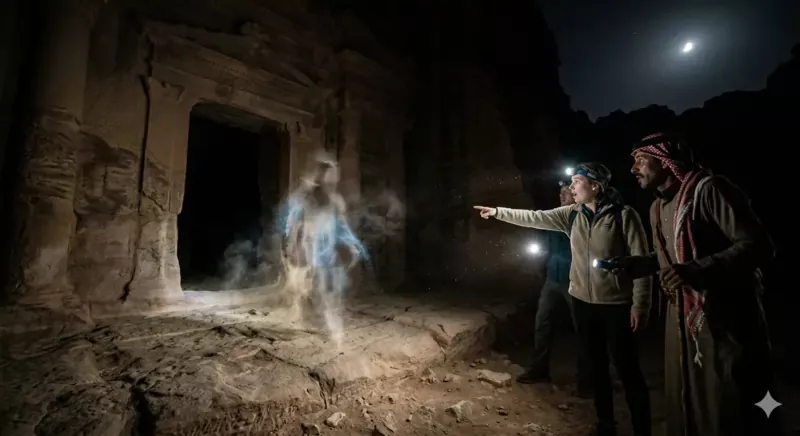
The case of Arthur Flowerdew remains one of the most intriguing modern stories associated with reincarnation. This British man, with no academic background in ancient history or archaeology, claimed to possess detailed memories of a past life in a distant ancient city he had never visited in his current lifetime. His story raises fascinating questions about memory, consciousness, and the limits of human knowledge.
Visions Since Childhood
For as long as he could remember, Arthur Flowerdew had been haunted by recurring dreams and visions. He saw a city of stone—majestic, ancient, and set within a desert landscape. In these visions, he wandered through monumental structures, rock-carved stairways, and architectural features he did not consciously understand, yet felt deeply familiar.
For years, he could not identify this place. The images remained a mystery—like memories without a known source. It was only later, upon seeing images of Petra—the famous ancient city in Jordan—that he experienced a profound realization: this was the very place he had been seeing all his life.
A Growing Conviction
Shaken by this immediate recognition, Flowerdew became convinced that he had lived a previous life in Petra. To him, these visions were not mere dreams, but fragments of memory carried over from another existence.
Determined to explore this phenomenon, he contacted the BBC to share his story. Intrigued, producers arranged for him to travel to the Middle East, where his claims could be tested against reality.
The Journey to Petra
When Flowerdew finally arrived at Petra, his behavior quickly drew the attention of archaeologists working on-site. He did not react like a typical visitor discovering the site for the first time—he seemed to navigate it with an uncanny sense of familiarity.
According to accounts, he led experts to specific areas of the site, claiming to recognize important locations. He even stated that his past life had ended violently and pointed to a particular place where he believed he had been murdered.
What surprised researchers even more was his ability to describe certain features of the site with unexpected accuracy.
Unexplained Knowledge
Flowerdew reportedly helped archaeologists interpret objects and structures whose functions had previously been unclear. Despite having no formal training, he offered plausible explanations for the use of certain ancient tools and architectural elements.
Even more remarkably, he spoke of areas that had not yet been excavated, describing features that were later said to align with ongoing archaeological findings.
One expert who accompanied him in Jordan was quoted as saying that he did not believe Flowerdew was a fraud. According to this account, many of the details he provided were not only consistent with known facts but also added new insights about the ancient city.
Reincarnation or Psychological Phenomenon?
The case of Arthur Flowerdew remains deeply controversial. For believers in reincarnation, it serves as compelling evidence that consciousness may survive death and carry memories into a new life.
Skeptics, however, offer alternative explanations:
Cryptomnesia: Flowerdew may have encountered information about Petra earlier in life and unconsciously retained it.
Intuition and inference: Some of his “insights” could result from careful observation and intelligent guesswork.
Confirmation bias: Testimonies may have been interpreted or emphasized in a way that supports the reincarnation narrative.
Even so, certain aspects of the case remain difficult to fully explain through conventional reasoning.
An Unresolved Mystery
To this day, Arthur Flowerdew’s story continues to fascinate both researchers and the public. It sits at the crossroads of science and belief, memory and imagination. It challenges our understanding of time, identity, and consciousness.
Whether it represents a genuine case of reincarnation or a psychological phenomenon not yet fully understood, one thing is certain: it reminds us that the human mind still holds mysteries we have yet to unravel.
And perhaps, somewhere between past and present, some stories are still waiting to be understood.
In the history of medicine and human records, few lives are as perplexing as that of Adam Rainer. Born at the end of the 19th century in the Austro-Hungarian Empire, Rainer remains the only known individual in human history to have been officially classified as both a dwarf and a giant. His life stands as a medical anomaly and a deeply human story of suffering, adaptation, and biological extremity.
Adam Rainer was born in 1899 in Graz, in what is now Austria. During his adolescence and early adulthood, nothing suggested an extraordinary fate. He was small and frail, reaching a height of approximately 1.38 meters (4 feet 6 inches) as a young adult—well within the medical definition of dwarfism. In 1917, when he presented himself for military service, he was deemed unfit due to his short stature and poor physical condition. At the time, his case attracted little attention.
That changed dramatically in the early 1920s. Rainer began to grow at an abnormal and uncontrollable rate, far beyond what biology would normally allow after adolescence. Over the following years, his height increased rapidly, accompanied by severe physical symptoms: joint pain, skeletal deformities, and worsening vision. Physicians eventually diagnosed the cause—an adenoma of the pituitary gland, a benign tumor that triggered excessive secretion of growth hormone.
In 1931, surgeons attempted to halt the progression by removing part of the tumor. The operation slowed his growth but could not completely stop it. By the time his condition stabilized, Adam Rainer had reached a height of approximately 2.34 meters (7 feet 8 inches), placing him firmly in the category of gigantism.
The extreme growth came at a heavy cost. Rainer developed severe scoliosis and suffered chronic pain, progressive blindness, and hearing loss. His final years were marked by physical decline and social isolation rather than public fascination. He died in 1950 at the age of 51.
Today, Adam Rainer’s case continues to be studied as a rare intersection of dwarfism and gigantism. More than a biological curiosity, his story underscores the fragility of the human body and the limits of medical understanding in the early 20th century. It is the story of a man whose body defied classification—and whose life was shaped by a condition that first made him too small for the world, and later far too large to comfortably exist within it.
Légende - Photo Bennett Blakley, Public domain, https://commons.wikimedia.org/w/index.php?curid=120776100
The possibility of a global conflict is a nightmare scenario no one wants to contemplate. However, as an exercise in geopolitical and survivalist forecasting, it's intriguing to analyze which nations would offer the best chances of survival in the event of a worldwide collapse. The key criteria for this ranking are: geographical isolation, political and social stability, food and energy self-sufficiency, low population density, and a lack of strategic military targets.
Here is our top 10 list of potential refuges in the event
of a third world war.
10. Portugal
Why:Political stability and
relative isolation in Europe.
Strengths:As one of Europe's
most peaceful countries, Portugal is situated on the western
periphery of the continent, far from potential major flashpoints
like Eastern Europe. Its climate supports viable agriculture, and
it has a long coastline for fishing.
Weaknesses:Its membership in
NATO could draw it into a conflict, and it hosts strategic military
bases.
9. Switzerland
Why:A legendary tradition of
neutrality and a culture of preparedness.
Strengths:Swiss neutrality
is deeply ingrained. The mountainous terrain is easily defensible,
and the country boasts one of the highest densities of nuclear
bunkers per capita in the world. Its decentralized political system
is a key asset.
Weaknesses:Surrounded by
major NATO and EU powers, it could become caught in conventional
European fighting.
8. Slovenia
Why:A discreet, small nation
rich in nature and water.
Strengths:With a low
population density, vast forested and mountainous areas (the Julian
Alps), and abundant freshwater resources, Slovenia offers a stable
and relatively self-sufficient haven.
Weaknesses:Membership in
NATO and the EU increases its potential risk of
involvement.
7. Bhutan
Why:Himalayan isolation and
a philosophy of self-reliance.
Strengths:Nestled in the
Himalayas, its access is naturally difficult. The country has a
very low population density and a culture deeply rooted in
environmental respect and autonomy. It has no diplomatic relations
with major nuclear powers.
Weaknesses:Geographic
proximity to potential giants in conflict, India and China. Limited
resources could be a challenge.
6. Iceland
Why:Extreme island isolation
and geothermal energy independence.
Strengths:Located in the
middle of the North Atlantic, it is remote from everything. It
produces its own food (fish) and is almost entirely self-sufficient
in energy thanks to geothermal power. A small, homogeneous
population aids social cohesion.
Weaknesses:Its strategic
position in the North Atlantic could make it relevant to naval
powers. The harsh climate limits agriculture.
5. Ireland
Why:Historical neutrality
and island isolation.
Strengths:Ireland is not a
member of any military alliance (like NATO) and has a strong
tradition of neutrality. It is an island with significant
agricultural land, allowing for potential food self-sufficiency.
Its distance from the European mainland is a buffer.
Weaknesses:Relative
proximity to the UK, a potential high-value target.
4. Canada (Rural and Northern Regions)
Why:Immense territory and
vast resources.
Strengths:Canada has one of
the lowest population densities on Earth. Its vast wilderness
areas, particularly in the Yukon, Northwest Territories, and
Nunavut, are extremely isolated. The country is rich in freshwater,
natural resources, and wildlife.
Weaknesses:Direct neighbor
to the United States, the number one target in any large-scale
attack. Major cities would be high-risk zones.
3. Australia / New Zealand
Why:Isolated continental
fortresses.
Strengths:Their primary
asset is their extreme geographical isolation. They are
continent-islands with strong food, mineral, and energy
self-sufficiency. New Zealand, in particular, is often cited as the
ultimate billionaire bunker destination due to its stability and
remoteness.
Weaknesses:Australia is a
close ally of the US (ANZUS Pact) and could be a secondary target.
Both face risks from wildfires and droughts.
2. Argentina (Patagonia)
Why:Remoteness, low
population density, and abundant resources.
Strengths:Argentina, and
especially its Patagonia region, is far from likely geopolitical
epicenters. It is a self-sufficient food and energy producer. The
vast, uninhabited spaces in the south offer an ideal
refuge.
Weaknesses:A history of some
economic and political instability, though this may matter less in
a global crisis.
1. Finland
Why:The ultimate survivalist
culture.
Strengths:Finland stands
apart due to its unique level of national preparedness. Universal
male conscription means a large portion of the population has
military survival training. The country has thousands of public
shelters and a culture of "sisu" (resilience and grit). Its vast
forests and tens of thousands of lakes provide shelter, food, and
water. Despite recent NATO membership, its immense territory and
low density make it the most prepared and resilient nation on this
list.
For centuries, the location of the Ark of the Covenant—a sacred chest believed to contain the original tablets of the Ten Commandments—has remained one of history’s greatest mysteries. While many doubt the Ark ever existed at all, a series of declassified CIA documents from the 1980s has reignited interest in the legend. These documents suggest that the Ark may have been located by individuals involved in a controversial government program known as "remote viewing."
This program, part of a Cold War-era intelligence initiative
often referred to as the "Stargate Project," sought to explore and
harness extrasensory perception—particularly clairvoyance, or the
ability to perceive distant or hidden objects using the mind alone.
Participants were trained in psychic techniques designed to allow
them to "see" places and events beyond the reach of normal senses.
According to some of these records, remote viewers claimed to have
identified the Ark’s location during their sessions.
Biblical accounts state that the Ark was constructed by the
Israelites shortly after their exodus from Egypt, around the 15th
century BCE. Moses is said to have placed the stone tablets bearing
the Ten Commandments inside the chest to protect and preserve them.
The Ark was revered as a powerful symbol of divine presence and
guidance. Over time, however, its trail vanished from historical
records, giving rise to numerous theories about its fate.
Some believe the Ark was hidden beneath the ruins of Jerusalem,
others suggest it was transported to Ethiopia, and some posit that
it lies buried in the sands of ancient Middle Eastern cities. Yet
the claim that it may have been rediscovered through psychic means
represents a departure from traditional historical or
archaeological inquiry.
There is no public evidence to confirm that the Ark was ever
actually found, and the CIA has never officially acknowledged
recovering such an artifact. Still, the idea that intelligence
agencies explored supernatural methods to locate one of the most
elusive objects in human history is intriguing—and unsettling.
Whether fact, fiction, or something in between, these claims add
another layer to the enduring enigma of the Ark of the Covenant. If
it does still exist, it may be hidden not just beneath layers of
earth, but behind walls of secrecy, protected by the very
institutions that once sought to reveal it.
In November 1897, The Worthington Advance, a regional newspaper, reported a remarkable archaeological discovery in the state of Iowa, USA. During excavations conducted by the Smithsonian Institution’s Division of Eastern Mounds, scientists uncovered the remains of a human skeleton of extraordinary size.
According to the article, the skeleton measured—based on precise
onsite measurements—seven feet six inches in height, or
approximately 2.29 meters. However, the remains were extremely
fragile. Once exposed to open air, the bones reportedly crumbled to
dust, preventing further examination or preservation.
John Wesley Powell, then Director of the Bureau of Ethnology and
a prominent figure in 19th-century American scientific exploration,
was cited in connection with the find. Yet official records from
the Smithsonian remain largely silent regarding the outcome or
scientific documentation of this discovery.
This incident is one of many similar reports from the late 19th
century, when extensive archaeological surveys were conducted
throughout the Midwestern United States. These efforts focused on
ancient burial mounds—earthworks constructed by indigenous cultures
long before European settlement. The origin, purpose, and contents
of these mounds continue to intrigue archaeologists to this
day.
While some modern scholars argue that such claims may stem from
measurement errors or journalistic exaggeration, others question
the disappearance or lack of official recognition for several of
these finds. The Iowa giant remains one of the more puzzling
stories among those early mound explorations.
A middle school in Kabale was forced to close its doors this week after a series of disturbing incidents described by students and teachers as “demonic attacks.” Since the beginning of the term, dozens of pupils had reportedly been “possessed,” screaming, fainting, crawling on the floor, hitting themselves, and speaking in incoherent voices.
Witnesses say that during a recent school meeting held to
address the matter, at least nine students began barking like dogs,
crawling on their bellies like snakes, and calling out the name of
a teacher, claiming he had “sacrificed” them in some kind of
ritual.
A spiritual conference and prayer service had been hastily
organized by the local community, but to no avail. Tensions boiled
over when enraged parents stormed the accused teacher’s home,
setting fire to his property. Four houses belonging to him were
destroyed, along with barns containing goats, sheep, pigs, and
crops. The teacher, who has denied any wrongdoing, was suspended
along with another staff member.
Meanwhile, local police have vowed to track down and prosecute
the vandals. “We will hold accountable those who took the law into
their own hands,” said a police spokesperson.
As fear and superstition swirl across the district, one resident
put it this way: “Sometimes, the people with the smallest guts have
the biggest gut feelings.”
Légende - Photo Edirisa, CC BY-SA 2.5, https://commons.wikimedia.org/w/index.php?curid=1735838
For a few days, social media was ablaze. Internet users around the world thought they had uncovered long-awaited proof of extraterrestrial life after a Google Maps image began circulating — what looked like a flying saucer appeared to be partially buried in the sands of the Sahara, not far from the small town of Bordj Omar Driss in southern Algeria.
The story was first launched by well-known UFO researcher Scott
Waring. Scanning satellite images of this remote desert region, he
came across a circular structure that he immediately interpreted as
a crashed spaceship resting some ten meters underground. Soon
enough, the rumor gained momentum: forums and specialized pages
shared the image, fueling the idea of a forgotten alien craft
hidden beneath the dunes.
But the mirage was quickly shattered. Upon closer inspection of
the surrounding area, another researcher spotted an identical
structure nearby, this one topped with a tower under construction.
It turned out to be nothing more than the concrete base of a wind
turbine — a perfectly ordinary round foundation in the eyes of
engineers.
This mix-up is yet another reminder of the dangers of jumping to
conclusions in the world of UFO research. In the age of the
internet, a single intriguing image is enough to fire up the
collective imagination. Yet, more often than not, the reality is
far less mysterious than fiction: before seeing a flying saucer in
the desert, it’s usually wise to consider whether it’s simply an
ordinary human project after all.
The winter of 1956 remains marked by an event as troubling as it is unexplained. In a cold and dark atmosphere, a witness named John Hanks experienced an encounter that still haunts the minds of paranormal enthusiasts. That evening, as he was peacefully walking home from work, he witnessed a terrifying apparition from the skies.
According to his account, a demonic entity suddenly emerged from
the darkness. The creature, measuring about 9 feet tall, had a
humanoid appearance but was covered in brown leathery skin. What
made this vision even more perplexing was the equipment it seemed
to be outfitted with: a strange metallic structure equipped with
mechanical wings. The device, with its enigmatic contours, was
covered with scintillating multicolored lights on its lower
part.
An even more fascinating detail caught Hanks' attention: at the
center of the entity’s chest was a square control panel that the
creature appeared to manipulate, presumably to adjust its flight.
Furthermore, the entire entity emitted a ghastly hissing noise,
similar to that of a machine in operation.
John Hanks' astonishment quickly turned to terror when the
strange being fixed its gaze upon him. Large, watery, glowing eyes
locked onto the petrified witness before the creature sped off into
the night at great speed, vanishing as suddenly as it had
appeared.
This account, though difficult to verify, has fueled numerous
theories. Some see it as the manifestation of an extraterrestrial
entity, while others suggest it was a hallucination or a
misinterpretation of natural phenomena. However, the precision of
the details reported by Hanks, as well as the uniqueness of the
description, leave an unresolved mystery lingering.
Located in the Saint Lawrence River, in the Thousand Islands archipelago in upstate New York, Just Room Enough Island, also known as Hub Island, holds a unique title: the smallest inhabited island in the world. With an area of about 310 square meters, it perfectly embodies its name, which translates to "just enough space."
Purchased by the Sizeland family in the 1950s, the island is
characterized by its minimalist and charming layout. It features a
house, a tree, a few shrubs, and a small beach. Everything fits
surprisingly well, transforming this tiny island into a true oasis
of peace.
More than just a geographical curiosity, Just Room Enough Island
has become an iconic attraction, captivating tourists and lovers of
the unusual. The island humorously and poetically demonstrates
humanity's ability to adapt and make the most of even the smallest
available space, right in the middle of the river.
Légende - Photo Omegatron, CC BY-SA 3.0, https://commons.wikimedia.org/w/index.php?curid=1088504
Manchester United is considering leaving Old Trafford, its iconic stadium, for a new state-of-the-art complex with a 100,000-seat capacity located nearby. However, this decision might not only be motivated by logistical or commercial reasons: according to a study conducted by Spin Genie, Old Trafford is reportedly the most haunted and UFO-visited football stadium in the UK.
With no fewer than 62 ghost sightings and 26 encounters with
unidentified flying objects, Manchester United far surpasses other
Premier League clubs in terms of paranormal activity. Behind the
Manchester club, Manchester City, Everton, and Liverpool have also
experienced some supernatural events, albeit to a much lesser
extent. Meanwhile, the least haunted clubs in England are said to
be West Ham, Brentford, and Fulham, which report almost no
paranormal activity.
Although the presence of spirits and extraterrestrial visitors
at Old Trafford has not directly impacted the team’s performance,
it remains a fascinating topic of discussion among fans and
football observers. Some claim that the stadium’s mystical aura has
always been part of its charm, while others wonder if these
phenomena might be a sign that Manchester United needs to begin a
new chapter in its history.
Légende - Photo Parrot of Doom, CC BY-SA 3.0, https://commons.wikimedia.org/w/index.php?curid=9445020
Butyrophobia is a peculiar and little-known phobia: it’s the irrational fear of butter. While this may seem unusual to most people, it’s a very real issue for those who experience it. What makes this phobia even more unique is that it is exclusively directed at butter. Other dairy products, such as milk, yogurt, or cheese, do not provoke any discomfort or fear.
People with butyrophobia feel intense fear and deep disgust at
the thought of eating butter or even seeing it. In some cases, it’s
not just the butter itself that causes distress, but its
appearance. For example, a partially used stick of butter, with its
wrinkled, torn packaging and visible marks, can trigger extreme
discomfort or even repulsion.
While this may seem minor or even amusing to some, butyrophobia
can have a real impact on daily life. Avoiding dishes that contain
butter, steering clear of grocery store aisles where butter is
displayed, or having to explain this fear to others can cause
stress and embarrassment.
As with all phobias, solutions are available to help manage
butyrophobia. Cognitive-behavioral therapy (CBT) or gradual
desensitization techniques can assist individuals in overcoming
their fear. The key is to recognize that this condition is real and
to seek support if it interferes with everyday life.
Some destinies seem to be written by an invisible force. Bill Morgan's story is a perfect example. This Australian not only brushed with death but then experienced a series of lucky events that defy all odds.
It all began with a terrible road accident that required
doctors to administer emergency cardiac treatment. Unfortunately,
this led to a dramatic reaction: Bill Morgan was declared
clinically dead for 14 long minutes before being revived and placed
in a coma. To everyone's amazement, he emerged from it twelve days
later, without the slightest aftereffect.
Convinced that he had been given a second chance, he
decided to fully embrace life. He proposed to his partner, who
accepted. Then fate smiled upon him once again: shortly after, he
bought a scratch ticket and won a car.
His incredible luck caught the attention of Australian
media, who wanted to recreate the scene in front of the cameras.
Bill Morgan agreed to the request and purchased another ticket.
Right before the cameras, he scratched his ticket and was stunned
to discover that he had just won $250,000!
Bill Morgan's story is that of a man who, after narrowly
escaping death, saw luck shine on him like never before. An
incredible lesson in hope and renewal, proving that sometimes, life
truly holds miracles.
Normally, jogging is an ordinary physical activity, associated with health and well-being. But in Burundi, under the presidency of Pierre Nkurunziza, this seemingly harmless exercise took an unexpected political turn. In March 2014, the head of state officially banned group jogging, fearing it could serve as a cover for subversive activities.
This surprising decision came amidst growing tensions between
the government and the opposition. With the 2015 elections
approaching, Burundian authorities feared that gatherings under the
guise of sports could turn into platforms for political dissent.
Security forces even arrested several joggers, accusing them of
plotting against the regime.
The ban sparked outrage both within the country and
internationally. Human rights organizations strongly condemned the
measure, calling it a violation of fundamental freedoms. Amnesty
International pointed out that simply running in a group should not
be considered a threat to state security.
Ironically, the jogging ban did not apply to everyone. Pierre
Nkurunziza himself was a devoted sports enthusiast and frequently
led group fitness sessions with his supporters.
Giovanni Vigliotto will go down in history as one of the most prolific romantic fraudsters of the 20th century. Operating between the 1950s and 1980s, this man abused the trust of dozens of women across the United States, marrying them before disappearing with their possessions. Here’s a look at the incredible journey of a man who played with the hearts and finances of his victims.
A Mysterious Identity and a Life of Secrets
Giovanni Vigliotto was not his real name. Until his
arrest, he used hundreds of aliases, making his identification
particularly difficult for authorities. His method was
well-practiced: he targeted his victims mainly at fairs and flea
markets, presented himself as a successful businessman, and
proposed marriage after a short courtship. Once married, he
convinced his new wife to sell all her belongings and entrust him
with the money, only to disappear without a trace.
Dozens of Victims and an Impressive Loot
Authorities estimated that Vigliotto scammed at least 105
women, though the actual number could be much higher. His victims
came from various backgrounds and were often women seeking love and
stability. By manipulating their emotions, he managed to extort
vast sums of money, amassing millions of dollars in assets and
cash.
A Spectacular Arrest and a Sensational Trial
In 1981, police finally put an end to his run thanks to
one of his victims, Sharon Clark, who trapped him and turned him in
to the authorities. His trial, held in Arizona in 1983, attracted
significant media attention. Charged with fraud and grand theft,
Vigliotto was sentenced to 34 years in prison. During the trial, he
cynically declared, "I never cheated a woman. I truly loved them
all."
A Life Ending in the Shadows
After his conviction, Giovanni Vigliotto served his
sentence without ever revealing the full extent of his frauds. He
died in prison in 1997, taking with him many secrets about his true
motives and the whereabouts of the stolen money.
A Criminal Legend That Still Fascinates Today
The story of Giovanni Vigliotto continues to captivate
fans of true crime and extraordinary scams. His case highlights the
dangers of emotional manipulation and the difficulty for victims to
realize the scale of the deception. Even today, his name remains
synonymous with one of the greatest marriage fraudsters in
history.
His incredible journey has inspired several documentaries
and books, reminding us how cunning and manipulation can lead to
large-scale scams. Giovanni Vigliotto was not just a conman but a
true illusionist of emotions.
In 2001, the United Kingdom witnessed one of the most sensational television scandals in its history. Charles Ingram, a former British Army major, managed to win the £1 million jackpot on the iconic show "Who Wants to Be a Millionaire?". However, his triumph was short-lived, as he was quickly accused of cheating.
A Well-Oiled Strategy
The case began when the show's producers noticed
irregularities in how Ingram selected his answers. A thorough
review of the recordings revealed a troubling pattern: every time
Ingram mentioned an answer, a coughing sound emanated from the
audience, particularly from Tecwen Whittock, a teacher present that
day. This technique allegedly helped the contestant avoid wrong
answers and progress to victory.
A High-Profile Trial
The fraud was exposed, and Charles Ingram, along with his
wife Diana and Tecwen Whittock, was arrested. During the 2003
trial, overwhelming evidence led to their conviction for conspiracy
to defraud the show. Charles and Diana Ingram were sentenced to 18
months in prison, suspended, while Whittock received a similar
sentence. Additionally, they had to pay hefty fines and legal
fees.
A Case That Still Fascinates
Despite his conviction, Ingram has always denied any
involvement in fraud. This case has sparked lasting interest,
inspiring books, documentaries, and series, including "Quiz," a
mini-series that recounts this incredible scandal.
More than two decades after the events, the name Charles
Ingram remains associated with one of the boldest cheating attempts
in television history. While some see him as a misunderstood
genius, most consider him a symbol of fraud exposed on live
TV.
Légende - Photo Sodakan, Public domain, https://fr.wikipedia.org/wiki/Charles_Ingram#/media/Fichier:Charles_Ingram_1.jpg
An incredible story continues to captivate minds and fuel debates: the supposed resurrection of Jean Chapas, a seven-year-old child declared dead by doctors, who allegedly came back to life thanks to the intervention of Nizier Anthelme Philippe, better known as Maître Philippe de Lyon.
A Dead Child and a Desperate
Mother
Jean Chapas, born in 1863 to a family of fishermen living
near the banks of the Saône, was declared dead at the age of seven
by two doctors. His family, plunged into mourning, was preparing to
organize his funeral when Maître Philippe was called to the
scene.
According to the testimony of Jean-Baptiste Ravier, a
close disciple of Philippe, the scene unfolded before a crowd of
grieving relatives and friends.
A Supernatural Intervention?
Maître Philippe, upon entering the house, looked for Jean
Chapas' mother and asked her, "Madame Chapas, do you give me your
son?" Perplexed, she replied "Yes" without fully understanding the
significance of the question. Then, Philippe approached the
lifeless body of Jean, lying on his bed, and pronounced these
words: "Jean, I return your soul."
Immediately, according to witnesses, the child opened his
eyes and came back to life under the astonished gaze of those
present.
Jean Chapas, the Devoted
Disciple
Far from being merely a miraculously revived boy, Jean
Chapas later became Maître Philippe's most faithful disciple. He
followed his teachings and assisted him in his practices,
eventually becoming a respected mystical figure himself.
Miracle or Illusion?
This enigmatic resurrection has raised many questions. For
Maître Philippe's supporters, there is no doubt that this event was
divine. For others, it could have been a medical error, with the
child perhaps never truly having died.