2026-11-15

Afghanistan: When Marines Met a Djinn in a Classroom

Afghanistan: When Marines Met a Djinn in a Classroom

In southern Afghanistan, American soldiers say a classroom “came alive” around them. Questioned the next day, a local mullah spoke not of a ghost but of a djinn. An investigation into a region where two imaginations of the invisible collided.

A School, a Wall, a Night

As is often the case, the story begins with a rumor. A group of Marines assigned to guard a school near Amir Aghah learn from residents that teachers were allegedly murdered there during Taliban rule. Nothing known about the region makes the claim implausible: southeastern Afghanistan has endured four decades of war, reprisals and massacres.

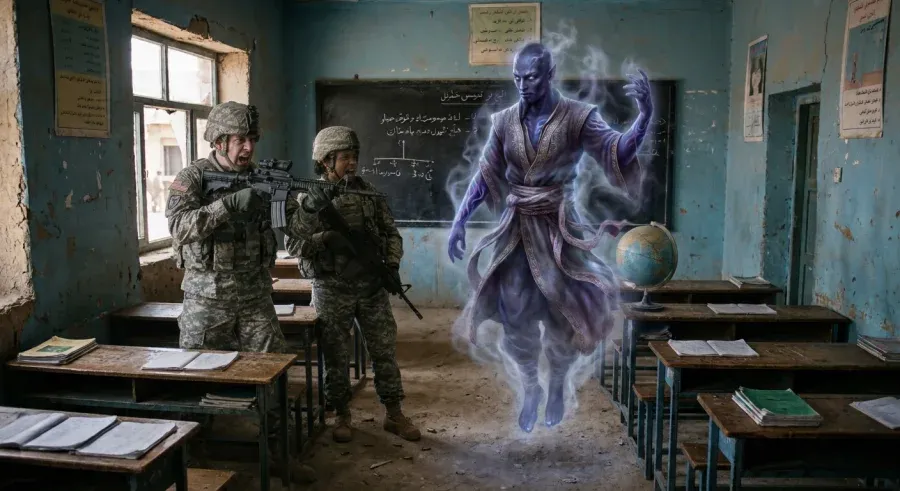
One night, the troops spot movement near the perimeter wall. They secure the area and clear the compound. It is in a classroom, they say, that everything tips over: a desk falls and moves across the floor. A window shatters. No obvious cause is found.

“It Is Not a Ghost”

The next day, the Marines question a local mullah. His answer is not the one Westerners expect. He speaks neither of the restless souls of dead teachers nor of revenants: he speaks of a djinn.

In Islamic tradition, djinn are beings from an invisible realm that theology calls al-ghaib, “the unseen.” They share our universe without being perceived, and can intervene in human lives for good or ill. An apparition is therefore not the soul of the dead here, but a presence of another nature.

According to the Marines, the activity did not stop with this explanation. Furniture kept moving. Apparitions were reported. Several service members said they had the same dream: being chased by a dark figure.

Everyone interprets the unexplained with the words their culture puts at their disposal.

Amir Agha, Land Both Sacred and Cursed

To understand the mullah’s reaction, one must know the place. The locality of Amir Agha, in Garmsir district (Helmand province), takes its name from a protective saint. A small shrine there is dedicated to Amir Hamza, presented by local tradition as an uncle of the Prophet and one of his most faithful commanders, as well as to one of his descendants, Amir Agha. His tomb is said to lie beneath the building.

For residents, this place protects. A mullah’s son from Garmsir told journalists that Soviet armored vehicles sent against the shrine got stuck in the mud, and that in 1982 a rocket fired at the roof allegedly vanished before reaching the tomb, then exited through a window. The rusting wrecks still lie across the region.

The shrine’s caretaker gives a darker reading of the American presence: according to him, soldiers came several times at night, forced villagers to stay indoors and took precious marble tablets inscribed with Quranic verses. A desecration, he says, that set a curse in motion. It should be stressed that this is his account, not an established fact.

OP Rock: The Hill of Bones

The same area produced the most famous military paranormal story of the war in Afghanistan: that of Observation Post Rock, known as “OP Rock,” a few hundred meters from Patrol Base Hassan Abad. It is a mound of roughly one hundred feet, riddled with collapsed tunnels and likely developed by the Taliban.

When Marines and British soldiers dug their positions there, they unearthed bones in large quantities. Residents explain that the hill has served as a burial ground for centuries and was also the scene of massacres during the Soviet-Afghan war of the 1980s.

The testimonies that followed have become a classic of the genre: lights resembling muzzle flashes without any gunfire, radio static, sudden temperature changes, serial nightmares, sleep paralysis, the feeling of being watched. One Marine reports hearing, in his ear, a whisper in Russian meaning roughly “drop your weapon.” Even the dog the soldiers had adopted, named “Ugly Betty,” barked at figures no one could see.

The affair was relayed by The New York Times (an article by Thomas Gibbons-Neff, published in late October 2020) and adapted in the American series Paranormal Witness (season 4, episode “Beneath the Rock”). One Marine saw the place as a “conduit” for paranormal activity.

One caveat is in order: the Amir Aghah school account and OP Rock are two distinct episodes, even though they occur in the same area. Lacking a date, a unit or an official report, we have been unable to corroborate the desk incident with an independent document. For now, it rests on the testimony of the service members.

Summary File — Reconstruction (Sourced Facts Only)

File: phenomena reported by Western service members, Amir Agha area (Garmsir, Helmand)
Document status: editorial summary, not an official document
Reported elements (Amir Aghah school): nighttime movement near the wall; overturned desk; broken window; moved furniture; apparitions; recurring dreams of a dark figure.
Local interpretation: a mullah suggests a djinn.
Documented elements (OP Rock): bones discovered during earthworks; lights, radio static, temperature variations, nightmares; coverage by The New York Times in 2020.
Unestablished elements: cause of the broken window and moved furniture; reality of the murders of teachers at the school; effect of any “curse” of the shrine.

Two Grammars of the Invisible

This is where these stories become inseparable from place. An American soldier arrives with his own cultural baggage: the ghost, the haunted house, the dead who return, fed by cinema and barracks legends. An Afghan community has another vocabulary: protective saints, sacred places, spirits, djinn. A troubling event is then read by both sides, each in its own language.

The encounter is sometimes explosive. In Amir Agha’s case, the same place is seen as a haunted graveyard by the Marines, as a protective shrine by the villagers and as outraged ground by its caretaker. As Atlas Obscura sums it up, one culture’s vengeful spirit is another’s guardian angel.

The Critical View: Stress, Priming, Suggestion

Skeptics have serious arguments. First, the conditions: isolation, fatigue, lack of sleep, constant tension, buildings gutted by years of fighting. A desk that tips over or a window that shatters in a weakened structure can have mundane causes (wind, settling, an animal, even a human presence), especially as the troops had just spotted movement near the wall.

Then there are the dreams of being chased by a shadow. They recall sleep paralysis, studied notably by folklorist David Hufford in The Terror That Comes in the Night (1982), which shows that the experience of a menacing presence in the bedroom appears in many cultures, with local dressing. Sleeping in groups and recounting one’s nights is enough to spread the same motif.

Finally, psychiatrist Anthony Feinstein (University of Toronto), a specialist in the psychological effects of conflict, explains regarding OP Rock that hallucinations are not in themselves a symptom of post-traumatic stress, but that traumatized people can dissociate and experience abnormal perceptions. Above all, he describes a mechanism of priming: a few soldiers have a strange experience and recount it, and those who follow arrive expecting something to happen. Cut off from the rest of the world, with no outside “reality check,” they reinforce the belief. He compares the phenomenon to the expectations surrounding places of miracles such as Lourdes. He stresses, however, that he cannot make any diagnosis without examining a patient.

This also applies to the mullah’s explanation. Once the word “djinn” is spoken, it becomes a frame for interpreting what follows: a moving piece of furniture, a dream, a shadow. The explanation may have shaped the experience as much as the reverse.

What Can, and Cannot, Be Asserted

What happened in that classroom? We do not know. The Marines are sincere, but sincerity is not proof. The mullah applies a respectable reading, consistent with his tradition, but it cannot be verified. And the psychology of combat, while it offers solid leads, does not explain every detail of an account for which we lack the full file.

One lesson remains: in wartime, men from two worlds shared the same place and each searched for words for a common unease. Perhaps they were all confronted with something none of them understood, and simply drew on the cultural vocabulary available to them. In this region of the “graveyard of empires,” the boundary between history, memory and the supernatural remains extremely thin.

Légende - Photo
Gemini, CC0,
Sources
TagsHaunted house

2026-09-27

"Jesus, I Trust in You": The Unexplained Remission of a Polish Teacher

"Jesus, I Trust in You": The Unexplained Remission of a Polish Teacher

Late March 2012. Adam Biały, a 48-year-old art teacher from Rozkopaczew, near Lublin in eastern Poland, notices a red spot on his chest. It itches, grows day by day, and changes color. Then similar spots appear on the top of his left foot.

Worried, he consults a friend who is a general practitioner. "Just from her expression, you could tell it was serious," he would later recall. A biologist friend, consulted in turn, is categorical: the lesion looks like melanoma. She mentions the case of an acquaintance with an identical lesion who died a few weeks after diagnosis.

A surgical oncologist, considered one of the best specialists in the region, recommends surgery as soon as possible, while trying not to frighten his patient further. But Adam understands, from the reaction of the medical staff, that his chances are not good. "I could tell I didn't have a very good chance of surviving," he would confide.

The shrine of Radecznica and the Secular Franciscan Order

A few months before his illness, Adam — already involved in the Catholic Charismatic Renewal — had joined the Secular Franciscan Order, whose community meets in an unusual place: the Bernardine shrine of St. Anthony of Padua in Radecznica, near Zamość, in southeastern Poland.

This shrine is no ordinary place of pilgrimage. According to local tradition, confirmed after a Church inquiry, St. Anthony is said to have appeared there on May 8, 1664, to a peasant named Szymon, asking for a temple to be built and making a promise: "The sick will find health here, the blind their sight, the lame their gait; in short, all who take refuge in this place will not leave without grace." Radecznica is thus said, according to shrine authorities, to be the only place in the world where an apparition of St. Anthony of Padua has been officially recognized as authentic by the Church. The site saw its greatest growth between 1815 and 1869, to the point of being nicknamed the "Częstochowa of Lublin" — an echo of Poland's great Marian shrine.

It was within this community that Adam, while awaiting surgery, entrusted his fear and pain to St. Anthony's intercession through a novena, all the while questioning the state of his own faith: "Do I still see the face of God in myself, or have I buried it in the name of modernity and an unrestrained life?"

The prophetic dream and the road accident

On April 27, 2012, Adam sets out to meet Maria Vadia, an American charismatic preacher and founder of the Magnificat community, to arrange a gathering in his parish. The trip is full of obstacles: he is involved in a car accident for which he is, he says, unjustly blamed. "I forgive," he says at the time, refusing to enter into conflict.

The night before meeting Maria Vadia, he has a strange dream: he sees himself reading, from the ambo of the Radecznica shrine, a passage of Scripture opened at random to a single word — "fly" — while the congregation sings the Magnificat. Everything around him turns golden and transparent, "as if filled with grace." When he wakes, he is certain he will be healed. In the days that follow, he says he also hears a mocking inner voice telling him he has only a few weeks left to live — a thought he counters with a single phrase, repeated like a mantra: "Jesus, I trust in you."

Maria Vadia's prayer and the fading of the lesions

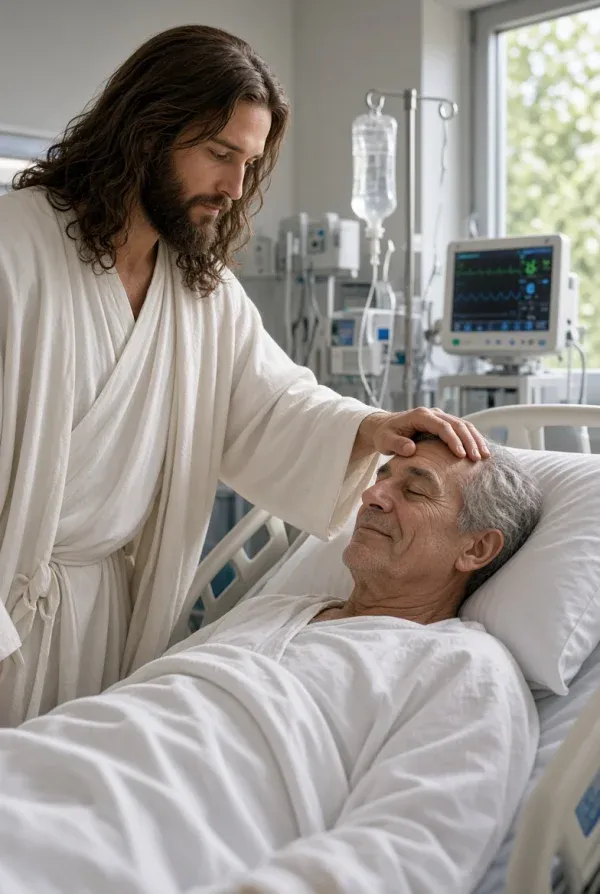
On April 29, 2012, during the long-awaited meeting, Maria Vadia places her hand on the lesion on Adam's chest and prays for a moment. He feels, he says, warmth and tingling, followed by deep relief.

The next morning, the spot on his chest has faded. The red border around it has disappeared, and the itching has stopped. On his foot, only a few of the largest spots remain.

The doctors' verdict

At the next check-up, his primary care physician cannot hide her joy. At the scheduled appointment with the oncologist, Adam asks: "Can melanoma disappear on its own?" — "Impossible," the specialist replies, before asking to see the affected area. "Unbutton further down, I can't see anything." — "But you're looking right at it," Adam replies, pointing to the faded mark. The doctor sits down, visibly shaken: "This spot doesn't even qualify for dermatological treatment anymore."

Adam nevertheless asks for the remaining tissue to be removed, to be certain. "I wanted to be 100% sure I was healed," he explains. The result of the analysis, according to his account: no cancer cells found anywhere in the body. The last spots on his foot fade away on August 15, the Feast of the Assumption of the Virgin Mary — a date Adam interprets as a personal invitation from Mary, having long resisted traditional Marian devotions.

Years later, an older doctor, while issuing him a medical certificate for work, is said to have summed up the situation in one sentence: "You had one of the most malignant forms of cancer there is, and you experienced a miracle. You escaped death by the skin of your teeth."

"I don't understand what's happening here, but Jesus, I trust in you."
— Adam Biały, while awaiting surgery, April 2012

Reconstructed document — medical follow-up notes (April–August 2012)

Reconstruction, based on published material, of the kind of notes a physician following this case might have kept:

03/29/2012 — Evolving pigmented lesion, anterior thoracic region. Irregular border, rapid color change. Clinical suspicion of malignant melanoma. Referred urgently to surgical oncology.

04/27/2012 — Patient reports stable general condition, marked anxiety. Pre-operative follow-up continues.

04/30/2012 — Patient reports spontaneous disappearance of the inflammatory appearance of the thoracic lesion (erythematous border, pruritus). Follow-up examination scheduled.

Follow-up consultation — Residual lesion no longer meets standard criteria for dermatological excision. Removal of remaining tissue proposed for histological verification, at the patient's request.

Pathology result — No neoplastic cells found in the sample.

08/15/2012 — Disappearance of the last residual lesions on the left foot.

A critical look: what does medicine say about spontaneous remission?

Melanoma is one of the most aggressive skin cancers, responsible for a large share of skin-cancer deaths. Yet the medical literature does document, rarely and under strict scrutiny, cases of spontaneous regression. A landmark review by Kalialis, Drzewiecki and Klyver, published in Melanoma Research, catalogs 76 reported cases of spontaneous regression of melanoma metastases since 1866, with an estimated incidence of roughly one case per 400 patients with metastatic disease. The proposed mechanisms remain hypothetical — an outsized immune reaction against tumor antigens, endocrine, inflammatory, or nutritional factors — but no scientific consensus yet explains why the immune system suddenly mobilizes against the tumor in some patients and not others.

Other research, focused specifically on primary, non-metastatic melanoma, points to markedly higher rates of partial or complete regression — as high as 10 to 35% in some studies — though the phenomenon remains exceptional in advanced or metastatic forms, precisely the kind described in Adam Biały's own account.

Methodologically, it is worth noting that the case rests almost entirely on the patient's own testimony, collected years after the events, without the original pathology reports, dermatoscopic images, or the identity of the treating hospital having been made public or submitted to an independent medical board — unlike, for instance, the procedure followed by the International Medical Committee of Lourdes for the investigation of claimed miraculous healings, which requires complete clinical files, extended follow-up, and the collegial opinion of physicians uninvolved in the case. In the absence of such an inquiry, Adam Biały's case remains, from a scientific standpoint, an independently unverifiable testimony rather than a strictly documented case of unexplained healing — which rules out neither the sincerity of the account nor the clinical possibility, statistically rare, of a spontaneous remission occurring at the very moment of prayer.

Légende - Photo
Grok, CC0,
Sources
TagsMiracle, Sect / Religion

2026-09-04

"Jesus is real": a dying man's last three words that circled the globe

"Jesus is real": a dying man's last three words that circled the globe

On July 6, 2024, a father in Cebu, Philippines, published a Facebook post that would go on to be shared worldwide, circulating for two years across TikTok, X (formerly Twitter) and countless evangelical pages before resurfacing periodically in social media feeds. Joel Sia recounted the final moments of his son Jonathan, a 23-year-old student at the University of San Carlos in Cebu, who died one week before he was due to graduate Magna Cum Laude in Business Administration.

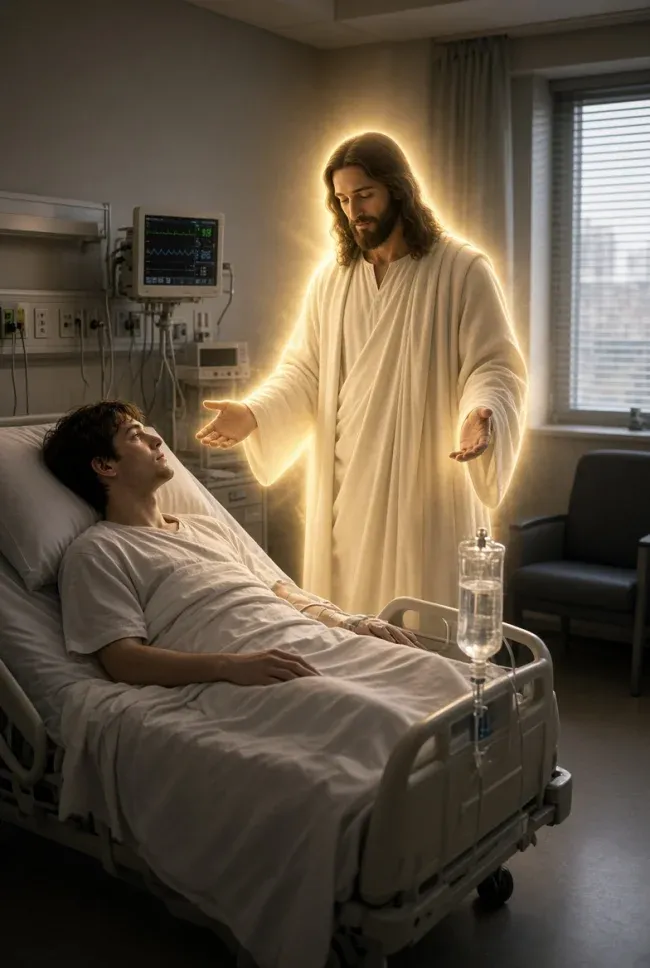
According to the father's account, since widely repeated, Jonathan had been hospitalized with a kidney disorder. Intubated as his condition worsened, he reportedly lost the ability to speak. In his final moments, he is said to have gestured toward his father as though he could see a presence in the room. Joel Sia says he handed him a pen and paper. Though extremely weak and trembling, the young man reportedly managed to write, in what his father described as perfectly legible handwriting, three words: "Jesus is real." Seconds later, he is said to have gone into cardiac arrest. His mother, at his bedside, says she saw a light and a hand lifting her son as he passed, a smile on his face.

A young man remembered for his faith

Jonathan Sia's relatives, quoted in the numerous social media retellings of the story, describe him as a young man of deep faith since childhood, nicknamed a "prayer warrior" by those close to him, who reportedly kept speaking about his faith to hospital staff even from his bed. A high-achieving student, he was about to graduate with honors when his health suddenly deteriorated.

It is this trajectory — the promise of a bright future, publicly professed religious devotion, and the suddenness of the kidney illness — that fueled the story's virality, elevating it through countless shares into a "testimony" and, for a significant portion of the English-speaking evangelical public and beyond, empirical proof of God's existence.

Reconstruction of the message shared by the family

What follows is a reconstruction, based on the consistent versions circulating publicly, of the testimony originally posted by Joel Sia on social media. It is not an official document but an illustrative synthesis of the reported statements.

"Before my son Jonathan was resuscitated, he signaled to me as though he was seeing someone, but I couldn't understand what he was trying to tell me. So I gave him a piece of paper and a pen so he could write it down. He was already very weak, shaking, barely able to hold the pen. Yet before the nurses called a Code Blue, he managed to write one final message: 'Jesus is Real.' It amazed me, because the words were so clearly legible. I believe he saw Jesus. My wife Aidy also witnessed a bright light and a hand lifting our son as he ascended. He was smiling."

"He could no longer speak because of the intubation. Yet in a matter of seconds, he traced three perfectly legible words." — Joel Sia, Jonathan's father

Terminal lucidity: a phenomenon documented by medicine

Jonathan Sia's case falls into a category of phenomena the medical literature calls "terminal lucidity," or paradoxical end-of-life lucidity. German psychiatrist Michael Nahm and Bruce Greyson, professor emeritus of psychiatry at the University of Virginia and a leading researcher on near-death experiences, have published several studies cataloguing cases of patients with advanced dementia, deep comas, or prolonged agonal states who unexpectedly regain mental clarity and the ability to communicate in the hours before death — a state seemingly at odds with their clinical condition.

This resurgence remains poorly understood physiologically. Proposed hypotheses include terminal neural discharges, sudden shifts in cerebral oxygenation, or a transient redistribution of cortical activity in the process of dying. None of these has achieved scientific consensus, and the rarity of the phenomenon — difficult to document in real time in an intensive care setting — severely limits the possibility of rigorous clinical study.

End-of-life visions as a research field in their own right

Alongside terminal lucidity, "end-of-life visions" or "deathbed visions" form a distinct field of research, notably explored by British neuropsychiatrist Peter Fenwick, whose studies examine perceptions reported by hospice patients. His work shows that dying patients frequently report perceiving presences, deceased relatives, or religious figures in the hours before death, regardless of their culture or prior beliefs.

Explanations proposed by the scientific community center mainly on neurological mechanisms: cerebral hypoxia, hypercapnia (carbon dioxide buildup in the blood), the release of neurotransmitters such as serotonin or dopamine during the dying process, and residual activity in the visual cortex in the absence of external stimulation. These mechanisms are documented in various clinical contexts, notably cardiac arrest, and have been studied extensively by American cardiologist Sam Parnia as part of the AWARE research program on consciousness after cardiac arrest.

What critical analysis of the account calls into question

Beyond the medical framework, several elements specific to this testimony's viral spread call for journalistic caution. First, no independently verifiable primary source — a medical record, a hospital statement, or a Filipino press article contemporaneous with the events — could be located beyond the social media posts and their successive reshares. The account rests entirely on the father's testimony, relayed second- or third-hand by faith-based accounts aimed at edification, a format that structurally favors the homogenization and embellishment of a story as it spreads.

Second, the versions of the testimony recorded over its spread show minor but notable variations: the exact nature of the kidney condition, the precise wording attributed to the father, and the description of the "hand" perceived by the mother all differ from one retelling to another — a classic sign of an oral or semi-oral account that sediments and dramatizes with each new transmission, a phenomenon folklorists know as narrative chain drift.

Finally, on a clinical level, the fine motor control required to write three legible words as an intubated patient in terminal multi-organ failure remains a rare but not impossible event: it precisely matches the clinical definition of terminal lucidity discussed above, without in itself constituting proof of the nature of the patient's subjective experience at that moment.

A phenomenon that extends beyond religious framing

It is worth noting that this type of testimony is not unique to evangelical Christianity. Researchers such as Icelandic psychologist Erlendur Haraldsson and American anthropologist Karlis Osis have documented similar end-of-life visions among Hindu, Buddhist, and non-religious patients, each perceiving figures consistent with their own cultural and symbolic framework — a point that proponents of a universal neurological explanation cite in their favor, while proponents of a transcendent explanation instead read it as evidence of a genuine experience simply translated into the language of each culture.

Conclusion: between neurology and transcendence

Jonathan Sia's case illustrates the persistent difficulty, given the current state of knowledge, of choosing between a strictly neurophysiological explanation of end-of-life phenomena and the transcendent interpretation defended by the families and faith communities involved. Neither mainstream medicine nor academic parapsychology currently offers a definitive explanatory framework for this type of episode — documented for centuries across every culture, yet whose rigorous scientific study remains, by its very nature, hampered by the unique, unpredictable, and non-reproducible character of each case.

Légende - Photo
Grok, CC0,
Sources
TagsSect / Religion

2026-06-13

An Alleged Exorcism at Brown University: The Strange Account Involving Bobby Jindal

An Alleged Exorcism at Brown University: The Strange Account Involving Bobby Jindal

Among the most unusual stories linked to American political figures, the one involving Bobby Jindal, former governor of Louisiana, continues to attract curiosity and controversy. According to an account published in the 1990s in the New Oxford Review, the politician allegedly took part in what was described as an exorcism during his time as a student at Brown University.

A Prayer Meeting That Took a Strange Turn

According to the reported testimony, Bobby Jindal attended a campus prayer meeting accompanied by a friend named Susan. She was going through an extremely difficult period: she had recently learned she was suffering from cancer and had also lost a close friend to suicide. Her emotional state was described as highly fragile.

During the prayer meeting, the situation allegedly took an unexpected turn. Susan suddenly collapsed to the ground, entering a violent episode that participants interpreted as a form of demonic possession. Her sister, who was present, reportedly claimed that she was under the influence of an evil entity.

An Improvised Exorcism on Campus

According to the account, around a dozen students present, including Bobby Jindal, placed their hands on the young woman while praying intensely. They reportedly called for “Satan to leave her.” The scene, described as chaotic and emotionally charged, lasted several minutes.

After the episode of convulsions, Susan allegedly regained consciousness. She stood up and appeared calm, with no immediate signs of distress. For those involved, the event was interpreted as a spiritual deliverance.

Between Paranormal Phenomenon and Medical Explanation

Such events raise numerous questions among skeptical and paranormal communities alike. Convulsive episodes can in fact be linked to various medical causes, including epileptic seizures, dissociative episodes, or extreme psychological stress reactions.

However, from a more spiritual perspective, some interpret such cases as possible manifestations of possession or negative spiritual influence. Exorcism practices, although controversial, still exist in several religious traditions around the world.

An Episode That Still Fuels Debate

Bobby Jindal’s alleged involvement in this episode continues to spark discussion, especially due to his later political career. The former governor has rarely commented in detail on this event, leaving room for multiple interpretations.

Between a spiritual narrative, an extreme psychological episode, and a paranormal interpretation, this story remains a fascinating example of the blurred line between the mystical and the rational.

Légende - Photo
Grok, CC0,
Sources
TagsExorcism, Sect / Religion

2025-11-13

Book - He Walked the Americas

Book - He Walked the Americas


Abstract

"He Walked the Americas" presents Native American legends about a mysterious white prophet who traveled throughout the Americas nearly two thousand years ago. According to the author's research, this figure arrived in Peru from the Pacific Ocean and journeyed through South America, visiting various indigenous peoples including those in Central America and the Mayan civilizations. He continued northward through Mexico and across North America before returning to ancient Tula and eventually departing across the Atlantic.

The book describes this prophet as a healer and teacher who possessed remarkable abilities—speaking numerous languages, curing the sick, and even raising the dead. His teachings reportedly paralleled those of Jesus Christ, leading the author to suggest a connection between this figure and Christian tradition.

L. Taylor Hansen, identifying as an archaeologist, compiled these accounts over twenty-five years of fieldwork, gathering oral traditions from numerous Native American tribes across both continents. The author claims to have corroborated these legends through consultation with museums, libraries, folklore experts, and archaeological evidence from ancient ruins.

The book's central thesis is that these indigenous legends provide evidence that Jesus Christ (or a Christ-like figure) visited the Americas, supplementing the New Testament narrative with Native American oral histories. Hansen presents this work as proof that the Savior's mission extended beyond one continent to encompass the entire world, positioning the book as a faith-affirming text that bridges Eastern Christian tradition with Western indigenous spirituality.


Author : L. Taylor Hansen
ISBN 10 : 0964499703
ISBN 13 : 9780964499706
Numbers of pages : 256
Publisher : Legend Press
Publication date : January 1, 1994

More books on Paranormal Book

2025-08-02

3,800-Year-Old Inscription Sparks Debate Over Possible Evidence of Moses

3,800-Year-Old Inscription Sparks Debate Over Possible Evidence of Moses

A recently revisited inscription carved into the rock face at Serabit el-Khadim in Egypt’s Sinai Peninsula is stirring controversy among biblical archaeologists. Believed to be around 3,800 years old, the text is written in Proto-Sinaitic script—the earliest known alphabet—and is located near a site known as Sinai 357 in the area called Mine L, an ancient turquoise mining zone.

Independent researcher Michael Bar-Ron has spent eight years analyzing high-resolution images and 3D scans of the inscription. He now claims that the text reads “zot miMoshe”, Hebrew for “This is from Moses.” If true, Bar-Ron argues, this would constitute direct archaeological evidence of the historical figure Moses, long debated by scholars and theologians alike.

The site dates back to the reign of Pharaoh Amenemhat III, a ruler of Egypt’s Middle Kingdom. Some scholars have proposed that Amenemhat III could have been the Pharaoh referenced in the biblical Book of Exodus—the one who pursued the Hebrews during their escape from Egypt. Supporting this theory are other inscriptions found at the same location, which include references to slavery, overseers, violent purges, and workers fleeing, echoing elements of the Exodus narrative.

Still, Bar-Ron’s interpretation is far from universally accepted. Dr. Thomas Schneider, an Egyptologist and professor at the University of British Columbia, cautions against drawing conclusions from such limited and uncertain data. He criticizes what he calls “arbitrary” letter identifications, warning that such speculative readings risk distorting the historical record. “Proto-Sinaitic characters are notoriously difficult to decipher,” Schneider said, adding that without consensus and peer-reviewed confirmation, such claims remain unproven and misleading.

The debate touches on a broader issue in biblical archaeology: the tension between faith-based interpretations and evidence-based scholarship. While some view the inscription as a tantalizing clue worthy of further investigation, others urge restraint and scientific rigor.

For now, the rock face at Serabit el-Khadim offers more questions than answers—and perhaps, still holds secrets waiting to be uncovered.

Légende - Photo
Grok, CC0, https://x.com
Sources
TagsSect / Religion

2025-05-21

Sacred Mystery or Natural Phenomenon? Body of Saint Teresa of Ávila Displayed Again in Spain

Sacred Mystery or Natural Phenomenon? Body of Saint Teresa of Ávila Displayed Again in Spain

In a moment that blends religious devotion with scientific curiosity, the body of Saint Teresa of Ávila, the 16th-century Carmelite mystic, has once again been put on public display at the Basilica of the Annunciation of Our Lady of Mount Carmel. Teresa, who died in 1582, is at the center of a deeply rooted Catholic belief: incorruptibility — the idea that the bodies of certain saints do not decompose, seen by many as a divine sign of holiness.

But this latest unveiling comes with a twist. For the first time in over a century, researchers have been granted permission to study her mummified remains in an attempt to determine why her body has resisted decay. The initiative has sparked heated debate — where faith meets science, skepticism, and mystery.

An "intact" body — but not quite

Photos from the last exhumation in 1914 have been compared to current images, but the differences in photographic quality — the old images are in black and white — make direct comparisons difficult. “It’s hard to evaluate the actual state of preservation from outdated visuals alone,” admitted one researcher involved in the project.

Adding to the controversy, the body of Saint Teresa is incomplete. Over the centuries, several parts — including her heart, an arm, a hand, and a tooth — were removed and distributed as holy relics, a common practice in earlier Catholic tradition. Today, however, this makes a full scientific assessment more complicated.

Holiness under scientific scrutiny

Initial observations suggest the body underwent natural mummification — a rare but documented phenomenon often linked to environmental conditions such as humidity, soil composition, and temperature. For the faithful, however, there is no question: the preservation of Teresa’s body is a divine miracle. “It’s God’s will,” says María del Pilar, a pilgrim who traveled from Seville. “She remained whole because she was pure in life.”

Scientists are less certain. Chemical and biological analyses are currently underway to better understand the cause of the unusual preservation. Meanwhile, skeptics argue that the narrative of incorruptibility lacks evidence. “Until we have concrete scientific results, claims of miraculous preservation remain speculative,” says one Spanish anthropologist specializing in historical mummification.

A trial by fire for the new pope

The case also comes at a symbolic moment for the Catholic Church, just as newly elected Pope Leo XIV begins his pontificate. The handling of this sensitive topic — balancing age-old beliefs with modern scientific inquiry — may well be his first significant challenge. Should he defend the traditional narrative of incorruptibility, or champion a more rational, investigative approach? His response could set the tone for a papacy navigating between faith and the demands of the contemporary world.

Légende - Photo
Tiberioclaudio99, Public domain, https://commons.wikimedia.org/w/index.php?curid=607324
Sources
TagsSect / Religion

2025-05-15

Philippines – The Man Who Came Back from the Dead: The Astonishing Resurrection of Stanley Villavicencio

Philippines – The Man Who Came Back from the Dead: The Astonishing Resurrection of Stanley Villavicencio

It’s a story that defies science, challenges faith, and leaves witnesses torn between awe and disbelief. On March 2, 1993, Stanley Villavicencio, a seemingly healthy Filipino father, was rushed to Chong Hua Hospital in Cebu City. After a sudden collapse, his condition deteriorated rapidly. Despite the best efforts of medical professionals, Stanley slipped into a coma—and was soon declared clinically dead.

Medically Confirmed Death

Doctors at the respected hospital left no room for doubt. Heart monitors flatlined. No vital signs registered. His skin turned pale and gray. His pupils were fixed and dilated. Stanley’s heart had stopped beating. He was pronounced dead. His family, devastated, began making funeral arrangements. Prayers were whispered in the hallways, and mourners prepared for the wake.

But then, something extraordinary happened.

An Unbelievable Awakening

Three days later, on the morning of March 5, 1993, a strange rumor began circulating among hospital staff. Some nurses claimed they saw movement in the room of the deceased man. Others reported seeing a figure sitting up in bed. At first, it was dismissed as grief-induced hallucination—until Stanley Villavicencio, dressed in his hospital gown, calmly walked down the corridor, very much alive.

“I remember everything,” he later recounted. “I was in a peaceful place filled with light. Then I heard a voice telling me to go back—that it wasn’t my time yet.”

A Medical Mystery

Doctors were stunned. Post-revival examinations showed that Stanley was in surprisingly good health. No organ damage. No signs of brain trauma. No logical explanation. Coming back to life after 72 hours of clinical death simply isn’t medically possible—yet Stanley stood as living proof of the impossible.

Dr. Ramon Galvez, the hospital’s chief cardiologist at the time, admitted his confusion: “Scientifically, this can’t happen. Medically, this man was dead. But here he is, fully alive and alert. We have no explanation.”

Faith, Miracles, and Controversy

The case quickly took on a spiritual dimension. Many began referring to the event as a miracle. Local Catholic communities rallied around the story, believing it to be a divine sign. Pilgrims flocked to Cebu, eager to meet the "man who returned from the beyond."

Skeptics, of course, suggested medical error or an unknown anomaly—but no evidence ever supported such claims. In time, even the doubters found it hard to explain away what had occurred.

A Changed Man

From that day forward, Stanley Villavicencio dedicated his life to sharing his story. He traveled the world giving talks, especially in religious venues, and published writings about his "encounter with the afterlife." According to his family and friends, the experience deeply transformed him. He became more peaceful, detached from materialism, and profoundly rooted in his faith.

Conclusion: Between Mystery and Miracle

Stanley Villavicencio’s story remains one of the most puzzling and extraordinary cases of the 20th century. Neither science nor theology can fully explain what happened. But one truth stands: on that morning in March 1993, a man believed to be truly dead stood up and walked. And with him, the age-old question reawakened—where does science end, and where does the miraculous begin?

Légende - Photo
Thewideawake1, CC BY-SA 4.0, https://commons.wikimedia.org/w/index.php?curid=128831496
Sources
TagsNDE, Miracle, Sect / Religion

2025-03-16

The Healing Miracles at Saint-Nicolas-des-Champs Church

The Healing Miracles at Saint-Nicolas-des-Champs Church

For nearly thirty years, Saint-Nicolas-des-Champs Church, located in the third arrondissement of Paris, has been the site of extraordinary events that attract large crowds every week. Every Thursday evening, hundreds of believers and curious visitors gather for a time of prayer dedicated to the sick and those who suffer.

A Simple and Fervent Prayer

At the heart of these gatherings, a fervent and accessible prayer is recited with faith. Hymns, biblical readings, and moments of silence punctuate this time of devotion. Participants come with the hope of spiritual comfort, but also of possible physical or psychological healing. Many report profound and unexplained transformations, whether it be the disappearance of chronic pain, improvement in supposedly incurable illnesses, or the rediscovery of inner peace after years of suffering.

Documented Healings and Growing Enthusiasm

Week after week, testimonies continue to pour in. Some claim to have seen tumors disappear, paralysis subside, or deep depression dissipate. Faced with these accounts, doctors and scientists question the nature of these healings: psychosomatic phenomenon, autosuggestion, or genuine divine intervention? Regardless, the number of people touched by these experiences continues to grow.

A Worldwide Reach Since the Pandemic

With the Covid-19 pandemic, these prayer meetings have taken on a new dimension. The live broadcast on YouTube has allowed tens of thousands of internet users worldwide to join this community seeking healing and spirituality. Testimonials of healing and consolation are no longer confined within the church walls but now extend far beyond, reaching individuals across the globe.

An In-Depth Investigation into a Mysterious Phenomenon

Intrigued by these exceptional occurrences, writer and journalist François-Xavier du Besset conducted a meticulous investigation for more than ten years to understand and recount the history of this place. His work highlights not only the moving testimonies collected over the years but also the role of faith and prayer in these healing experiences.

An Invitation to Reflection and Spirituality

Whether one is a believer or a skeptic, the phenomenon of healings at Saint-Nicolas-des-Champs Church arouses curiosity and questioning. It serves as a reminder of the power of community, the strength of prayer, and the mystery that sometimes surrounds human experience. For some, it is tangible proof of a divine presence at work in our modern world. For others, it remains an unexplained phenomenon.

In any case, these prayer gatherings continue their mission of welcome and hope, offering a space where everyone can seek comfort and healing, whether physical, psychological, or spiritual.

Légende - Photo
Velvet, CC BY-SA 4.0, https://commons.wikimedia.org/w/index.php?curid=34169831
Sources
TagsMiracle, Sect / Religion

2025-02-09

Book - They Flew

Book - They Flew


Abstract

In They Flew: A History of the Impossible, Carlos M. N. Eire delves into the fascinating and often perplexing accounts of seemingly impossible phenomena that proliferated during the early modern era. This period, marked by profound religious, intellectual, and scientific upheaval, witnessed a proliferation of stories about levitating saints, bilocating mystics, flying witches, and demonic possessions. These narratives existed alongside the rise of skepticism, atheism, and empirical science, which sought to challenge and often dismiss such occurrences as mere superstition. Eire’s work explores how a culture increasingly devoted to rational and scientific thought grappled with events that defied its understanding of the possible.

Eire argues that these accounts of the impossible were not mere fringe beliefs but were integral to the fabric of early modern life. Levitating saints and flying witches were as much a part of the historical landscape as the religious conflicts and scientific breakthroughs of the time. By examining firsthand accounts and focusing on particularly extraordinary cases—such as those involving St. Teresa of Avila, St. Joseph of Cupertino, the Venerable María de Ágreda, and three disgraced nuns—Eire challenges conventional assumptions about the boundaries between the natural and supernatural. He demonstrates how these boundaries were redrawn during the transition to modernity, revealing the complex interplay between belief, skepticism, and the evolving understanding of reality.

Central to Eire’s exploration are questions about why certain phenomena were deemed impossible and how cultural contexts shape these determinations. He invites readers to consider whether reality might encompass more than what is visible or measurable by science. Through his case studies, Eire not only reconstructs a world where the supernatural was deeply intertwined with the natural but also prompts reflection on the enduring relevance of these questions in contemporary society.

They Flewis a thought-provoking examination of the tension between faith and reason, the seen and the unseen, and the ways in which human understanding of the impossible has evolved over time. Eire’s work challenges readers to reconsider the limits of reality and the role of the supernatural in shaping historical and modern worldviews.


Author : Carlos Eire
ISBN 10 : 0300280076
ISBN 13 : 9780300280074
Numbers of pages : 512
Publisher : Yale University Press
Publication date : January 7, 2025

More books on Paranormal Book

2024-12-17

The mysteries surrounding Claudia Procula, Pontius Pilate's wife

The mysteries surrounding Claudia Procula, Pontius Pilate's wife

Claudia Procula, also known simply as Claudia or Procula, is a fascinating figure in biblical and apocryphal history. Though she is mentioned only once in the canonical Gospels, her influence and the reflections on her life have intrigued historians, theologians, and writers for centuries. This article explores the mysteries surrounding this enigmatic character.

An Appearance in the Gospels

Claudia Procula is mentioned in the Gospel of Matthew (27:19). During Jesus’ trial before Pontius Pilate, her husband, she sends him a message advising him not to get involved in the matter, as she has suffered because of a dream related to Jesus: “Have nothing to do with that just man, for I have suffered many things today in a dream because of him.”

This brief passage raises many questions:

  • What was the nature of her dream?

  • Why did she regard Jesus as a “just man”?

  • What influence did her message have on Pilate?

Although the Gospels provide no further details, this single act has led to varied interpretations over the centuries.

Claudia Procula's Origins

The origins of Claudia Procula are shrouded in mystery. According to some historical and apocryphal sources, she may have been from a noble Roman family. Her name “Claudia” suggests a possible connection to the gens Claudia, an influential patrician family in Rome. However, there is no direct evidence to confirm this.

Some accounts propose that she might have been a convert to Judaism or, at the very least, sympathetic to Jewish beliefs. This theory stems from her apparent respect for Jesus and the spiritual nature of her dream. Nevertheless, without solid historical evidence, this remains speculative.

A Canonized Figure in Some Traditions

In Eastern Christian tradition, Claudia Procula is venerated as a saint. The Greek Orthodox Church and the Ethiopian Orthodox Church commemorate her on October 27. According to these traditions, she converted to Christianity after Jesus’ resurrection and dedicated her life to the faith.

This perspective contrasts with the Western view, where she remains a secondary figure in biblical history. Western medieval texts rarely emphasize her sanctity, instead focusing on her prophetic dream.

The Prophetic Dream: A Divine Revelation?

Claudia Procula’s dream is central to the mysteries surrounding her. Was it a divine revelation? Some Christian exegetes interpret it as a warning from God to affirm Jesus’ innocence. Others see it as merely reflecting her personal anxieties or an intuitive sense of the injustice of the trial.

In apocryphal traditions and mystical texts, it is suggested that Claudia was sensitive to spiritual revelations. This might explain why she took the bold step of intervening with Pilate, an unusual act given the political and social context of the time.

Claudia Procula and Pontius Pilate: A Complex Relationship

The marriage between Claudia Procula and Pontius Pilate remains a topic of interpretation. Pilate is often described as a pragmatic and political Roman governor, while Claudia is portrayed as a more spiritual and intuitive figure. Their interaction during Jesus’ trial reveals a unique dynamic, where Claudia attempts to influence her husband in a critical matter.

It is also noteworthy that, despite her warning, Pilate chooses to symbolically wash his hands of the affair, signifying his refusal to take direct responsibility. Some interpret this as an indirect result of Claudia’s intervention.

A Mythologized Character

Over the centuries, Claudia Procula has inspired numerous literary, artistic, and theatrical works. Writers often depict her as a noble, courageous, and visionary figure. In some modern interpretations, she is seen as a woman ahead of her time, capable of discerning the truth beyond societal and religious prejudices.

However, it is essential to distinguish historical facts from artistic and spiritual embellishments. The lack of reliable historical sources makes it difficult to fully understand her life.

Légende - Photo
User-duck, Public domain, https://en.wikipedia.org/wiki/Pontius_Pilate%27s_wife#/media/File:Brooklyn_Museum_-_The_Message_of_Pilate's_Wife._Pilate_-_James_Tissot.jpg
Sources
TagsSect / Religion

2024-11-26

How Did the 12 Apostles Die?

How Did the 12 Apostles Die?

The 12 apostles of Jesus Christ played a vital role in spreading Christianity after Jesus' death and resurrection. Their deaths are surrounded by historical accounts, Christian traditions, and some speculation, as historical sources are not always clear. Here is a detailed overview of what is known about their deaths based on Scripture, Church history, and ancient traditions.

1. Peter (Simon Peter)

Peter, often considered the leader of the apostles, was martyred in Rome under Emperor Nero's reign around AD 64 or 67. Tradition says he was crucified, but out of humility, he requested to be crucified upside down, feeling unworthy to die in the same manner as Jesus.


2. Andrew

Andrew, Peter's brother, was crucified in Patras, Greece, on an X-shaped cross, later known as the "St. Andrew's Cross." Tradition states he preached to onlookers for two days before dying.


3. James the Greater

James, the son of Zebedee, was the first apostle to be martyred. According to the Acts of the Apostles (Acts 12:1-2), he was beheaded by the order of King Herod Agrippa I around AD 44. His martyrdom is one of the few documented in the New Testament.


4. John

John, the brother of James the Greater and author of the Gospel of John, is the only apostle believed to have died of natural causes. He lived to an old age in Ephesus, Asia Minor. Before his death, he was exiled to the island of Patmos, where he wrote the Book of Revelation.


5. Philip

Philip is said to have preached in Asia Minor and Phrygia. Tradition holds that he was crucified in Hierapolis, though some accounts claim he was stoned or hanged.


6. Bartholomew (Nathanael)

Bartholomew is associated with missionary work in India and Armenia. According to tradition, he was flayed alive and then beheaded, particularly in Armenia, where he converted many people to Christianity.


7. Thomas (Didymus)

Thomas, known for initially doubting Jesus' resurrection, is believed to have traveled to India to spread the Gospel. There, he was reportedly speared to death, possibly by soldiers near Chennai (formerly Madras).


8. Matthew (Levi)

Matthew, the tax collector turned apostle, is said to have preached in Ethiopia or Persia. According to some traditions, he was killed by the sword, though accounts of his death vary.


9. James the Lesser

James, the son of Alphaeus, also known as James the Lesser, is believed to have been the first bishop of Jerusalem. According to the historian Flavius Josephus and other accounts, he was thrown from the pinnacle of the Temple in Jerusalem, then stoned and beaten to death with a club.


10. Jude (Thaddeus)

Jude is said to have preached in Persia (modern-day Iran), where he was martyred alongside Simon the Zealot. According to some traditions, they were killed with clubs or crucified.


11. Simon the Zealot

Simon the Zealot's death is subject to varying accounts. Some traditions say he was martyred in Persia alongside Jude, while others suggest he preached in Africa before being crucified.


12. Matthias

Matthias was chosen to replace Judas Iscariot after his betrayal and death (Acts 1:26). According to some traditions, he was stoned and then beheaded in Jerusalem, while other accounts claim he preached in Ethiopia and died as a martyr there.


Conclusion

The deaths of the apostles symbolize their unwavering commitment to their faith and their mission to spread the Gospel. Though the details vary by source, their sacrifices marked the history of Christianity, inspiring the missionary efforts that allowed the faith to spread worldwide. The apostles remain enduring symbols of courage and devotion for believers.

Légende - Photo
Magnificus, Public domain, https://fr.wikipedia.org/wiki/Douze_Ap%C3%B4tres#/media/Fichier:Alberto_Piazza_Apostoles_entorno_al_Sepulcro_Staatliche_Museen_Berl%C3%ADn.jpg
Sources

2024-11-06

Satan - The Devil in Different Religions

Satan - The Devil in Different Religions

El diablo es una figura compleja y fascinante presente en numerosas religiones y mitologías alrededor del mundo. Aunque sus interpretaciones y simbolismo varían ampliamente, el diablo suele ser visto como una encarnación del mal, una figura de oposición a la divinidad o un espíritu rebelde. En este artículo, exploraremos las diversas representaciones del diablo en las principales religiones, incluyendo el cristianismo, el islam, el judaísmo, el hinduismo y otras tradiciones espirituales.

El Diablo en el Cristianismo

En el cristianismo, el diablo se asocia comúnmente con Satanás, un ángel caído que se rebeló contra Dios. La Biblia describe al diablo como un tentador y un engañador, cuyo objetivo es alejar a la humanidad de la voluntad divina. En el Antiguo Testamento, el término "Satanás" significa "adversario" o "acusador". Satanás aparece en el libro de Job como un ser que pone a prueba la fe de Job en Dios.

En el Nuevo Testamento, Satanás se presenta como un ser malévolo, especialmente en los Evangelios, donde intenta a Jesús en el desierto. En las Epístolas y en el Apocalipsis, se le representa como el enemigo supremo de Dios y de los creyentes, destinado a ser derrotado al final de los tiempos. El cristianismo ve en Satanás la personificación del mal y el príncipe de un mundo caído. En el arte, se le representa frecuentemente con cuernos y características monstruosas.

El simbolismo de Satanás en el Cristianismo

En el cristianismo, el diablo simboliza el pecado, el orgullo y la rebelión contra Dios. Encarna todo lo que se opone a la pureza divina y la bondad, y juega un papel central en la doctrina de la salvación, donde la fe en Jesucristo libera a los creyentes de su influencia.

El Diablo en el Islam

En el islam, el diablo es conocido como Iblís o Shaytán. Iblís es descrito como un yinn (un ser espiritual de fuego) que se negó a inclinarse ante Adán por orgullo cuando Dios se lo ordenó. Esta desobediencia le valió ser expulsado del paraíso. Desde entonces, Iblís se convirtió en enemigo jurado de la humanidad, esforzándose en alejar a las personas del camino recto al inspirarles pensamientos y acciones pecaminosas.

El Corán describe a Iblís como un ser astuto que intenta continuamente a los humanos y ha jurado desviarlos hasta el Día del Juicio. Sin embargo, en el islam, Iblís no se ve como un rival de Dios en términos de poder; es solo una criatura sometida a la voluntad divina, y su existencia forma parte del plan de Dios para poner a prueba la fe humana.

El papel de Shaytán en la vida cotidiana

En la cultura islámica, se menciona a Shaytán como aquel que incita a cometer pecados. Se utilizan oraciones para rechazar su influencia, y los creyentes son alentados a acercarse a Dios para protegerse de él. El Ramadán, mes sagrado para los musulmanes, se considera una época en la que los yinn y los diablos están encadenados, permitiendo a los creyentes concentrarse en su fe sin influencias negativas.

El Diablo en el Judaísmo

En el judaísmo, el concepto del diablo es más ambiguo y menos desarrollado que en el cristianismo y el islam. "Satanás" se menciona en el Antiguo Testamento, pero actúa más como un ángel que cumple el papel de adversario o acusador dentro del plan de Dios, en lugar de ser un enemigo de Dios. Por ejemplo, en el libro de Job, Satanás pone a prueba la fe de Job con el permiso de Dios.

Las tradiciones judías suelen ver a Satanás como una metáfora de la inclinación al mal (yetzer hara) presente en cada persona, más que como una entidad autónoma. En la Cábala, la mística judía, existen entidades espirituales que representan fuerzas negativas, pero no se personifican en una figura única o centralizada.

El simbolismo del mal en el Judaísmo

El judaísmo hace hincapié en la responsabilidad individual y el libre albedrío, considerando que el mal es a menudo resultado de las decisiones humanas más que obra de un demonio. Satanás, en este contexto, sirve principalmente para poner a prueba la fidelidad de los creyentes.

El Diablo en el Hinduismo

En el hinduismo, no existe una figura central del diablo como encarnación del mal, pero en su cosmología existen demonios y espíritus malignos. Los asuras, por ejemplo, son seres espirituales poderosos que suelen estar en conflicto con los devas (dioses o divinidades benevolentes). Los asuras simbolizan generalmente las fuerzas del caos, el desorden y la oscuridad, y su lucha contra los devas representa la batalla eterna entre el bien y el mal.

Entre las figuras más conocidas está Rávana, el rey demonio en el Ramayana, quien se opone al héroe Rama, una encarnación de Vishnú. Sin embargo, en el hinduismo, los asuras no son completamente "malvados"; poseen cualidades complejas, y su lucha con los dioses es a veces interpretada como una metáfora de los conflictos internos humanos.

La visión del bien y del mal en el Hinduismo

En el hinduismo, el bien y el mal son aspectos del equilibrio cósmico y del dharma (deber, ley y orden). Los actos malignos suelen surgir de la ignorancia, el egoísmo y la ilusión, y las fuerzas demoníacas representan estas tendencias en lugar de un antagonista absoluto.

El Diablo en otras Religiones y Tradiciones Espirituales

En el Budismo

En el budismo, no existe una figura del diablo eterno o puramente malvada. Sin embargo, hay una entidad demoníaca llamada Mara, que encarna las tentaciones y las ilusiones que impiden a los seres alcanzar la iluminación. Mara intenta, en particular, a Siddhartha Gautama (el Buda) durante su meditación bajo el árbol Bodhi, tratando de desviar su camino espiritual. Mara representa los deseos, el miedo y el apego al mundo material, que son obstáculos para la iluminación.

En las Religiones Africanas

En las religiones tradicionales africanas, el concepto de un diablo o mal puro es menos común. Sin embargo, ciertos espíritus o fuerzas pueden causar daño, generalmente debido a desequilibrios o violaciones de leyes espirituales. Los rituales a menudo tienen como objetivo restaurar la armonía entre los seres humanos y estas fuerzas espirituales para mantener el equilibrio de la comunidad.

En el Zoroastrismo

El zoroastrismo, una de las primeras religiones monoteístas, presenta una figura maligna conocida como Angra Mainyu (o Ahrimán), el espíritu destructor que se opone a Ahura Mazda, el dios creador y benevolente. Angra Mainyu encarna las fuerzas del caos, la destrucción y el engaño. La lucha entre el bien y el mal es un tema central en esta religión, donde cada individuo es responsable de hacer triunfar la luz y el bien a través de sus elecciones.

El Diablo en la Cultura Moderna

La figura del diablo también ha evolucionado en la cultura popular moderna, donde a menudo se presenta como un personaje complejo e incluso seductor en obras literarias, cinematográficas y musicales. Esta tendencia refleja un enfoque menos dicotómico del bien y el mal, en el que el diablo puede simbolizar la rebelión, la tentación y la búsqueda de libertad.

Conclusión

El diablo, o sus equivalentes, ocupa un lugar esencial en numerosas religiones y filosofías en todo el mundo, representando el mal, la tentación o la oposición a los ideales divinos. Sin embargo, la percepción de esta figura varía considerablemente: desde un ser rebelde y malévolo en las religiones abrahámicas hasta una fuerza de equilibrio o desafío espiritual en tradiciones como el budismo y el hinduismo. Estas diferencias destacan la riqueza y diversidad de interpretaciones humanas sobre el bien, el mal y la búsqueda espiritual en el universo.

Légende - Photo
StarryAI, CC0, https://starryai.com/
Sources

2024-10-29

Colorado City: The Polygamous Town in the American Southwest

Colorado City: The Polygamous Town in the American Southwest

Colorado City is a small town located on the border between Arizona and Utah, known for its connection to polygamy and religious fundamentalism. The town has drawn public attention due to its unique history and its association with the Fundamentalist Church of Jesus Christ of Latter-Day Saints (FLDS), a dissident offshoot of the mainstream Church of Jesus Christ of Latter-Day Saints (LDS, commonly known as the "Mormon Church"). This article explores the history, social dynamics, current situation, and controversies surrounding Colorado City.

1. The History of Colorado City and Polygamy

The history of Colorado City is intricately tied to the issue of polygamy in the United States. In the 1930s, some fundamentalist Mormons decided to continue the practice of polygamy despite its official prohibition by the LDS Church in 1890. Rejecting the decision of their church and feeling persecuted, these groups began to gather in remote areas where they could practice their beliefs and customs away from the authorities.

Colorado City, previously known as Short Creek, became a haven for the FLDS, who viewed polygamy as a divine commandment. Since the 1940s, this small town has been the center of the FLDS community, which grew in isolation until it began to attract media and legal attention over time.


2. The FLDS and Its Influence on Colorado City

The FLDS exerted immense control over Colorado City until recently. Led by charismatic and authoritarian leaders, the community imposed strict rules on its members, regulating everything from dress codes to personal life choices, including polygamous marriages. Leaders like Warren Jeffs became controversial figures. Jeffs wielded enormous power over the community until his arrest in 2006 on charges of sexual assault against minors. His arrest and subsequent life sentence in 2011 marked a turning point for both the FLDS and Colorado City.

Jeffs controlled every aspect of life in the town, including who could marry whom and how community members should behave. Under his influence, the FLDS enforced strict modest dress codes, banned television, radio, and much of mainstream culture, isolating its members from the outside world.


3. Daily Life and Social Structure

In Colorado City, daily life was deeply influenced by the FLDS’s religious principles. The town was organized to foster community solidarity, with most property held in a trust managed by religious leaders. This trust, known as the "United Effort Plan" (UEP), is a collective ownership structure that allowed the church to control where and how members could live.

Polygamous families are the norm, with men married to multiple women and having numerous children. This creates a complex family structure where parental and domestic responsibilities are shared among multiple adults. Women and children in this community grow up in strict adherence to FLDS norms, often educated in private schools run by the sect and with limited contact with the outside world.


4. Controversies and Legal Conflicts

Polygamy remains illegal in most U.S. states, including Arizona and Utah, and Colorado City’s lifestyle has frequently attracted attention from law enforcement. Several police raids have taken place over the decades, notably in 1953, when authorities attempted to dismantle the community by arresting many members and placing children in foster homes. This operation ultimately failed, sparking public outrage and resulting in families returning to the town.

The situation took a different turn with the indictment of Warren Jeffs, which exposed abuses within the FLDS, including forced marriages and sexual abuse. This led to increased federal and local scrutiny of the FLDS’s activities. Since then, Colorado City and the FLDS have seen their influence wane, with many members leaving the community or questioning their allegiance to the church.


5. The Current Situation in Colorado City

Since Jeffs’s conviction, the FLDS community in Colorado City has changed. Many members have left the FLDS, and local authorities have taken steps to regain control of the town. In 2017, courts ordered the dismantling of the United Effort Plan trust, which held most of the town’s real estate, to redistribute it among former FLDS members. Today, the town is striving to diversify and reintegrate into broader American society.

However, the transition has been challenging, as some residents remain loyal to FLDS teachings. Additionally, tensions persist between former and current FLDS members over access to resources and property. Though FLDS control over Colorado City has lessened, its influence remains, and the town is still marked by its history of polygamy and isolation.


6. Colorado City Facing the Future

Today, Colorado City is undergoing transformation. The town is working to rebuild and change its image, though traces of the FLDS are still visible. Many residents are attempting to adapt to modern life by entering the workforce, sending their children to public schools, and reconnecting with the outside world. New investments and an influx of outside residents are gradually helping the town evolve.

Yet the scars of polygamy and past abuses remain, and it will likely take time for the town to fully move on. Colorado City has also become a site of curiosity for researchers and visitors eager to understand how such an isolated community thrived for so long in modern America.

Légende - Photo
Ricardo630, CC BY 2.5, https://fr.wikipedia.org/wiki/Colorado_City_(Arizona)#/media/Fichier:Colorado_City,_AZ.jpg
Sources

2024-10-22

Book - The Cokeville Miracle

Book - The Cokeville Miracle


Abstract

The Cokeville Miracle, written by Hartt Wixom, explores the incredible true story of a bombing that took place at Cokeville Elementary School in Wyoming on May 16, 1986. The bomb, which could have caused massive devastation, miraculously resulted in the loss of only two lives—the perpetrators. The book delves into the sequence of miracles that occurred, protecting the 154 children and teachers present at the time, highlighting the power of faith and prayer.

Wixom provides a detailed account of the events, the survivors' testimonies, and explores the spiritual aspect of the incident, suggesting divine intervention. This revised edition builds on his earlier work, When Angels Intervene To Save The Children, and offers additional insights and updates. Readers are inspired by the message of hope and divine protection in the face of unimaginable danger.


Author : Hartt Wixom
ISBN 10 : 1462117619
ISBN 13 : 9781462117611
Numbers of pages : 160
Publisher : Cedar Fort Publishing & Media
Publication date : June 2, 2015

More books on Paranormal Book

2024-10-19

The Codex Gigas: The Mysterious "Devil's Bible"

The Codex Gigas: The Mysterious "Devil's Bible"

The Codex Gigas, also known as the "Devil's Bible," is one of the most fascinating and mysterious manuscripts of the medieval era. This colossal book, measuring about 92 cm (36 inches) in height, 50 cm (20 inches) in width, and weighing 75 kg (165 pounds), has captivated historians and enthusiasts for centuries. But why has this manuscript, written in the early 13th century, earned such a sinister nickname? In this article, we’ll explore the history, structure, and legends surrounding the Codex Gigas.

Origin and History of the Codex Gigas

The Codex Gigas was created in a Benedictine monastery in Podlažice, in what is now the Czech Republic, around 1229. It is believed to be the work of a single monk, although his identity remains unknown. According to historical records, the Codex was moved to the Broumov monastery after its completion, and it disappeared for several centuries before resurfacing in Sweden.

During the Thirty Years' War (1618-1648), Swedish forces invaded Prague in 1648 and seized the Codex Gigas as war booty. It was then transported to Sweden, where it still resides in the National Library of Sweden in Stockholm.

Structure of the Codex Gigas

The Codex Gigas is remarkable in many ways. It consists of 310 vellum leaves (about 620 pages), made from the skins of approximately 160 calves. It includes a variety of religious and historical texts, such as:

  1. The Old and New Testaments: The Bible is nearly fully transcribed in Latin.
  2. Historical texts: Chronicles of Bohemia and lists of abbots from the Podlažice monastery are included.
  3. Medical texts: The manuscript contains medical writings based on ancient knowledge, offering advice on medicinal plants and health practices.
  4. Exorcisms and invocations: There are also rituals and prayers meant to ward off evil and instructions on how to heal those possessed by demons.

One of the most striking features of the Codex Gigas is a full-page illustration of a demon, taking up an entire double-page spread opposite a depiction of Heaven. This image is believed to be the reason for the Codex's nickname, "The Devil's Bible."

The Legend of the Damned Monk

The nickname "Devil's Bible" stems from a dark legend about its creation. According to the tale, a Benedictine monk had committed a grave sin and was sentenced to be walled up alive as punishment. To escape this fate, he promised to create, in a single night, the largest manuscript ever made, containing all the knowledge of the world. However, realizing at midnight that he could not complete the task alone, he allegedly made a pact with Satan, selling his soul in exchange for the Devil's help. In gratitude, he supposedly included the large illustration of the demon.

While this story is purely mythical, it has fueled the manuscript's mysterious reputation.

The Unique Content and Its Significance

Despite its ominous nickname, the Codex Gigas is primarily a compilation of knowledge from the time. The mix of religious, medical, and historical texts suggests an attempt to create an encyclopedic work, though the exact reason for its creation remains uncertain.

Biblical Text

The core of the manuscript is, of course, the Bible, with the Old and New Testaments transcribed in full. However, unlike traditional Bibles, the Codex Gigas includes some apocryphal texts and other writings, setting it apart from conventional religious manuscripts.

Medical Writings

The Codex also contains medical treatises, drawing on the works of ancient physicians and philosophers like Hippocrates and Galen. It includes remedies for physical ailments and instructions for common medieval therapeutic practices, such as bloodletting and the use of medicinal herbs.

Prayers and Invocations

The sections on exorcisms and magical rituals are perhaps the most intriguing. They reflect the medieval belief in demonic possession and spiritual healing, showing that illnesses and mental disorders were often attributed to supernatural forces.

The Mystery of Its Creation

One of the most astonishing aspects of the Codex Gigas is that it appears to have been written by a single person. Paleographic experts who have studied the handwriting agree that it is remarkably consistent from beginning to end, indicating that one scribe wrote the entire text. Considering the size and complexity of the work, some estimates suggest it would have taken between 20 and 30 years to complete.

This only deepens the mystery surrounding its origins, as very few monks would have possessed the skill and patience to undertake such an enormous task. The conditions under which this monk worked and lived remain a subject of speculation.

The Devil's Illustration

The image of the demon, standing nearly 50 cm (20 inches) tall, is undoubtedly the most famous aspect of the Codex Gigas. The Devil is depicted with horns, sharp claws, and a menacing expression, painted in green and red to symbolize decay and evil. This depiction has inspired centuries of legends about the book’s infernal nature.

On the opposite page is a representation of Heaven, creating a stark visual contrast between good and evil. Some believe this juxtaposition illustrates a spiritual struggle within the manuscript, though the exact purpose of this arrangement remains a mystery.

Légende - Photo
Jeff G., Public domain, https://fr.wikipedia.org/wiki/Codex_Gigas#/media/Fichier:Devil's_portrait,_Herman_the_Recluse,_Codex_Gigas,_Benedictine_monastery_of_Podla%C5%BEice,_early_13th_century.jpg
Sources

2024-10-12

Is the Tomb of Christ in Indian Kashmir?

Is the Tomb of Christ in Indian Kashmir?

The idea that the tomb of Jesus Christ might be located in India, specifically in Kashmir, is a controversial but fascinating theory. It has intrigued scholars, theologians, and explorers for centuries. While this notion seems surprising in light of traditional biblical accounts, it is rooted in a combination of local legends, alternative historical interpretations, and theological speculation.

In this article, we will delve deeply into this theory: where it originates, what arguments have been put forward, and to what extent it is taken seriously by historians and religious scholars.

1. Origins of the Theory

The idea that Jesus may have spent part of his life or his final years in India comes from several non-canonical and unconventional sources. One of the most notable proponents was the Russian mystic Nicolas Notovitch, who, in 1894, published a book titled The Unknown Life of Jesus Christ. Notovitch claimed to have discovered manuscripts in a Buddhist monastery in Ladakh, a region near Kashmir, describing Jesus’ journey to India during what are sometimes called the "lost years"—the period between Jesus’ childhood and the beginning of his public ministry.

Notovitch asserted that Jesus, under the name Issa, traveled to India to learn from Buddhist sages before returning to the Near East to preach his message. However, this theory was widely discredited by scholars and historians, particularly because Notovitch could never produce concrete evidence of these manuscripts.

Meanwhile, other speculations linking Jesus to India have been fueled by local legends in Kashmir. These legends suggest that a prophet named "Yuz Asaf" came to the region after his crucifixion. According to these accounts, he lived a long life in Kashmir and died there. The tomb of this figure is believed to be in Srinagar, at a site known as Roza Bal.

2. Roza Bal: The Contested Tomb

The site of Roza Bal, located in the Khanyar district of Srinagar, is at the center of this controversy. Roza Bal means "the tomb of the prophet" in Kashmiri. According to local beliefs and alternative historical interpretations, this tomb belongs to Yuz Asaf, a sage who some believe was actually Jesus Christ, having survived the crucifixion and found refuge in Kashmir.

Accounts from the 14th century mention a man named Yuz Asaf, who is revered as a prophet. He was said to have arrived in the region and preached a message of simplicity and piety. According to these sources, Yuz Asaf lived out his days in this mountainous region and was buried at Roza Bal. Over time, some believers have associated Yuz Asaf with Jesus, suggesting that Christ survived the crucifixion, traveled east, and lived under a different identity.

However, this identification is far from universally accepted. Many experts argue that there is no direct evidence linking Yuz Asaf to Jesus Christ. Local Muslim traditions maintain that Roza Bal is actually the tomb of a Muslim saint, not Jesus.

3. The Arguments in Favor

Proponents of this theory present several arguments to support the idea that Jesus traveled to India after the crucifixion and that his tomb is in Kashmir.

3.1. Linguistic and Historical Similarities

One argument often cited is the presence of linguistic and cultural similarities between some of the sayings attributed to Jesus in the Gospels and teachings found in Buddhism or Hinduism. Some argue that Jesus may have traveled east to learn from Eastern sages, particularly during his "lost years." The stories about Yuz Asaf share some similarities with aspects of Jesus’ life, particularly his message of love and peace.

3.2. The Survival of Jesus after the Crucifixion

Another argument, advanced by researchers like Holger Kersten in his book Jesus Lived in India, suggests that Jesus did not die on the cross but survived the crucifixion. According to this hypothesis, after recovering from his wounds, Jesus left the region of Palestine to escape Roman and Jewish authorities. He supposedly traveled east, eventually reaching India, where he lived to an old age.

4. Rebuttal by Christian Tradition and Historians

The theory that Jesus traveled to India and that his tomb is in Kashmir is not accepted by mainstream Christian churches or by most historians. According to the canonical Gospels, Jesus was resurrected on the third day after his crucifixion and ascended to heaven. This belief is central to Christian faith, as the resurrection is considered a key element of salvation.

Historians also point out that the sources on which these theories are based are extremely weak and often derived from apocryphal texts or local traditions that bear no direct connection to known historical facts. Furthermore, there is no serious archaeological evidence to support the idea of Jesus’ presence in Kashmir.

5. Conclusion: Between Myth and Mystery

The theory of Jesus’ tomb in Kashmir is intriguing and fuels popular imagination, but it remains highly speculative. While it offers an alternative narrative of Jesus' life, it faces the challenge of a lack of tangible evidence and the weight of established traditions, both Christian and historical. Roza Bal continues to attract visitors and curious minds, but as of now, it remains more of a legendary site than an established fact.

The mystery surrounding the tomb of Christ in Kashmir raises a larger question: How far can we go in exploring non-traditional narratives of religious history, and how do we distinguish truth from myth in stories as ancient and complex as these?

Légende - Photo
Cacahuate, CC BY-SA 3.0, https://fr.wikipedia.org/wiki/Roza_Bal#/media/Fichier:Rozabal.JPG
Sources

2024-10-08

Where will the Antichrist come from?


This video explores the concept of the Antichrist in relation to biblical prophecy and end-time events. It examines who the Antichrist might be, where he could come from, and his connection to the Beast and the False Prophet mentioned in the Bible. The video also discusses how the Antichrist is linked to the end-time Babylon from the Book of Revelation. Additionally, it questions whether Europe could be the modern-day Babel, with the European Parliament building symbolizing a new Tower of Babel, and why some euro coins feature the image of a woman riding the Beast.


→ More information

2024-09-28

The Village in Japan Where they Believe Jesus Died


In the quiet village of Shingo in northern Japan, there exists a surprising local legend that claims Jesus Christ did not die on the cross in Jerusalem, but instead lived out his final years there. According to this tale, Jesus escaped crucifixion, fled to Japan, and settled in Shingo, where he became a rice farmer, married, and had children. A modest grave, known as the "Tomb of Christ," marks the spot where he is said to be buried. The legend, though far from mainstream, is celebrated annually in Shingo, where curious visitors come to see this unusual take on one of history's most famous figures.


→ More information

2024-09-19

Colton Burpo: The Story of the Boy Who Says He Visited Heaven

Colton Burpo: The Story of the Boy Who Says He Visited Heaven

The story of Colton Burpo captivated the world following the release of the book "Heaven is for Real", which tells the remarkable account of Colton, a 4-year-old boy who claimed to have visited heaven during a life-threatening surgery. This account has touched millions of readers and believers, sparking deep discussions on the nature of near-death experiences, spirituality, and the afterlife.

Family Background

Colton Burpo was born in 1999 and raised in Imperial, Nebraska, in a devout Christian family. His father, Todd Burpo, served as a pastor at a local church while also working as a volunteer firefighter and mechanic. His mother, Sonja Burpo, was a teacher. Christianity played a central role in their family life, and Colton grew up immersed in these teachings.

The Medical Crisis

In 2003, when Colton was only 4 years old, he fell gravely ill due to an undiagnosed burst appendix. His condition worsened over several days, and he was rushed to the hospital for emergency surgery to treat a life-threatening infection called peritonitis, caused by the rupture. Doctors feared for his life, and during this ordeal, his parents turned to prayer.

Colton's "Heavenly" Experience

After surviving the surgery, Colton began sharing incredible stories with his family. He claimed that while he was unconscious during the operation, he left his body and went to heaven. What stunned his family was the level of detail in his descriptions, including events and information that he had no apparent way of knowing.

Colton described meeting Jesus, angels, and even deceased family members, including a sister his parents had never told him about—a child lost to miscarriage before Colton's birth. He painted vivid scenes of light and peace and spoke about the afterlife with a simplicity and clarity that bewildered his family.

The Parents' Response and the Book's Publication

At first, Colton's parents were skeptical, but as their son continued to share details that seemed inexplicable, they became convinced that something extraordinary had happened. Todd Burpo, being a pastor, saw Colton’s account as a powerful affirmation of Christian teachings about life after death. Eventually, they decided to share their son's experience more widely.

In 2010, Todd Burpo co-authored a book with Lynn Vincent titled "Heaven is for Real", which chronicles Colton’s experience and the family’s journey. The book quickly became a New York Times best-seller, resonating with millions of readers worldwide. It was translated into multiple languages and sparked widespread discussions about faith, heaven, and near-death experiences.

The Film Adaptation

The book’s success soon drew Hollywood’s attention. In 2014, a film adaptation titled "Heaven is for Real" was released, directed by Randall Wallace and starring Greg Kinnear as Todd Burpo. The film recounts the Burpo family's story and Colton’s extraordinary experience. While some critics felt the film oversimplified the theological complexities, it was a commercial success, grossing over $100 million worldwide.

Skepticism and Criticism

As with any story of this nature, Colton's account was met with skepticism. Critics, including scientists, atheists, and even some theologians, questioned the validity of Colton’s experience. Many argued that near-death experiences (NDEs) could be explained by neurological and physiological processes triggered by extreme stress and trauma, rather than being evidence of the afterlife. Others suggested that Colton’s memories could have been influenced by his deeply religious upbringing and stories he may have overheard in church.

Some critics also pointed to the commercialization of the story, arguing that the book and film adaptations might have introduced financial motives, potentially compromising the authenticity of the family's testimony. Despite these challenges, the Burpo family has consistently maintained that their son’s story is genuine and that they have shared it sincerely.

The Impact on Colton Burpo and His Family

Since the story became public, Colton and his family have lived under the spotlight. Now in his twenties, Colton has grown up with the weight of this extraordinary story attached to his life. In interviews, he has expressed gratitude for the opportunity to share his experience, though he acknowledges that the fame has been challenging at times.

The Burpo family continues to be active in religious circles, frequently sharing their testimony at conferences, churches, and in media appearances.

Légende - Photo
Kar3nt, Pixabay, https://pixabay.com/illustrations/ai-generated-heavens-gateway-8730374/
Sources