2026-05-10

The Virgin Mary photographed in the 1990s in Conyers?

The Virgin Mary photographed in the 1990s in Conyers?

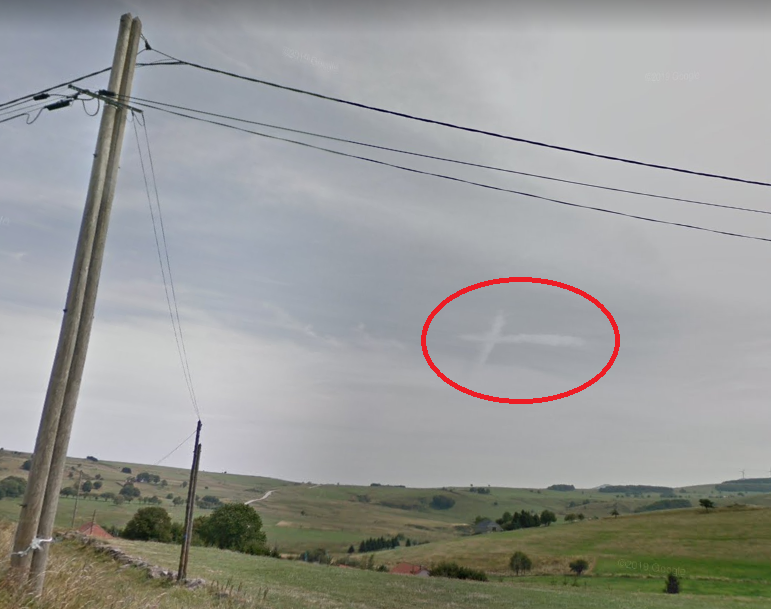
During the early 1990s, the town of Conyers, Georgia, became known for reported Marian apparitions and unusual spiritual events witnessed by many believers. Among the most famous images connected to these gatherings is a photograph showing a strange cloud formation that some people believed resembled the figure of the Virgin Mary in the sky.

The photo was reportedly taken during a spiritual gathering held on the 13th day of the month — a date often associated with Marian apparitions. Witnesses described the moment as deeply emotional and saw the cloud as a sign of peace, protection, and the presence of the “Blessed Mother.”

As with many paranormal or religious phenomena, opinions remain divided. Some consider the image to be a genuine miracle, while others believe it is simply a natural cloud formation shaped by light, weather conditions, and perspective. Regardless of interpretation, the photograph continues to fascinate people interested in spirituality, the paranormal, and unexplained mysteries.

Even today, the Conyers apparitions remain a topic of discussion among believers and researchers alike, where faith and mystery continue to intersect.

Légende - Photo
, , https://www.flickr.com/photos/36829113@N05/3411081620

→ More information
TagsMarian apparition

2025-01-18

January 17, 1871 - The First Marian Apparition in Pontmain

January 17, 1871 - The First Marian Apparition in Pontmain

January 17, 1871, marks a significant event in the religious history of France: the first apparition of the Virgin Mary in Pontmain, a small village in the Mayenne department of western France. This extraordinary event occurred during the Franco-Prussian War, at a time when the region was under threat from advancing Prussian forces. The apparition brought hope to the local population and, according to believers, divine protection.

Historical Context: The Franco-Prussian War

The Franco-Prussian War of 1870-1871 was a devastating conflict for France, which faced a series of defeats against Prussian forces. By January 1871, the Prussian army had occupied large parts of the country and was advancing westward, posing an imminent threat to the Mayenne region. The villagers of Pontmain, like many others, lived in fear of invasion.

It was in this tense and desperate atmosphere that a miraculous event occurred, one that would offer solace and reassurance to the faithful.

The Apparition at Pontmain

The Witnesses

On the evening of January 17, 1871, two brothers, Joseph Barbedette (12 years old) and Eugène Barbedette (10 years old), were helping their father in the family barn. Around 6 p.m., Joseph stepped outside and saw a luminous figure of a lady in the sky, above a neighbor's house. He described her as wearing a dazzling blue robe adorned with golden stars. His brother Eugène, called outside by Joseph, confirmed the vision.

Their father, unable to see anything unusual, alerted their mother, who decided to involve other villagers. Two young girls, Françoise Richer (9 years old) and Jeanne-Marie Lebossé (11 years old), also saw the Lady, while the adults present were unable to perceive her.

The Vision of the Virgin Mary

The children described the figure as a beautiful woman radiating light. She wore a blue robe dotted with stars, a black veil, and a golden crown. Her hands were outstretched in a gesture of peace and reassurance. Over time, glowing letters appeared in the sky behind her, spelling out a message that was revealed gradually:

"But pray, my children, God will answer you very soon. My Son allows Himself to be touched."

This simple yet powerful message called the villagers to prayer and trust in God.

A Miraculous Intervention?

The Prussian Army's Retreat

In the days following the apparition, an unexpected event occurred. The Prussian army, which had been advancing toward Pontmain, suddenly halted and retreated without engaging the area. This decision, which lacked clear strategic justification, was seen by many as a miraculous intervention linked to the Virgin Mary's message.

Spiritual and Historical Impact

The apparition was thoroughly investigated by the Catholic Church. In 1872, Bishop Wicart of Laval officially recognized the event as a genuine Marian apparition. By 1873, a basilica was constructed in Pontmain to honor the Virgin Mary and commemorate the apparition, transforming the village into a significant pilgrimage site.

Pontmain in the Context of Marian Apparitions

The apparition at Pontmain joins a tradition of Marian appearances recognized by the Catholic Church, such as those at Lourdes in 1858 and Fatima in 1917. The message of Pontmain emphasized the power of collective prayer and faith during times of crisis.

Occurring during a period of war and despair, the event has been interpreted as a sign of hope and divine intervention. It reinforced the religious devotion of the local population and contributed to a broader resurgence of Marian piety in France.

Pontmain Today

Today, Pontmain remains a prominent pilgrimage site in France, attracting thousands of visitors annually. The Basilica of Our Lady of Pontmain stands as a symbol of faith and peace. Each year on January 17, special commemorations are held to honor the apparition, drawing both the faithful and the curious.

Légende - Photo
Ikmo-ned, CC BY-SA 3.0, https://fr.wikipedia.org/wiki/Pontmain#/media/Fichier:FrancePaysDeLaLoirePontmainBasilique.jpg
TagsMarian apparition

2024-12-15

Camera Captures Human Soul Leaving the Body


A series of spine-chilling clips has ignited a heated discussion across the internet, each seemingly capturing the unimaginable: the moment when a human soul departs the body. In these haunting scenes, shadowy figures, luminous shapes, or mist-like forms appear to rise, leaving viewers both awestruck and unsettled. For some, these eerie visuals are undeniable evidence of the soul’s existence and a glimpse into the afterlife. Others remain skeptical, offering scientific or natural explanations for what we see.

Each clip carries its own eerie narrative, sparking both curiosity and fear. Yet, they all share one thing in common: their ability to provoke a deep, visceral reaction, challenging our understanding of life and death. Could these recordings reveal the truth about what lies beyond, or are they simply the result of camera glitches, lighting, or our own desire to believe?

The answer, as always, is left to the viewer’s interpretation. Are we witnessing the ultimate mystery of existence unfold, or is this just another illusion in the digital age? You decide.


→ More information
TagsMarian apparition

2024-12-05

A Paralyzed Nun Walks Again: The 70th "Miracle" of Lourdes

A Paralyzed Nun Walks Again: The 70th "Miracle" of Lourdes

For centuries, Lourdes has been a renowned pilgrimage site for millions of believers worldwide. Nestled in the French Pyrenees, this Marian sanctuary is famous for accounts of unexplained healings. In 2018, another extraordinary event was officially recognized: the healing of Sister Bernadette Moriau, a nun who, after over 50 years of partial paralysis, began walking again. Her recovery was declared the 70th "miracle" officially recognized by the Catholic Church at Lourdes.

Decades of Suffering

Sister Bernadette Moriau, born in 1939, lived a life devoted to her faith and religious service until she was struck in 1966 by a severe condition affecting her lumbar roots. This neurological disorder, known for causing chronic pain and significant functional limitations, progressively confined her to a wheelchair and required her to wear a rigid back brace. Despite multiple surgeries and medical treatments, her condition showed no signs of improvement.

Through it all, Sister Bernadette maintained unwavering faith. In 2008, at her doctor’s recommendation, she undertook a pilgrimage to Lourdes—not seeking a cure, but hoping for spiritual comfort.


A Life-Changing Experience

During her pilgrimage, Sister Bernadette participated in a Mass for the sick, where she described feeling profound inner peace and a warm sensation throughout her body. However, it was only after returning to her religious community in northern France that she noticed an extraordinary change.

On July 11, 2008, while praying in her room, she felt an inner call to remove her back brace and abandon her medical aids. For the first time in decades, she was able to walk unaided and pain-free.


Official Recognition

Sister Bernadette's sudden and complete recovery immediately drew the attention of her medical team. An in-depth investigation was launched, involving around 50 specialists, including neurologists, surgeons, and radiologists. The goal was to examine the event's scientific and medical basis. After a decade of rigorous analysis, experts concluded that her healing was medically inexplicable.

In February 2018, Bishop Jacques Benoit-Gonnin of Beauvais officially declared Sister Bernadette Moriau’s recovery a miracle. This marked the 70th officially recognized miracle since the Marian apparitions of 1858.


The Meaning of a Miracle

For the Catholic Church, a miracle is not merely an extraordinary healing but a sign of divine intervention. Stories like Sister Bernadette’s encourage reflection on faith, suffering, and hope.

This 70th miracle of Lourdes underscores the sanctuary’s significance for believers. Each year, approximately six million pilgrims visit Lourdes to pray, seek peace, or hope for healing. For Sister Bernadette, her recovery strengthened her mission: to bear witness to the power of faith and divine love.

Légende - Photo
Imágenes_Cristianas, Pixabay, https://pixabay.com/illustrations/ai-generated-jesus-christ-divinity-8609397/
Sources
TagsMarian apparition

2024-11-26

Ireland - The Miraculous Healing of Marion Carroll

Ireland - The Miraculous Healing of Marion Carroll

The extraordinary healing of Marion Carroll, an Irish woman afflicted with severe illnesses, remains a captivating story that bridges spirituality and medical mystery. The event, which occurred in 1989 during a visit to the Marian shrine of Knock, is regarded by many as a miracle.

A Dire Medical Condition

Before her healing, Marion Carroll, then 38 years old, was suffering from multiple sclerosis, a degenerative neurological disease with no known cure. Her condition was compounded by other severe health issues, including partial blindness, chronic pain, and loss of mobility. Confined to a wheelchair and requiring constant care, her prognosis appeared grim.

An Unforgettable Pilgrimage

On September 1, 1989, Marion joined a pilgrimage to Knock Shrine, a revered site of Marian devotion in Ireland known for the apparitions of the Virgin Mary in 1879. Transported on a stretcher and in a fragile state, Marion attended a Eucharistic blessing. It was during this moment, she later recounted, that she felt a sudden warmth and an overwhelming sense of peace.

"I knew something special had just happened," she said in later testimonies. Moments later, Marion claimed she was able to stand and walk, leaving onlookers astonished.

A Miracle Recognized by the Church

After years of thorough investigation and medical consultations, the Diocese of Knock officially declared Marion Carroll's healing a miracle in 2019. This marked the first such recognition in the shrine's history. Bishop Francis Duffy, who announced the decision, described it as a profound affirmation of faith for the many pilgrims visiting Knock.

A Medical Mystery

From a scientific standpoint, Marion’s healing remains unexplained. While spontaneous remissions of severe illnesses are occasionally documented, medical experts agree that her sudden and complete recovery defies conventional explanation. "There’s no scientific basis for such an abrupt and total recovery," remarked a neurologist who reviewed her case.

An Ongoing Inspiration

Today, Marion Carroll dedicates her life to sharing her story and offering hope to others facing similar challenges. She views her healing as a divine act and a testament to the power of faith.

Whether regarded as a miracle or an unsolved medical anomaly, Marion Carroll’s story continues to inspire and intrigue. It is a poignant reminder of the mysteries of the human condition, where science and faith intersect in ways that often elude understanding.

Légende - Photo
Kar3nt, Pixabay, https://pixabay.com/illustrations/jesus-god-help-support-together-8385575/
Sources

2024-11-03

An angel filmed one night in Jakarta in 2011


In 2011, a surveillance camera in a Jakarta supermarket captured a mysterious glowing figure descending from the sky, briefly touching the ground before quickly vanishing. Enthralled, some mystic enthusiasts believe this to be the appearance of an angel, awestruck by what they consider a divine manifestation.


→ More information

2024-10-26

Angels appear at baptism in Honduras


Heavenly beings, identified as angels of God, are said to have appeared in their divine form during a baptism service for new converts, organized by a local church in Honduras. The event was captured on an amateur video.


→ More information

2024-08-18

Real Historical Account of The Flying Monk: Saint Padre Pio


Saint Padre Pio, born Francesco Forgione in 1887 in Italy, is one of the most revered saints of the 20th century, known for his mystical gifts, including bilocation, miraculous healings, and especially the stigmata that he bore for much of his life. However, one of the most fascinating and controversial stories associated with him is that of the "Flying Monk."

According to reported accounts, Padre Pio was allegedly seen levitating or flying on several occasions. One of the most famous anecdotes involves World War II pilots, both Italian and American, who claimed to have seen a monk flying in the sky above San Giovanni Rotondo, preventing them from bombing the area. These stories fueled his reputation as a saint with supernatural powers.


→ More information

2024-07-30

A statue of the Virgin Mary began to cry in 1905

A statue of the Virgin Mary began to cry in 1905

En 1905, a concierge living in Bordeaux, in the southwest of France, noticed that the statue of the Virgin Mary she had purchased seemed to be miraculous. The statue would regularly and inexplicably shed tears.

In the early 20th century, Marie X brought a statue of the Virgin Mary from the Lourdes sanctuary. She placed the devout statue in her quarters on the Cours du XXX-Juillet. She soon noticed that the statue was intermittently covered with droplets of water.

Intrigued by this phenomenon, she carefully observed the statue and concluded that the droplets definitely came from the statue's eyes. She invited several friends over to witness the prodigy. All were astonished by what they saw.

In 1910, at the request of ecclesiastical authorities, Marie X moved the statue to a religious house for the miracle to be officially confirmed.

Mysteriously, the statue stopped weeping altogether.

In 1911, the woman received a statue of "Santissima Bambina." She placed it in her home, and this new statue also began to weep. Word quickly spread, and curious crowds began to gather.

Could this miracle have been caused by the particular humidity in her home? It's possible.

However, two years later, in 1913, she moved to the Boulevard du Bouscat and took her statue with her. There, the statue stopped weeping, but another unexplained phenomenon occurred: delightful fragrances began to emanate from the statue. Once again, no explanation could be found...

Légende - Photo
CharlVera, Pixabay, https://pixabay.com/illustrations/ai-generated-virgin-mary-8579796/
Sources

2024-07-21

October 3, 1847 - The Miracle of Ocotlán

October 3, 1847 - The Miracle of Ocotlán

On October 3, 1847, in the sky over Ocotlán, a small town in central Mexico, an extraordinary event took place that would deeply mark the local and religious history of the region. On this day, more than 2,000 people witnessed a divine vision: a perfect image of the crucified Jesus Christ appeared in the sky, visible for about 30 minutes. This phenomenon, known as the "Miracle of Ocotlán," remained etched in the collective memory and was officially recognized by the Archdiocese of Guadalajara in 1911.

Historical and Religious Context

Ocotlán, located in the state of Jalisco, was a small, deeply Catholic community at the time. The mid-19th century was a period marked by political and religious tensions in Mexico, with conflicts between liberal and conservative forces influencing daily life and religious practice. The population often sought signs of comfort and faith during uncertain times.

The Day of the Miracle

On the morning of October 3, 1847, the residents of Ocotlán were going about their usual activities. Suddenly, around 10 a.m., a strange and extraordinary phenomenon captured the town's attention. A large cloud, resembling a thick bank of fog, began to form in the sky. As the cloud took shape, the outlines of a familiar figure started to emerge, astonishing the eyewitnesses.

The Apparition of Jesus Christ

Within minutes, what initially appeared as an indistinct form became a clear and detailed image of the crucified Jesus Christ. The vision was so precise that observers could distinguish the facial features, the wounds of the crucifixion, and the crown of thorns. For about 30 minutes, this divine image remained suspended in the sky, observed by a growing crowd of more than 2,000 people. Some spectators reported feeling a deep peace and a strong sense of spiritual presence.

Testimonials and Reactions

Contemporary accounts describe a scene of profound reverence and prayer among the residents. Reports indicate that people knelt, praying and weeping in the face of what they perceived as a divine sign. News of the apparition quickly spread, attracting attention from neighboring communities and even distant regions.

A number of testimonies were collected by local religious authorities. The descriptions were remarkably consistent despite the diversity of the witnesses. These accounts were meticulously documented and preserved by the local church, forming the basis of subsequent investigations.

Official Recognition by the Church

It was not until 1911, more than six decades after the event, that the Archdiocese of Guadalajara officially recognized the Miracle of Ocotlán. This recognition came after a thorough investigation, including the examination of testimonies and historical documents, as well as theological deliberations.

The bishop at the time, impressed by the consistency of the testimonies and the lasting spiritual impact of the apparition, declared the event an authentic sign of divine presence. This official validation strengthened the faith of the inhabitants and solidified Ocotlán as an important pilgrimage site in the region.

Spiritual and Cultural Impact

The Miracle of Ocotlán had a profound and lasting impact on the local community. It reinforced the faith of the inhabitants and contributed to a renewed religious fervor. Every year, on October 3, a commemorative celebration is held in Ocotlán, attracting thousands of pilgrims who come to honor the apparition and renew their faith.

The recognition of the miracle also had cultural repercussions, influencing local art, literature, and music. Artistic representations of the apparition are visible in many churches and homes in the region, and songs and poems have been composed to celebrate this extraordinary event.

Légende - Photo
Kriloft, CC BY-SA 4.0, https://es.wikipedia.org/wiki/Ocotl%C3%A1n#/media/Archivo:Cathedral_of_the_Lord_of_Mercy.jpg

2024-05-12

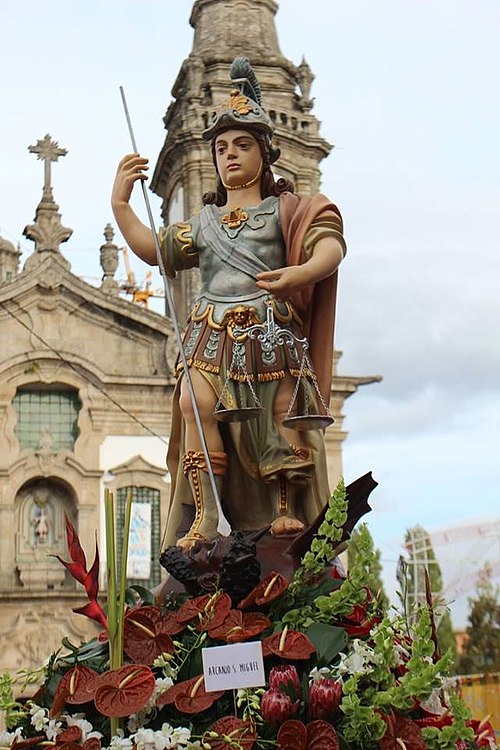
May 6, 590 - Apparition of St Michael the Archangel on the Mausoleum of Hadrian

May 6, 590 - Apparition of St Michael the Archangel on the Mausoleum of Hadrian

In 590, a terrible plague was ravaging Rome. The city was gripped by panic and despair. Pope Gregory I, helpless in the face of the disease, implored divine help through prayers and processions.

The Apparition:

On May 8, as the papal procession reached the Mausoleum of Hadrian, Gregory I looked up to the sky and had an extraordinary vision. Saint Michael the Archangel, resplendent with light, stood above the mausoleum, sheathing his sword in its scabbard.

Interpretation:

Pope Gregory interpreted this vision as a sign that the end of the epidemic was near. He ordered a solemn procession to give thanks to God and Saint Michael.

Consequences:

As the vision predicted, the plague died out shortly thereafter. The event deeply marked the Romans and strengthened their devotion to Saint Michael, who became the patron saint of the city.

The Mausoleum of Hadrian and Castel Sant'Angelo:

The Mausoleum of Hadrian, built in the 2nd century AD, was transformed into a fortress in the Middle Ages and took the name of Castel Sant'Angelo. A statue of Saint Michael the Archangel was erected on top of the castle in commemoration of his apparition.

Historical Significance:

The apparition of Saint Michael on the Mausoleum of Hadrian is an important event in the history of Rome. It illustrates the deep faith of the Romans and their devotion to their patron saints. This story has also had a lasting impact on art and architecture, inspiring many works of art and religious monuments.

Légende - Photo
Tomiandreas, CC BY-SA 4.0, https://en.wikipedia.org/wiki/Michael_(archangel)#/media/File:S._Miguel_Arcanjo.jpg

2024-01-03

January3, 1933 - The Last Marian Apparition of Beauraing

January3, 1933 - The Last Marian Apparition of Beauraing

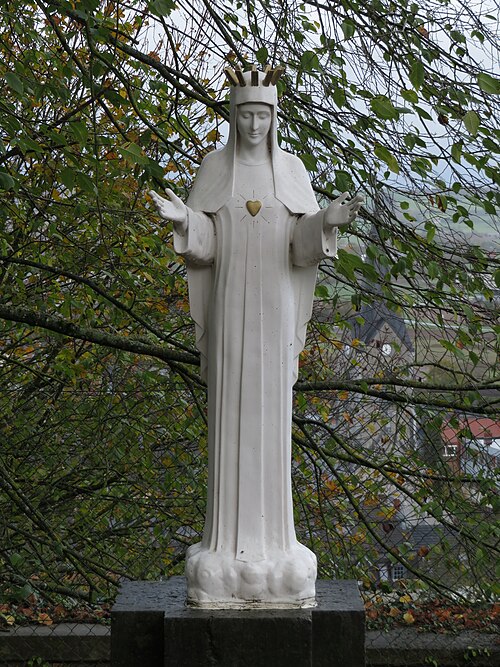
The last Marian apparition of Beauraing, also known as the Virgin of the Golden Heart or Our Lady of Beauraing, occurred on January 3, 1933, in the small town of Beauraing, Belgium. It was the 33rd and final appearance of the Blessed Virgin Mary to five children, who had been witnessing her visions since November 29, 1932. The apparition was recognized by the Catholic Church in 1949, and the site became a place of pilgrimage and devotion.

The five children who saw the apparitions were Fernande Voisin (15), Gilberte Voisin (13), Albert Voisin (11), Andrée Degeimbre (14), and Gilberte Degeimbre (9). They belonged to two families who lived near each other and were friends. The first apparition took place on November 29, 1932, when the four older children went to the convent school to fetch Gilberte Voisin, who was studying there. As they passed by a railway viaduct, they saw a luminous figure of a woman dressed in white, floating in the air. They ran to the school and told Gilberte, who also saw the figure when they returned to the spot. The nun who opened the door for them did not see anything, and neither did their parents, who dismissed their story as a prank or a hallucination.

However, the children insisted that they had seen the Virgin Mary, and returned to the same place the next day, hoping to see her again. They were not disappointed, as the figure reappeared and smiled at them. The children began to pray the rosary, and the figure joined them with her lips moving. The children also noticed that she had a rosary hanging from her right arm. The apparitions continued almost daily, usually around 6 p.m., and lasted for a few minutes. The children described the figure as having a white dress and veil, blue eyes, blonde hair, and a golden heart on her chest. She did not speak at first, but later communicated with them through gestures, nods, and words.

The news of the apparitions spread quickly, and attracted the curiosity and skepticism of many people. Some came to see the children’s reactions, while others came to pray and seek favors from the Virgin. The local authorities and the clergy were also alerted, and tried to investigate the phenomenon. The children were questioned, examined, and tested by doctors, psychologists, and theologians, who found no evidence of fraud, hysteria, or mental illness. The children remained consistent and sincere in their accounts, and showed signs of ecstasy, such as falling to their knees, gazing upward, and becoming oblivious to their surroundings, when they saw the apparition. They also reported physical sensations, such as warmth, cold, and fragrance, associated with the presence of the Virgin.

The Final Apparition

The last apparition took place on January 3, 1933, in the presence of about 30,000 people, who had gathered in the garden of the convent school, where most of the apparitions had occurred. The Virgin appeared to the children near a hawthorn tree, next to a grotto dedicated to Our Lady of Lourdes. She spoke to each of the children individually, and revealed her identity and her message. She said to Fernande: “I am the Immaculate Virgin. Pray always.” She said to Albert: “I am the Mother of God, the Queen of Heaven. Pray always.” She said to Andrée: “I will convert sinners.” She said to Gilberte Voisin: “I am the Immaculate Conception.” She said to Gilberte Degeimbre: “Do you love my Son? Do you love me?” When Gilberte answered yes, she said: “Then sacrifice yourself for me. Goodbye.”

The Virgin also made three requests to the children: to build a chapel on the site of the apparitions, to come on pilgrimage, and to pray a lot. She also showed them her golden heart, which was a sign of her love and compassion for humanity, and a source of grace and healing for those who invoked her. The children said that the Virgin was very beautiful and radiant, and that she smiled and blessed them before disappearing. They were filled with joy and peace, and thanked God for the privilege of seeing his Mother.

Aftermath and Recognition

The apparitions of Beauraing had a profound impact on the lives of the children and the people who witnessed them. Many conversions, cures, and miracles were reported as a result of the Virgin’s intercession. The children grew up to lead simple and devout lives, and remained faithful to their mission of spreading the message of the Virgin. They also faced some difficulties and persecutions, such as mockery, slander, and threats, from those who did not believe or approve of their experience. They bore these trials with patience and humility, and trusted in God’s plan for them.

The Church authorities also followed the development of the apparitions with caution and prudence. They established a commission of inquiry to examine the facts and the fruits of the phenomenon, and to determine its supernatural origin and authenticity. The commission conducted a thorough and rigorous investigation, and consulted with various experts and witnesses. After 16 years of study and deliberation, the commission reached a positive conclusion, and submitted its report to the bishop of Namur, André-Marie Charue. On July 2, 1949, the bishop issued a decree, approving the public devotion to Our Lady of Beauraing, and declaring that the apparitions were worthy of belief. He also authorized the construction of the chapel that the Virgin had requested, and the celebration of the feast of the Virgin of the Golden Heart on November 29, the anniversary of the first apparition.

The recognition of the apparitions by the Church was a great joy and consolation for the children and the faithful, who had been waiting for this moment for a long time. It also confirmed the validity and importance of the Virgin’s message, which was a call to prayer, conversion, and sacrifice, in a time of great turmoil and distress for the world. The apparitions of Beauraing were a sign of hope and grace, and a reminder of the maternal love and care of the Mother of God for her children.

Légende - Photo
Donarreiskoffer, CC BY-SA 4.0, https://fr.wikipedia.org/wiki/Apparitions_mariales_de_Beauraing#/media/Fichier:Our_Lady_of_Beauraing_06.jpg
Sources

2023-11-30

27th November 1830 - Second of the Marian apparitions of the Rue du Bac

27th November 1830 - Second of the Marian apparitions of the Rue du Bac

The Marian apparitions of the Rue du Bac are the three apparitions of the Virgin Mary declared by a nun, Sister Catherine Labouré, from July to December 1830. During these apparitions, the nun said she received the request to have a medal struck and distributed in honor of the Mother of Jesus. This medal, struck for the first time in 1832, was very successful, and it was distributed to several million copies in the world, in a few years: it is the miraculous medal. The nun remained hidden and anonymous, her identity and the apparitions she said she witnessed remained secret almost until the end of her life. Although the Marian apparitions have not been officially recognized by the Catholic Church, because no canonical trial has been opened on the subject, this event has been implicitly recognized by the authorities of the Church, through the canonical trial on the miraculous medal, the attribution of a religious feast for the miraculous medal, and the beatification and canonization of the visionary.

The context

France was affected by political unrest that led to the fall of Charles X during the Revolution of the Three Glorious Days, ten days after the first apparition. The liberal movements took power during this change of king. Thus, Charles X who had succeeded Louis XVIII in 1824, was ousted in turn by Louis-Philippe I, six years later. This political turmoil affected all of Europe, and in the following months, revolutions hit Belgium and Poland. A cholera epidemic broke out in Russia at the same time and spread throughout Europe to reach Paris in the spring of 1832 where it killed 20,000 people. In this very agitated political context, a young girl from the countryside, Catherine Labouré, entered the Daughters of Charity, in January 1830, and she was sent in April of the same year, to the convent located on Rue du Bac in Paris, to do her novitiate. This apparition (or this cycle of three apparitions) will open a period of about a century where about fifteen apparitions, until 1933, will be recognized more or less officially by the Catholic Church. Among these apparitions, five took place in France (this one in Paris in 1830, La Salette in 1846, Lourdes in 1858, Pontmain in 1871, Pellevoisin in 1876).

The second apparition

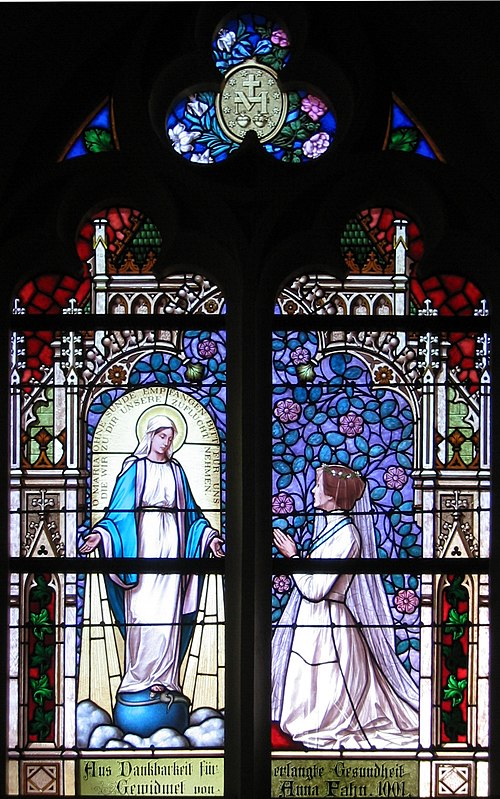
On November 27, 1830, the Blessed Virgin appeared again to Catherine in the chapel. This time, it was at 5:30 p.m., during the novices’ prayer, under the picture of Saint Joseph (current location of the Virgin with the globe). First Catherine saw two living pictures that passed, in cross-fade, and in which the Blessed Virgin stood on the half-globe, her feet crushing the serpent. In the first picture, the Virgin holds in her hands a small golden globe topped with a cross that she raises to heaven. Catherine heard: “This ball represents the whole world, France and each person in particular” In the second picture, rays of a dazzling brightness come out of her open hands, whose fingers wear rings of precious stones. Catherine heard at the same time a voice that said: “These rays are the symbol of the graces that I pour out on the people who ask me for them”. Then an oval formed around the apparition and Catherine saw inscribed in a semicircle this invocation in letters of gold: “O Mary conceived without sin, pray for us who have recourse to you”. Then a voice was heard: “Have a medal struck on this model. Those who wear it with confidence will receive great graces”. Finally the picture turned over and Catherine saw the back of the medal: at the top a cross surmounts the initial of Mary, at the bottom two hearts, one crowned with thorns, the other pierced by a sword.

The cult and the medal

Sister Catherine reported the apparitions to her confessor, Father Aladel, who was initially skeptical. He consulted the Archbishop of Paris, Hyacinthe-Louis de Quélen, who authorized the striking of the medal in June 1832. The first medals were distributed on July 19, 1832, and soon reports of miraculous healings and conversions multiplied. The medal became very popular and was called the “miraculous medal” by the faithful. The cult of the medal was officially approved by Pope Gregory XVI in 1836, and a feast was established on November 27, the anniversary of the second apparition. The chapel of the Rue du Bac became a place of pilgrimage, where the body of Saint Catherine Labouré, who died in 1876, is exposed. The medal is also worn by many Catholics around the world, who invoke the intercession of the Immaculate Conception. The medal also inspired other Marian devotions, such as the Miraculous Medal Association, founded in 1909, and the Green Scapular, revealed to Sister Justine Bisqueyburu in 1840.

Légende - Photo
FERNANDES Gilbert, CC BY-SA 3.0 at, https://fr.wikipedia.org/wiki/Notre-Dame_de_la_M%C3%A9daille_miraculeuse#/media/Fichier:Ma%C3%9Fwerkfenster_Pfarrkirche_Sitzendorf_an_der_Schmida.jpg
Sources

2023-11-19

2023-10-14

13th October 1917 - The 6th and Final Marian Apparition at Fátima

13th October 1917 - The 6th and Final Marian Apparition at Fátima

October 13, 1917, is a significant date in the history of the Marian apparitions at Fátima, a small village in Portugal. This event is marked by the sixth and final appearance of the Virgin Mary to three young shepherds, accompanied by an extraordinary celestial phenomenon known as the "Miracle of the Sun." This day left an indelible mark on the collective memory of believers and the curious alike, generating a multitude of testimonies and substantial media coverage.

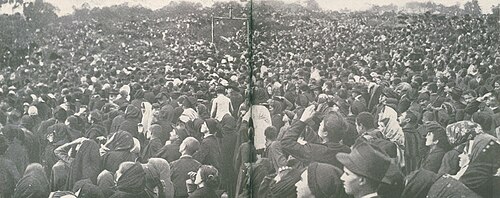
The meteorological context of this day is particularly noteworthy. Despite weather forecasts predicting dry conditions, a thunderstorm erupted, and heavy rain poured down on the Cova da Iria, where approximately fifty thousand people had gathered to witness the event. Some pilgrims recited the rosary, while others watched, huddled beneath umbrellas. Some had arrived the day before and spent the night on-site, demonstrating their devotion to this sacred place. On this date, the "little oak tree," an important symbol associated with the apparitions, had been stripped of its branches by the faithful, leaving only a ten-centimeter trunk. The "apparition site" was marked by a wooden arch adorned with lanterns and flower bouquets.

Shortly before noon, solar time, the three "visionaries," Lucie, Francisco, and Jacinta, arrived at the site, and the crowd allowed them to pass. A few minutes after the scheduled time, Lucie announced, "The lady is coming," and asked the crowd to close their umbrellas and remove their hats. Despite the persistent rain, a large part of the crowd complied with her request. Suddenly, witnesses claimed to have seen a "small cloud" form and position itself over the location of the "apparition oak." It was at this moment that the apparition of the Virgin Mary purportedly appeared to Lucie, introducing herself as Our Lady of the Rosary and asking her to build a chapel in her honor. The Virgin also expressed a desire for sinners to convert.

While the Virgin was slowly ascending toward the sky, the rain abruptly ceased, and the sun made a remarkable appearance. "Almost all the people present" reported observing the sun undergo a series of astonishing transformations, displaying colors ranging from pink to blue, green to "all the colors of the rainbow," according to some witnesses. The sun appeared to rotate in the sky, then "plunge towards the earth," causing panic among the crowd, before returning to its position in the sky. Some accounts even mentioned witnesses seeing the Virgin Mary alone or in the company of the Child Jesus during this celestial spectacle.

After the conclusion of the celestial phenomenon, Lucie announced to the crowd that "the Virgin" had promised that the war would soon end, and the soldiers would return home. She also revealed "the Virgin's" request to construct a chapel dedicated to Our Lady of the Rosary at the site of the apparitions.

The significance of this event cannot be understated. Avelino de Almeida, an anticlerical journalist and editor-in-chief of the Lisbon daily "O Século," wrote a report on the event in the October 15 edition, causing a sensation throughout the country. Fifteen days later, he published a new article with ten photos in "Ilustração Portugueza," preserving the memory of this extraordinary event. Numerous newspaper articles were published, with many readers sharing their testimonies of "what they had seen." Simultaneously, other articles, at times more critical or even ironic, also surfaced, reflecting the diversity of opinions on this mystical event.

The Miracle of the Sun on October 13, 1917, remains a subject of debate, adoration, and fascination for many, whether they are believers or not. This day continues to inspire faith and spirituality, serving as a reminder of an extraordinary moment when the heavens and the earth appeared to converge in an unforgettable celestial union.

Légende - Photo
FERNANDES Gilbert, CC BY-SA 4.0, https://fr.wikipedia.org/wiki/Apparitions_mariales_de_F%C3%A1tima#/media/Fichier:Foule_compacte_Miracle_du_soleil.jpg
Sources

2023-09-23

22nd September 1823 - Joseph Smith Claims to Have Found the Golden Plates

22nd September 1823 - Joseph Smith Claims to Have Found the Golden Plates

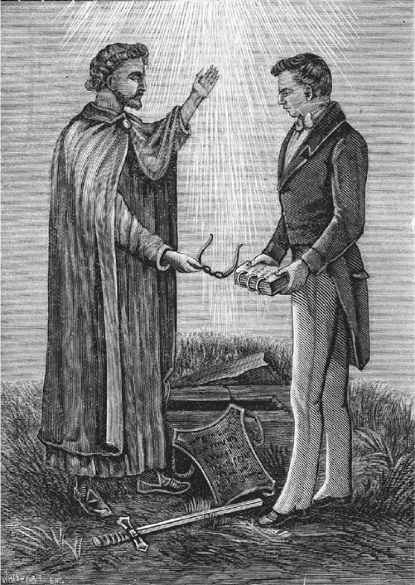
The story of Joseph Smith and the discovery of the golden plates, a foundational event in the Latter Day Saint movement, also known as Mormonism, dates back to September 22, 1823. This date marks the beginning of a series of extraordinary events that would lead to the creation of the Book of Mormon, a sacred text for followers of this faith.

The Golden Plates and Their Significance

According to the belief of Latter Day Saints, the golden plates, also referred to as the gold plates or, in 19th-century literature, the "golden bible," are the source from which Joseph Smith translated the Book of Mormon. These golden plates are described as weighing from 30 to 60 pounds (14 to 27 kg), being gold in color, composed of thin metallic pages engraved with hieroglyphics on both sides, and bound with three D-shaped rings.

The Discovery of the Golden Plates

Joseph Smith claimed to have discovered the golden plates on September 22, 1823, on a hill near his home in Manchester, New York. According to his account, the angel Moroni directed him to the location where they were buried. However, the angel prevented him from taking the plates during this initial encounter but provided instructions for him to return to the same place a year later. Smith followed these instructions and returned to the site each year, but it wasn't until September 1827 that he successfully retrieved the plates during his fourth annual attempt.

When he returned home with a heavy object wrapped in a frock, he placed it in a box. Joseph Smith allowed others to lift the box, but he stated that the angel had forbidden him from showing the plates to anyone until they had been translated from their original "reformed Egyptian" language.

The Mystery of Translation

One of the most intriguing aspects of this story is the process of translating the golden plates. Joseph Smith claimed to have used "divine instruments," including the Urim and Thummim stones, to decipher the hieroglyphs and translate the content into English. The result of this process is the Book of Mormon, which narrates the history of ancient peoples in America and their interactions with God.

The Legacy of the Book of Mormon

The Book of Mormon has become the cornerstone of the Latter Day Saint faith and is considered another testament of Jesus Christ. It supplements the Bible in their sacred canon and guides the doctrine and practice of The Church of Jesus Christ of Latter-day Saints, commonly known as the Mormon Church.

The story of Joseph Smith and the golden plates remains a central element of the religious identity of Latter Day Saints, sparking fascination, debate, and controversy over the years. For believers, it is a story of divine revelation, while for others, it serves as an example of 19th-century religious mysticism. Regardless of one's perspective, Joseph Smith's discovery of the golden plates continues to influence the faith and culture of Mormon adherents today.

Caption - Photo
COGDEN, Public domain, https://en.wikipedia.org/wiki/Golden_plates#/media/File:Joseph_Smith_receiving_golden_plates.jpg
Sources
22nd September 1823 - Joseph Smith Claims to Have Found the Golden Plates

22nd September 1823 - Joseph Smith Claims to Have Found the Golden Plates

The story of Joseph Smith and the discovery of the golden plates, a foundational event in the Latter Day Saint movement, also known as Mormonism, dates back to September 22, 1823. This date marks the beginning of a series of extraordinary events that would lead to the creation of the Book of Mormon, a sacred text for followers of this faith.

The Golden Plates and Their Significance

According to the belief of Latter Day Saints, the golden plates, also referred to as the gold plates or, in 19th-century literature, the "golden bible," are the source from which Joseph Smith translated the Book of Mormon. These golden plates are described as weighing from 30 to 60 pounds (14 to 27 kg), being gold in color, composed of thin metallic pages engraved with hieroglyphics on both sides, and bound with three D-shaped rings.

The Discovery of the Golden Plates

Joseph Smith claimed to have discovered the golden plates on September 22, 1823, on a hill near his home in Manchester, New York. According to his account, the angel Moroni directed him to the location where they were buried. However, the angel prevented him from taking the plates during this initial encounter but provided instructions for him to return to the same place a year later. Smith followed these instructions and returned to the site each year, but it wasn't until September 1827 that he successfully retrieved the plates during his fourth annual attempt.

When he returned home with a heavy object wrapped in a frock, he placed it in a box. Joseph Smith allowed others to lift the box, but he stated that the angel had forbidden him from showing the plates to anyone until they had been translated from their original "reformed Egyptian" language.

The Mystery of Translation

One of the most intriguing aspects of this story is the process of translating the golden plates. Joseph Smith claimed to have used "divine instruments," including the Urim and Thummim stones, to decipher the hieroglyphs and translate the content into English. The result of this process is the Book of Mormon, which narrates the history of ancient peoples in America and their interactions with God.

The Legacy of the Book of Mormon

The Book of Mormon has become the cornerstone of the Latter Day Saint faith and is considered another testament of Jesus Christ. It supplements the Bible in their sacred canon and guides the doctrine and practice of The Church of Jesus Christ of Latter-day Saints, commonly known as the Mormon Church.

The story of Joseph Smith and the golden plates remains a central element of the religious identity of Latter Day Saints, sparking fascination, debate, and controversy over the years. For believers, it is a story of divine revelation, while for others, it serves as an example of 19th-century religious mysticism. Regardless of one's perspective, Joseph Smith's discovery of the golden plates continues to influence the faith and culture of Mormon adherents today.

Caption - Photo
COGDEN, Public domain, https://en.wikipedia.org/wiki/Golden_plates#/media/File:Joseph_Smith_receiving_golden_plates.jpg
Sources

2023-09-21

19th September 1846 - Marian Apparition of La Salette-Fallavaux

19th September 1846 - Marian Apparition of La Salette-Fallavaux

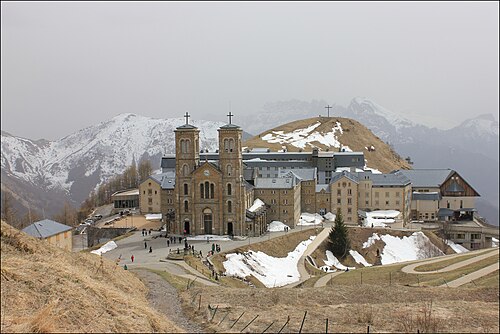
On September 19, 1846, an extraordinary event took place in the small commune of La Salette-Fallavaux, nestled in the French Alps. On this day, two young shepherds, Maximin Giraud and Mélanie Calvat, aged 11 and 14 respectively, claimed to have witnessed an apparition of the Virgin Mary. This event marked a significant turning point in the religious history of the region and beyond.

The Shepherds' Testimonies

On that day, Maximin and Mélanie were tending to a herd of cows near the mountain of La Salette. Suddenly, they reported seeing a beautiful lady clothed in light, seated on a rock. The lady was weeping profusely and spoke to them in French, even though the two children only spoke the local dialect. The Virgin Mary allegedly made revelations to them and entrusted them with a message for the local population.

The Revelations of La Salette

The Virgin Mary reportedly reproached the inhabitants of La Salette-Fallavaux for their lack of piety and observance of the Sabbath. She warned that if people did not repent and change their ways, severe punishments would befall the region. She also revealed a secret to the children that they were forbidden to disclose to anyone.

The Reaction of the Church and Authorities

The statements of the two shepherds initially raised skepticism and doubt among some local religious authorities. The famous priest Jean-Marie Vianney, the Curé of Ars, expressed initial reservations about the apparition. However, the message and devotion that began to develop around La Salette-Fallavaux eventually caught the attention of the Catholic Church.

Partial Recognition by the Church

Despite initial doubts, the Catholic Church partially recognized the apparition of La Salette-Fallavaux in 1851. The Diocese of Grenoble authorized the construction of a chapel on the site of the apparition. The message of reconciliation and penance brought by the Virgin Mary began to influence local religious life.

The Legacy of La Salette-Fallavaux

Over the years, the sanctuary of La Salette-Fallavaux has become a major pilgrimage site for Catholics from around the world. Pilgrims flock to the area to pray, meditate, and reflect on the message of peace and reconciliation from the Virgin Mary. The apparition at La Salette-Fallavaux also inspired the founding of numerous religious orders and charitable institutions engaged in acts of mercy.

Conclusion

The Marian apparition of La Salette-Fallavaux in 1846 remains an event of great significance in the religious and cultural history of the region. The revelations of the young shepherds have left an indelible mark on the faith of believers and continue to attract pilgrims from around the world. While controversial in its early days, this apparition was ultimately recognized and accepted by the Catholic Church, bearing witness to the depth of its spiritual impact.


User

 
in spanish
 
ChatGPT
 

La Aparición Mariana de La Salette-Fallavaux: Un Evento Celestial en 1846

El 19 de septiembre de 1846, un evento extraordinario tuvo lugar en la pequeña comuna de La Salette-Fallavaux, ubicada en los Alpes franceses. En ese día, dos jóvenes pastores, Maximin Giraud y Mélanie Calvat, de 11 y 14 años respectivamente, afirmaron haber sido testigos de una aparición de la Virgen María. Este evento marcó un punto de inflexión significativo en la historia religiosa de la región y más allá.

Los Testimonios de los Pastores

Ese día, Maximin y Mélanie estaban cuidando un rebaño de vacas cerca de la montaña de La Salette. De repente, informaron haber visto a una hermosa dama vestida de luz, sentada en una roca. La dama lloraba profusamente y les habló en francés, a pesar de que los dos niños solo hablaban el dialecto local. La Virgen María supuestamente les hizo revelaciones y les confió un mensaje para la población local.

Las Revelaciones de La Salette

La Virgen María supuestamente reprochó a los habitantes de La Salette-Fallavaux por su falta de piedad y observancia del domingo. Advirtió que si las personas no se arrepentían y no cambiaban su comportamiento, caerían castigos severos sobre la región. También reveló un secreto a los niños que les prohibió divulgar a nadie.

La Reacción de la Iglesia y las Autoridades

Las declaraciones de los dos pastores inicialmente generaron escepticismo y dudas entre algunas autoridades religiosas locales. El famoso sacerdote Jean-Marie Vianney, el Cura de Ars, expresó reservas iniciales sobre la aparición. Sin embargo, el mensaje y la devoción que comenzaron a desarrollarse en torno a La Salette-Fallavaux finalmente captaron la atención de la Iglesia Católica.

Reconocimiento Parcial por parte de la Iglesia

A pesar de las dudas iniciales, la Iglesia Católica reconoció parcialmente la aparición de La Salette-Fallavaux en 1851. La Diócesis de Grenoble autorizó la construcción de una capilla en el lugar de la aparición. El mensaje de reconciliación y penitencia traído por la Virgen María comenzó a influir en la vida religiosa local.

El Legado de La Salette-Fallavaux

Con el paso de los años, el santuario de La Salette-Fallavaux se ha convertido en un importante lugar de peregrinación para católicos de todo el mundo. Peregrinos acuden a la zona para rezar, meditar y reflexionar sobre el mensaje de paz y reconciliación de la Virgen María. La aparición en La Salette-Fallavaux también inspiró la creación de numerosas órdenes religiosas e instituciones benéficas comprometidas en obras de misericordia.

Conclusión

La aparición mariana de La Salette-Fallavaux en 1846 sigue siendo un evento de gran importancia en la historia religiosa y cultural de la región. Las revelaciones de los jóvenes pastores han dejado una marca indeleble en la fe de los creyentes y continúan atrayendo a peregrinos de todo el mundo. A pesar de la controversia en sus primeros días, esta aparición finalmente fue reconocida y aceptada por la Iglesia Católica, dando testimonio de la profundidad de su impacto espiritual.

Légende - Photo
Daniel CULSAN, CC BY-SA 4.0, https://fr.wikipedia.org/wiki/Apparition_mariale_de_La_Salette#/media/Fichier:Sanctuaire_de_Notre-Dame_de_La_Salette.jpg
Sources

2022-09-17

2022-08-25