2026-06-07

"I am Adolf Hitler": The astonishing confessions of a man in Argentina

"I am Adolf Hitler": The astonishing confessions of a man in Argentina

In the remote province of Salta, a man presenting himself as Herman Guntherberg claimed before witnesses to be the dictator whom the entire world had believed dead since 1945. Senile madness, calculated imposture — or a fragment of a truth that official History would rather keep buried?

There are confessions that tear the veil of reality apart. In a peripheral neighbourhood of Salta, a sun-bleached city lost in the far northwest of Argentina, a bedridden old man allegedly uttered words his family did not know how to receive:"I am Adolf Hitler. I have lived in hiding for seventy years. And now I want the world to know."The man is officially known as Herman Guntherberg — or at least, that is the identity under which he has been registered since his arrival in Argentina in 1945.

The affair, first revealed by the ultra-conservative local newspaperEl Patriotaand later amplified by the websiteWorld News Daily Report, triggered an immediate media earthquake in 2017 before being dissected by fact-checkers across the globe. No matter: it resurfaced with troubling vigour in 2026, carried by social media and fuelled, paradoxically, by the partial declassification of CIA documents ordered by Donald Trump.

A passport forged by the Gestapo, a new life beneath the Andes

According to statements collected byEl Patriota, Guntherberg claims to have arrived in Argentina in the summer of 1945 carrying a false passport manufactured by Nazi intelligence services as the war drew to a close. The document identified him under an ordinary Germanic name, sufficient to blend into the communities of European immigrants who were then disembarking by the thousands on the shores of the Río de la Plata. The strategy, in its broad outlines, is hardly without precedent: notorious war criminals such as Adolf Eichmann and Josef Mengele followed remarkably similar routes, sheltered by religious networks and escape pipelines now well-documented — the infamousratlines.

Archives — CIA Files / JFK Documents

In 2017, the CIA released microfilms containing reports on the testimony of one Philip Citroën, a Dutch soldier who claimed to have encountered Adolf Hitler in Colombia around 1954. According to this witness, the dictator subsequently moved to Argentina in January 1955. The head of the CIA's Western Hemisphere Division had recommended as early as 1955 that investigations be abandoned, deeming the "possibilities of establishing anything concrete" far too remote.

These documents, resurfaced during a new wave of declassification in 2025, reignited the debate — without providing a shred of formal proof.

The wife speaks: dementia, or a cursed memory?

In the corridors of the family home, Angela Martinez, Guntherberg's wife of fifty-five years, speaks with the resignation of a woman who has exhausted her certainties. Her husband, she says, never spoke of Hitler, the Nazis, or the war before 2015 — the year the first signs of cognitive deterioration appeared."He would forget who I was. He would enter a kind of trance and begin talking about Jews and demons. Then he would return to normal, as if nothing had happened,"she recalls. For Angela Martinez, the truth is medical: advanced dementia, identity confusion, an unconscious absorption of stories read or overheard.

"I have been depicted as a monster solely because we lost the war. When people read my side of the story, it will change the way they perceive me."

— Herman Guntherberg, as quoted by El Patriota (2017)

Yet other voices, less quick to reach a clinical verdict, press harder. How could a man afflicted with dementia construct a narrative so internally coherent — a forged passport, a precise itinerary, carefully reasoned motives? The timing, too, gives pause: it was precisely in 2016 that Israeli intelligence services reportedly and officially abandoned their policy of pursuing Nazi war criminals. Guntherberg is said to have cited this explicitly as his reason for finally speaking out.

Argentina: promised land of Nazi shadows

To understand why such a story could be born and flourish, one must look Argentina squarely in the face of the post-war years. Under the presidency of Juan Perón — whose ideological sympathies with European fascist regimes have been noted by numerous historians — the country became a refuge for dozens, perhaps hundreds, of former SS officers and collaborators seeking to disappear. Organised networks, sometimes with the tacit complicity of ecclesiastical authorities, facilitated the obtaining of false papers and passage to South America.

Abel Basti, an Argentine journalist and author of the bookHitler in Exile, goes further still. In a revised edition published in July 2016, he argues that Hitler lived in Argentina for a decade, before taking refuge in Paraguay under the protection of dictator Alfredo Stroessner — himself of German descent. According to Basti, the Führer died on 3 February 1971 on Paraguayan soil. A thesis the academic community receives with polite but firm scepticism.

Science against myth: what the bones say

Faced with this efflorescence of alternative narratives, historians have long ruled on the matter, evidence in hand. Adolf Hitler took his own life on 30 April 1945 in his Berlin bunker, surrounded by a close circle of loyalists. His body was partially burned on his orders before being taken by the Soviet army — a fact that long sustained doubt in the West.

Fact-Check Note

In 2018, a team of French researchers analysed dental fragments preserved in Moscow, concluding that there was "sufficient evidence to confirm the definitive identification of the remains of Adolf Hitler." Historian Richard J. Evans, consulted by AFP, is categorical: "Only confirmed direct eyewitness testimony could prove that Hitler was seen in Argentina, and none exists."

As for the original source of the Guntherberg affair —World News Daily Report— the site itself carries, on its homepage, this unambiguous disclaimer:"All characters appearing in the articles on this website — even those based on real people — are entirely fictional."More damning still: the photograph of the elderly man supposedly depicting Hitler is in fact that of Francis Morris, a British centenarian from Huddersfield, who gained media attention in 2014 as one of the oldest drivers in the United Kingdom.

Why these ghosts never die

So why does such a story continue to circulate, to resurface, to fascinate? Psychologists and historians of belief are unanimous on this point: Hitler's death in his bunker, banal in its sordidness, profoundly disappoints the human instinct for justice. A man responsible for an unprecedented genocide cannot havesimplyput a bullet in his head and vanished. He must be hunted down, judged, humiliated. His imagined survival compensates for the absence of trial — an impossible catharsis transformed into a persistent myth.

To this must be added an undeniable historical reality: Nazisdidflee to South America. Eichmann was captured in Buenos Aires in 1960. Mengele died in Brazil in 1979 without ever having been brought to justice. This factual soil feeds speculation: if they could hide, why not him?

Hitler's wretched death in a smoke-filled bunker fails to satisfy our thirst for justice. The myth of his escape is an imaginary revenge that History denies us.

— Analysis of conspiracy theories surrounding Nazi survival

Epilogue: the old man of Salta and his shadows

Herman Guntherberg — whatever his real name may have been — has in all likelihood passed away by the time you read these lines, claimed by age or illness, without his declarations ever having been verified. Neither the DNA tests that might have settled the matter, nor the autobiography he allegedly promised to publish in September 2017, ever materialised. He remains a silhouette in an armchair, in Salta, in the shadow of the Andes — real or invented, flesh or fiction — and the words attributed to him float somewhere between the ravings of a dying man and the stubborn persistence of a History that refuses to close cleanly.

For therein lies perhaps the true mystery, more unsettling than any forged passport or escape network: not that Hitler could have survived, but that we so desperately need to believe he did.

Légende - Photo
Franco Brignone, Public domain, https://commons.wikimedia.org/w/index.php?curid=134368855
Sources
TagsNazism, History

2025-07-27

Hoia Baciu Forest: Romania’s Bermuda Triangle

Hoia Baciu Forest: Romania’s Bermuda Triangle

On the outskirts of Cluj-Napoca, in the heart of the Transylvanian region, lies a forest that has intrigued scientists, paranormal enthusiasts, and curious tourists alike. Known by some as the “Bermuda Triangle of Romania,” Hoia Baciu Forest has developed a mysterious reputation fueled by decades of unexplained phenomena and eerie legends.

A Reputation Built on Strange Testimonies

The forest gained wider attention in the 1960s, when Romanian biologist Alexandru Sift reported witnessing unusual light phenomena and captured photographs of strange shapes among the trees. Not long after, a technician named Emil Barnea took what would become one of the country’s most famous UFO photographs, showing a disc-shaped object hovering above the forest canopy. These reports, published in the local press, sparked growing interest in the site and inspired a series of accounts involving unidentified flying objects and otherworldly occurrences.

Over the years, numerous visitors have claimed to experience dizziness, disorientation, and inexplicable rashes while inside the forest. Some have even reported sudden memory loss or the malfunction of electronic devices. While these claims remain largely anecdotal and unverified, they have significantly contributed to the forest’s mystique.

The Mysterious Clearing

One of Hoia Baciu’s most enigmatic features is a circular clearing in the heart of the forest where vegetation mysteriously refuses to grow. Despite scientific analyses of the soil, no conclusive explanation has been found. This near-perfect circle has become a focal point for paranormal investigations and a popular spot for photography and speculation.

A Controversial Tourist Attraction

With growing international attention, Hoia Baciu has become a hub for guided tours, nighttime hikes, and paranormal-themed excursions. Local agencies now offer experiences aimed at thrill-seekers hoping to witness something inexplicable. Television crews and documentary filmmakers frequently visit the site, further fueling its global allure.

However, this commercial approach has sparked criticism. Some researchers argue that the tourism industry capitalizes on local folklore for profit, often at the expense of scientific rigor. Skeptics caution against drawing conclusions based on subjective experiences, pointing to the lack of empirical evidence supporting the more sensational claims.

Between Legend and Reality

Within Romania, perceptions of Hoia Baciu are more divided. While the English-speaking world often associates Transylvania with the Dracula mythos, Romanians themselves view Vlad the Impaler—often linked to Dracula—as a historical figure rather than a supernatural one. As for the forest, many locals see it as nothing more than an old woodland with unusual shapes, while others believe it carries an inexplicable energy.

Whether it’s a site of electromagnetic anomalies, a place shaped by psychology and suggestion, or simply a forest with a good story, Hoia Baciu continues to capture imaginations. In a region steeped in history and myth, the line between the real and the mysterious remains unusually thin.

Légende - Photo
Panoramio upload bot, CC BY 3.0, https://commons.wikimedia.org/w/index.php?curid=56189285
Sources
TagsMystery

2024-12-22

Was Stalin a Double Agent for the Tsar?

Was Stalin a Double Agent for the Tsar?

The figure of Joseph Stalin, the undisputed leader of the Soviet Union for over two decades, is often associated with brutality and absolute control of power. However, some conspiracy theories suggest that Stalin may have been a double agent working for the Tsar before the Russian Revolution of 1917. While this hypothesis may seem far-fetched, it is worth examining the historical facts and arguments surrounding it.

The Origins of the Theory

The theory that Stalin was an infiltrated agent serving the Tsarist secret police, the Okhrana, is primarily based on his activities before the revolution. As an active revolutionary, Stalin (then known as Koba) was involved in bank robberies and clandestine operations to fund the Bolshevik movement. Some authors point out that several of his comrades were arrested or executed shortly after collaborating with him, fueling suspicion.

Ambiguous Relations with the Okhrana

Partial documents and fragmentary testimonies suggest that Stalin may have had contact with Okhrana agents. Some researchers argue that his ability to regularly evade arrests or severe sentences might indicate a form of protection or leniency from Tsarist authorities. However, no definitive evidence has ever been presented.

Arguments Against the Theory

Mainstream historians largely reject the idea that Stalin could have been a double agent. They point out that the repressions Stalin endured, including multiple exiles in Siberia, demonstrate that he was considered a genuine threat by the Tsarist regime. Moreover, the available Okhrana archives contain no clear evidence indicating that Stalin was an informant.

Conclusion: Myth or Reality?

The theory that Stalin was a double agent for the Tsar leans more towards myth than historical reality. While some elements may seem troubling, they remain insufficient to prove such an allegation. Ultimately, Stalin remains a complex and controversial historical figure, but the available evidence does not support the conclusion that he was a double agent serving the Tsar.

Légende - Photo
Militaryace, Public domain, https://fr.wikipedia.org/wiki/Joseph_Staline#/media/Fichier:Stalin_in_exile_1915_Colour.jpg
Sources
TagsHistory

2024-12-01

The Millennial Curse of King Zvonimir of Croatia

The Millennial Curse of King Zvonimir of Croatia

The legend of King Zvonimir of Croatia and his millennial curse is a captivating tale blending mythology, historical intrigue, and cultural identity. Rooted in the turbulent events surrounding King Zvonimir's death in 1089, this myth has left an enduring mark on Croatian folklore. For centuries, it has symbolized the challenges faced by Croatia, reflecting its struggles for independence and sovereignty. Today, this story remains a testament to the resilience of the Croatian people.

1. Historical Context: Who Was King Zvonimir?

King Zvonimir, known as Dmitar Zvonimir, was a member of a noble Croatian family who reigned from 1075 until his death in 1089. Before ascending the throne, he served as Ban (governor) of Dalmatia and was later appointed Duke of Croatia by King Petar Krešimir IV. Crowned King of Croatia with the support of Pope Gregory VII, Zvonimir became a staunch ally of the Catholic Church, seeking to strengthen ties between his kingdom and the West, particularly the Papacy.

Zvonimir's reign focused on unifying Croatia and consolidating centralized power. He implemented reforms aimed at fortifying the monarchy and aligning it with the Church’s authority. However, these policies were not universally welcomed, as many nobles resisted the king’s efforts to centralize power and deepen ties with foreign powers.

2. The Death of Zvonimir and the Birth of the Curse

The legend states that in 1089, King Zvonimir convened a council of Croatian nobles and soldiers in Knin. At this gathering, he reportedly requested their participation in a crusade against Muslims at the Pope’s behest. However, his plea was met with anger and resistance, as many nobles saw this as an attempt to subjugate Croatia to foreign interests.

According to the tale, tensions escalated, and Zvonimir was assassinated by his own soldiers. With his dying breath, the king is said to have cursed the Croatian people, declaring that they would endure a thousand years of suffering and turmoil until their independence was restored.

This curse became a cornerstone of Croatian folklore, often cited as the reason for the nation’s prolonged struggles with foreign domination, internal discord, and conflict.

3. The Curse’s Impact on Croatian History

The "Curse of Zvonimir" gained symbolic significance over the centuries. Following Zvonimir's death, Croatia faced a period of instability, culminating in 1102 with its loss of sovereignty when it entered a union with Hungary under the Pacta Conventa.

For the next thousand years, Croatia endured domination by various powers, including the Habsburgs, the Ottoman Empire, and later the fascist and communist regimes of the 20th century. Each of these periods was marked by conflict and subjugation, seen by many as a manifestation of Zvonimir’s curse.

It wasn’t until 1991 that Croatia regained its independence after a brutal war, an event viewed by many as the symbolic end of the millennial curse. The establishment of the independent Republic of Croatia marked a new chapter in the nation’s history, seemingly breaking the cycle of suffering.

4. Modern Interpretations of the Legend

The story of King Zvonimir and his curse continues to resonate in contemporary Croatia, offering multiple layers of meaning:

  • Historical and Political Symbolism: Historians often interpret the curse as a poetic reflection of Croatia's historical struggles. It serves as an allegory for the nation’s fight to maintain its sovereignty in the face of larger, more powerful empires.

  • A Cautionary Tale: The legend underscores the dangers of internal division and disunity, reminding Croatians of the importance of national cohesion in preserving independence.

  • National Identity: For many Croatians, the tale of Zvonimir is a foundational element of their national identity, symbolizing resilience and the enduring spirit of their people.

5. The Curse in Croatian Culture: Arts and Literature

The curse of King Zvonimir has inspired numerous works of art and literature in Croatia. Writers, poets, and playwrights have drawn upon this legend to illustrate the nation’s trials and triumphs. It has also found its way into modern Croatian art, patriotic songs, and literature, where it serves as a metaphor for resilience and determination.

Légende - Photo
HerrAdams, Public domain, https://en.wikipedia.org/wiki/Demetrius_Zvonimir#/media/File:Krunidba_kralja_Zvonimira,1897.jpg
Sources
TagsHistory

2024-10-23

Edgar Cayce and Atlantis: Exploring the Mystic and the Myth

Edgar Cayce and Atlantis: Exploring the Mystic and the Myth

Edgar Cayce (1877–1945) is one of the most enigmatic and influential figures of the 20th century in the realm of spirituality and psychic phenomena. Known as the "Sleeping Prophet," Cayce is famous for his thousands of psychic readings on topics ranging from spiritual healing to ancient history. Among his most intriguing contributions are his numerous readings on Atlantis, which have captivated generations of researchers, mystics, and curious minds.

Who Was Edgar Cayce?

Born into a modest family in Kentucky, Edgar Cayce displayed psychic abilities from a young age, such as the ability to memorize books by sleeping on them. However, it was in adulthood that his full talent as a psychic developed. During his sessions, he would enter a deep trance—hence his nickname "the Sleeping Prophet"—and answer questions posed to him on a variety of topics. While much of his work focused on physical and emotional health, he also delved into metaphysical and historical subjects, including Atlantis.

Cayce had no formal medical training, yet his readings often provided diagnoses and remedies that were effective for many people. He believed that his answers came from a higher spiritual source, accessible through his trance-like state.

Atlantis: Myth or Reality?

Atlantis is a legendary civilization first mentioned by the Greek philosopher Plato in his dialogues Timaeus and Critias. According to Plato, Atlantis was a vast island or continent that existed approximately 9,000 years before his time. It was a highly advanced society in both technology and spirituality, but it eventually sank into the sea after falling into moral decline and conflict.

Since Plato's time, the idea of Atlantis has fascinated philosophers, scientists, writers, and explorers. Many modern researchers consider Atlantis to be allegorical or fictional. Still, some believe that the civilization was real and may have been located in areas such as the Mediterranean, the Caribbean, or near Antarctica.

Cayce's Readings on Atlantis

Through his readings, Edgar Cayce provided many details about Atlantis, adding fascinating layers to the myth. He described the civilization as technologically advanced, with a deep understanding of science and spiritual powers. According to Cayce, Atlantis existed between 200,000 and 10,000 B.C. and was a vast continent located in the Atlantic Ocean between Europe and the Americas.

Cayce’s readings suggest that Atlantis went through several periods of destruction. The first occurred around 50,000 years ago, caused by the misuse of powerful technology, particularly crystals that could concentrate energy. Another catastrophe took place around 12,000 years ago, leading to the final collapse and submersion of the continent.

The Spiritual History of Atlantis

For Cayce, Atlantis wasn’t just a technologically advanced society but also a spiritually evolved one. The Atlanteans were said to possess a profound understanding of cosmic laws and universal energy. However, Cayce warned that Atlantis suffered from a moral split. One faction, called the "Sons of Belial," was driven by power and material ambition, while the other group, the "Sons of the Law of One," lived in harmony with the spiritual forces of the universe. This conflict ultimately led to the downfall of their society.

Atlantean Technology

One of the most controversial aspects of Cayce's readings is his description of the technology used by the Atlanteans. He claimed that Atlantis had developed a source of energy based on large crystals that harnessed solar and cosmic energy. This technology not only provided power for daily needs but also allowed them to move large objects and control natural forces.

More detailed accounts mention "flying machines" and vehicles capable of traveling through the air and water, using this mysterious crystal energy source. Some see parallels between these descriptions and modern theories about free energy or UFOs.

Reincarnations of Atlanteans

A central concept in Cayce's philosophy is reincarnation. He believed that many modern human souls had lived previous lives in Atlantis. In his readings, Cayce often identified individuals he was working with as having been Atlanteans in past lives. Some had even played key roles in the downfall of the civilization. This belief has led to the idea that some of the challenges humanity faces today may be linked to unresolved lessons from Atlantis's fall.

Cayce also predicted that physical evidence of Atlantis would re-emerge in the 20th century, particularly in the Bahamas, where underwater structures might belong to this lost civilization. In 1968, the discovery of what some believe to be a submerged road near Bimini was seen as validation of this prediction, although modern geologists typically attribute these formations to natural causes.

The Legacy of Cayce's Readings on Atlantis

Cayce's readings on Atlantis continue to have a lasting impact on esoteric and spiritual circles. His claims have inspired numerous books, research projects, and speculation about the existence of a technologically advanced lost civilization. While hard archaeological evidence of Atlantis remains elusive, Cayce's accounts still capture the imagination and fuel discussions about humanity's origins, the nature of consciousness, and the cycles of history.

For some, Cayce offers a spiritual and esoteric vision of Atlantis that transcends the limits of conventional science. For others, he remains a mystifier, articulating an ancient myth in a way that resonated with the spiritual aspirations of his time.

Conclusion

Through Edgar Cayce's readings, Atlantis becomes more than just a myth. It represents a powerful allegory of humanity’s struggles between materialism and spirituality, ego and soul. Whether or not Atlantis ever truly existed, Cayce's teachings remind us of the importance of harmony with universal forces and the lessons of the past, both on an individual and collective level.

Légende - Photo
SacredFusion, Pixabay, https://pixabay.com/illustrations/universe-fantasy-spiritual-7924245/
Sources

2024-10-20

The Enduring Mystery Of Rasputin, Russia's Secret Shadow Master


This video delves into the enigmatic figure of Grigori Rasputin, one of the most notorious names in Russian history. Known for his piercing eyes, unsettling gaze, greasy hair, and bushy beard, Rasputin's presence has fueled both fascination and outrage, particularly in the years leading up to the Russian Revolution. Despite the passage of time, Rasputin, often called the "Mad Monk" or "Black Monk," remains a figure of enduring intrigue. His mysterious life and influence continue to captivate audiences more than a century later.


→ More information

2024-09-14

What is the origin of the symbol "Peace and Love"?

What is the origin of the symbol "Peace and Love"?

The "Peace & Love" symbol, often depicted as a circle with three lines inside, has become an iconic representation of pacifist movements and the counterculture of the 1960s and 1970s. However, its origins trace back to a more specific cause: the British campaign against nuclear weapons.

Origin of the Symbol

The symbol was designed in 1958 by Gerald Holtom, a British graphic designer, for the Campaign for Nuclear Disarmament (CND). Holtom, a committed pacifist, sought to create a powerful visual to express his opposition to nuclear weapons, which were at the center of international debate at the time.

The design of the symbol is based on the semaphore alphabet, a visual communication system used by sailors. The circle represents the Earth, while the inner lines are a combination of the letters "N" and "D" in semaphore, standing for "Nuclear Disarmament." The letter "N" is formed by two arms raised in an angle, and the letter "D" by one arm raised and one lowered.

Adoption by the Peace Movement

The symbol was first used during a march against nuclear weapons between London and Aldermaston in April 1958 and quickly gained popularity. Because of its simplicity and strong connotations of peace, it was embraced by various peace movements around the world.

In the 1960s, as tensions related to the Cold War increased, the symbol was adopted by anti-war movements, particularly in the United States, where it became a prominent emblem of opposition to the Vietnam War. It later became closely associated with the hippie movement and the "Peace & Love" culture that advocated love, non-violence, and solidarity.

Evolution into the "Peace & Love" Symbol

Over time, the symbol’s original connection to nuclear disarmament expanded to represent broader ideals of peace and harmony. During the 1960s and 1970s, it merged with the "Peace & Love" slogan in popular culture, symbolizing an ideal of universal brotherhood and the rejection of violence. The hippie movement widely embraced it, turning it into a visual emblem of social and cultural protest.

A Global Symbol of Peace

Today, the "Peace & Love" symbol remains a powerful visual, universally recognized as a representation of peace and non-violence. Whether seen on protest posters, clothing, or artwork, it continues to convey a message of tolerance, respect, and rejection of armed conflict. It also serves as a reminder of past and ongoing struggles for a more just and peaceful world.

Légende - Photo
StarryAI, CC0, https://starryai.com/
Sources

2024-09-02

The Ancient Astronaut Theory: A Comprehensive Exploration

The Ancient Astronaut Theory: A Comprehensive Exploration

The ancient astronaut theory is a controversial hypothesis suggesting that extraterrestrials visited Earth in the distant past and played a crucial role in the development of human civilizations. Proponents of this theory argue that evidence of these extraterrestrial visits can be found in ancient art, architecture, myths, and religious texts. While largely dismissed by the scientific community, this theory has captured the imagination of many mystery enthusiasts, inspiring books, documentaries, and spirited debates.

Origins of the Theory

The ancient astronaut theory was popularized by authors like Erich von Däniken, whose 1968 book, "Chariots of the Gods?", became an international bestseller. In this work, von Däniken presents bold interpretations of archaeological sites, religious texts, and ancient art, suggesting they contain clues of extraterrestrial interventions. For instance, he interprets elements of the Great Pyramids of Egypt, the Nazca Lines in Peru, and the statues on Easter Island as achievements impossible for ancient civilizations to have accomplished without the help of advanced alien technologies.

Von Däniken was not the first to propose such ideas. Similar theories had been advanced by authors like H.P. Lovecraft in his science fiction stories, as well as Charles Fort, an early 20th-century writer who collected accounts of unexplained phenomena. However, von Däniken was the one who crystallized these ideas into a coherent theory that was accessible to the general public.

Key Arguments and Evidence Presented

  1. Advanced Architecture and Engineering:

    • Proponents of the ancient astronaut theory argue that some ancient architectural structures are too advanced to have been built by primitive human civilizations. The Pyramids of Giza, the megaliths of Stonehenge, and the complex of Puma Punku in Bolivia are often cited as examples of constructions requiring advanced engineering knowledge that ancient peoples supposedly did not possess.
  2. Myths and Ancient Texts:

    • Many myths and religious texts from ancient cultures refer to "gods" coming from the sky, possessing extraordinary powers. Ancient astronaut theorists interpret these stories as descriptions of extraterrestrials. For example, the Mahabharata, an ancient Indian epic, describes "vimanas," or flying chariots, which are often interpreted as extraterrestrial spacecraft.
  3. Art and Symbolism:

    • Ancient art sometimes depicts figures and symbols that ancient astronaut theorists interpret as representations of extraterrestrials or advanced technology. The famous Nazca Lines, for example, are seen by some as landing strips for alien spacecraft.
  4. Unexplained Scientific Advances:

    • Some argue that certain knowledge or technologies in ancient civilizations are difficult to explain solely by the capabilities of the time. For instance, the precise astronomical alignment of the pyramids or the Mayans' understanding of planetary cycles are sometimes attributed to extraterrestrial influence.

Criticisms and Refutations

The ancient astronaut theory is heavily criticized by the scientific community. Here are some of the main objections:

  1. Lack of Direct Evidence:

    • Scientists point to the lack of direct physical evidence of extraterrestrial intervention. The arguments of ancient astronaut theorists often rely on subjective interpretations of ancient texts and artifacts rather than material evidence.
  2. Underestimation of Ancient Human Capabilities:

    • Critics argue that the ancient astronaut theory underestimates the capabilities of ancient human civilizations. For example, archaeological studies show that the Egyptian pyramids were built using sophisticated techniques in planning, stonework, and resource management, without the need for extraterrestrial assistance.
  3. Scientific Alternatives:

    • The scientific and technological advances of ancient civilizations can often be explained by the long accumulation of knowledge, careful observation of nature, and human ingenuity. Theories requiring extraterrestrial intervention are seen as unnecessary when purely human explanations are available.

Cultural Impact

Despite the criticisms, the ancient astronaut theory has had a significant impact on popular culture. It has inspired TV series such as "Ancient Aliens" on the History Channel, science fiction films, as well as video games and comic books. These media representations have helped maintain interest in this theory, even though it remains largely discredited in academic circles.

Moreover, the ancient astronaut theory has sparked ongoing interest in space exploration and the search for extraterrestrial life. Although evidence of past extraterrestrial visits is largely absent, the idea that we might not be alone in the universe continues to fascinate humanity.

Légende - Photo
StarryAI, CC0, https://starryai.com/
Sources

2024-08-29

The Viking Attack on Paris: A Detailed Account of a Historic Siege

The Viking Attack on Paris: A Detailed Account of a Historic Siege

The Viking attack on Paris in 845 is a significant episode in medieval French history, often referred to as the "Siege of Paris." This event stands out as one of the most remarkable exploits of the Vikings, showcasing both their military audacity and the challenges that Europe faced during the era of Norse invasions.

Historical Context

The 9th century was a time of great instability in Europe, marked by repeated Viking incursions. Originating from Scandinavia, these seafaring warriors conducted swift and brutal raids, often targeting monasteries, coastal towns, and poorly defended sites. Their primary aim was to acquire wealth, but they also sought to establish colonies and gain control over fertile lands.

In France, then known as West Francia, the Vikings had already launched several devastating raids before their attack on Paris. The weakness of central authority and internal conflicts among Frankish nobles made the kingdom vulnerable, a situation the Vikings exploited to their advantage.

The Course of the Attack

The attack on Paris in 845 was led by Ragnar Lodbrok, a legendary Viking chieftain whose exploits are a mix of history and myth. According to chronicles, Ragnar assembled a fleet of around 120 ships and nearly 5,000 men for a daring assault on the city.

The Vikings sailed up the Seine, pillaging villages along the way. At the time, Paris was not yet the vast metropolis we know today, but it was already a city of great strategic and symbolic importance, located on the Île de la Cité, a fortified island on the Seine.

The forces of Charles the Bald, the grandson of Charlemagne and king of West Francia, were unable to stop the Viking advance. By the time Ragnar reached the gates of Paris, the inhabitants were terrified, aware of the fate that had befallen other cities attacked by the Vikings.

On March 28, 845, the Vikings reached Paris. After a brief but intense siege, they succeeded in capturing the city. The fortifications of the Île de la Cité, though strong, could not withstand the Viking assault. The city was plundered and devastated, with much of the population either massacred or taken as slaves.

The Ransom and Withdrawal

Faced with the inability of his forces to defend the city, Charles the Bald was forced to negotiate with Ragnar. To save what remained of Paris and prevent further Viking devastation, Charles agreed to pay an enormous ransom of 7,000 pounds of silver, an astronomical sum for the time.

After receiving the ransom, Ragnar and his men withdrew, but not before leaving an indelible mark on the history of the city and the kingdom. This event highlighted the vulnerability of European kingdoms to Viking incursions and led to significant changes in defensive strategies across Europe.

Consequences and Legacy

The attack of 845 was not the last that Paris would suffer at the hands of the Vikings, but it was undoubtedly the most iconic. It demonstrated the necessity for European kingdoms to strengthen their defenses and develop more effective responses to Viking raids.

For the Vikings, this raid was one of the most lucrative and added to the legend of Ragnar Lodbrok, who has since become a mythical figure in Scandinavian culture and beyond.

In the long term, the inability of the Frankish kings to effectively defend their territory against the Vikings contributed to the weakening of central authority. This opened the door to increased feudalization, where local lords built their own defenses and exercised more direct control over their domains.

Furthermore, the Viking attack on Paris is often seen as a prelude to future invasions and the establishment of Normandy, a region named after the "Northmen" or Normans, descendants of the Vikings. In 911, King Charles the Simple officially granted Normandy to a Viking chieftain named Rollo, in a move aimed at integrating the Vikings into the political and social fabric of the Frankish kingdom.

Légende - Photo
FnattaStina, Pixabay, https://pixabay.com/fr/illustrations/viking-guerrier-m%C3%A9di%C3%A9val-armure-8822005/
Sources

2024-08-24

August 15, 1305 - Execution of William Wallace in London

August 15, 1305 - Execution of William Wallace in London

August 23, 1305, is a pivotal date in Scottish history, marking the execution of William Wallace in London. This tragic event signifies not just the end of a man, but also the unyielding determination of a people to fight for their freedom against English oppression.

Historical Context

In the late 13th century, Scotland was embroiled in political turmoil. King Edward I of England sought to assert his control over the Scottish kingdom, taking advantage of a succession crisis after the death of King Alexander III in 1286. This crisis led to the English occupation of Scotland in 1296, sparking the Wars of Scottish Independence.

It was in this turbulent context that William Wallace emerged as a leader of resistance. Born around 1270, Wallace came from a family of minor Scottish nobility. In 1297, he gained fame by leading a rebellion against English forces, most notably achieving a significant victory at the Battle of Stirling Bridge on September 11, 1297. There, an outnumbered and poorly equipped Scottish army dealt a humiliating defeat to the English troops.

Wallace's Capture and Trial

Despite military successes, Wallace suffered a crushing defeat at the Battle of Falkirk in 1298. Forced into hiding, he continued to harass English forces until his capture in August 1305 near Glasgow, likely due to the betrayal of Sir John de Menteith, a Scottish noble allied with the English.

Taken to London, William Wallace was tried for high treason at Westminster Hall. He refused to recognize Edward I’s authority over Scotland, pleading not guilty. Nevertheless, the outcome was predetermined: Wallace was sentenced to death.

The Brutal Execution

Wallace's execution was exceptionally brutal, reflecting Edward I's determination to make an example of those who dared to challenge his rule. On August 23, 1305, Wallace was taken to Smithfield, a public square in London, where he endured a horrific death.

He was dragged several miles through the streets tied to the tail of a horse, then hanged, though cut down before he could die. He was then eviscerated, his entrails burned before his eyes, and finally, he was beheaded and quartered. His head was placed on a pike above London Bridge, while his limbs were sent to the four corners of the kingdom, with parts displayed in Stirling, Berwick, Perth, and Newcastle as a warning to other would-be rebels.

Légende - Photo
Puddyglum~commonswiki, Public domain, https://fr.wikipedia.org/wiki/William_Wallace#/media/Fichier:William_Wallace_Statue_,_Aberdeen2.jpg

2024-08-22

The Theory of Recentism: A Reassessment of History

The Theory of Recentism: A Reassessment of History

The theory of recentism, also known as the revised history theory, is a controversial hypothesis that suggests conventional historical timelines are fundamentally flawed and that historical events as we know them occurred much more recently than generally believed. This theory has been popularized by several researchers and writers, most notably Anatoly Fomenko, a Russian mathematician who has developed complex and detailed arguments supporting this reassessment of historical time.

Origins and Development of the Theory

The theory of recentism has deep roots in the attempts to reevaluate historical chronologies dating back to the 18th century. However, it gained significant attention in the 20th century through the work of Anatoly Fomenko and his colleagues. Fomenko, using methods of statistics and mathematical analysis, proposed that the dates and historical events taught in textbooks are often fabrications or deliberate errors.

Mathematical and Astronomical Foundations

One of the main methods used by Fomenko is the statistical analysis of historical texts. He compared historical data from different eras and claimed that many histories are actually repetitions of earlier accounts with modified names and dates. Additionally, Fomenko used astronomical alignments to challenge traditional historical chronologies. He examined descriptions of astronomical events in historical documents and argued that many of these events corresponded to stellar alignments that occurred much later than traditionally accepted.

Criticisms of Traditional Methods

Recentists severely criticize traditional methods of historical dating, such as carbon-14 dating and dendrochronology (the study of tree rings), arguing that they are not as reliable as claimed. They contend that errors and biases in these methods have led to incorrect chronologies that have been accepted without question.

Implications of the Theory of Recentism

If the theories of recentism were proven accurate, it would have profound and disruptive implications for our understanding of history. It would mean that many famous historical events and figures, such as the Roman Empire, the Crusades, and even the Renaissance, occurred much more recently than believed. This radical reassessment could also change our perception of ancient cultures and civilizations, as well as the evolution of technology and human knowledge.

Recentism and Great Civilizations

Recentists propose that many great civilizations, such as the Roman Empire and ancient Egypt, have been misdated and that their true periods of existence are much closer to modern times. They argue that similarities between different cultures and periods in history are often evidence of temporal overlaps and repetitions rather than independent and sequential developments.

Consequences for Historical and Archaeological Studies

Adopting the theory of recentism would require a massive revision of historical and archaeological studies. Researchers would need to reconsider thousands of documents, artifacts, and structures to redetermine their age and historical context. This could also mean a reevaluation of recent archaeological discoveries and a reorganization of museum exhibits based on revised chronologies.

Criticisms and Controversies

The theory of recentism is not without its critics. The majority of historians, archaeologists, and scientists reject this hypothesis, labeling it as pseudoscience. They argue that Fomenko's and other recentists' methods are biased and based on misapplied statistical analyses and erroneous interpretations of historical and astronomical data.

Arguments Against Recentism

Critics assert that Fomenko's statistical analyses are flawed because they do not account for the complexity of historical data and cultural variations. Moreover, the astronomical events used to revise the chronologies are often based on overly flexible interpretations of historical descriptions, leading to dubious conclusions.

Defense of Traditional History

Proponents of traditional history argue that current dating methods, though imperfect, are based on decades of research and empirical evidence. They contend that recentism ignores these vast bodies of evidence and does not offer viable mechanisms to explain the discrepancies between revised chronologies and widely accepted archaeological and historical facts.

Conclusion

The theory of recentism remains a marginal proposition in the field of historical studies. While it has sparked interesting debates about the reliability of historical chronologies and dating methods, it has not succeeded in convincing the majority of the scientific and academic community. Nonetheless, it underscores the importance of ongoing critique and reevaluation of methods and hypotheses in historical research. For many, recentism serves as a reminder that history is a constantly evolving science, always subject to new discoveries and interpretations.

Légende - Photo
Alfred_Grupstra, Pixabay, https://pixabay.com/fr/illustrations/surr%C3%A9alisme-fantasy-surr%C3%A9aliste-8765073/
Sources

2024-08-06

The Flag of the United States: Designed by a 17-Year-Old High School Student

The Flag of the United States: Designed by a 17-Year-Old High School Student

The United States flag, commonly known as the "Stars and Stripes," is one of the most recognizable and revered symbols worldwide. What many people may not know is that the modern version of this flag was designed by a 17-year-old high school student, Robert G. Heft, in 1958.

Historical Context

In 1958, the imminent admission of Alaska and Hawaii as new states to the Union was on the horizon, bringing the total number of states to 50. This development necessitated an update to the national flag, which had featured 48 stars since 1912, to reflect the new states.

Origin of an Idea

Robert G. Heft, then a high school student in Lancaster, Ohio, designed the flag as part of a school project for his history class. Motivated by the prospect of new states joining the Union, Heft proposed a new arrangement for the flag. His design featured five rows of six stars alternating with four rows of five stars, all arranged in parallel to represent the 50 states.

This project was more than just an academic exercise. Heft took a 48-star flag from his grandparents, cut out the original stars, and sewed 50 new stars according to his design. When he presented the project, he initially received a B- from his teacher, who felt the design lacked creativity. However, the teacher promised to reconsider the grade if Heft's design was officially adopted.

Official Adoption

Heft sent his model to his local congressman, Walter Moeller, who forwarded it to the appropriate authorities. After a series of evaluations, Heft's design was chosen out of more than 1,500 submissions to become the new national flag. President Dwight D. Eisenhower formally adopted this flag on July 4, 1960, following Hawaii's admission in August 1959. Thus, the 50-star flag of the United States became the nation's official symbol.

Legacy

The flag designed by Robert G. Heft has remained unchanged since its adoption, making it the longest-used version of the United States flag in history. Heft's story is an inspiring example of how young individuals can significantly impact national history, demonstrating how a simple idea and personal initiative can become an enduring part of a nation's identity.

Robert G. Heft, who passed away in 2009, is often celebrated as a symbol of patriotism and creativity. His work on the flag stands as a lasting testament to civic engagement and the innovative spirit that are central to the American experience.

The United States flag, with its 13 stripes and 50 stars, continues to be a powerful symbol of the nation's unity and diversity, and the story of its design remains an inspiration to generations.

Légende - Photo
Perchance, CC0, https://perchance.org/pretty-ai
Sources
Sergeant Stubby: The Hero Dog of World War I

Sergeant Stubby: The Hero Dog of World War I

Sergeant Stubby is one of the most celebrated military dogs in history, not only for his acts of bravery but also for the special bond he shared with American soldiers during World War I. Despite his modest appearance and uncertain breed, Stubby became a symbol of courage and loyalty.

Origins and Meeting the Army

Stubby was discovered in 1917, wandering around the campus of Yale University, where the 102nd Infantry Regiment of the 26th "Yankee" Division of the U.S. Army was training. He quickly won the affection of the soldiers, particularly a young corporal named J. Robert Conroy, who took care of him. Conroy even managed to smuggle Stubby aboard the ship transporting the troops to Europe.

Life on the Front Lines

Once in France, Stubby was exposed to the harsh realities of life on the front lines. Despite not being a trained military dog, he instinctively learned to detect dangerous situations, such as gas attacks. With his keen sense of smell, Stubby was able to alert his trenchmates to impending gas attacks, saving many lives. He also played a crucial role in locating wounded soldiers on the battlefield, allowing his unit to rescue them more quickly.

Stubby became the mascot and an integral member of the regiment. In addition to his gas detection skills, he helped capture a German spy, further cementing his heroic legend.

Recognition and Honors

For his services, Stubby received numerous medals and honors. Most notably, he was promoted to the rank of sergeant, becoming the first dog to be given such a rank in the U.S. Army. This honorary promotion reflected not only his heroic actions but also the affection and respect he commanded from his comrades.

After the war, Stubby returned to the United States as a hero. He participated in numerous military parades and was decorated by various organizations, including the American Legion and the American Red Cross. He even met three U.S. Presidents: Woodrow Wilson, Calvin Coolidge, and Warren G. Harding.

Life After the War and Legacy

Following the war, Stubby lived with Robert Conroy and became a public figure, often invited to charity events and commemorative ceremonies. He became the mascot of Georgetown University, where Conroy studied. The faithful companion continued to be honored for his service, and his story became an example of the impact of animals on human lives, especially in times of war.

Stubby passed away in 1926, but his memory endures. His body was preserved and is now displayed at the Smithsonian Institution in Washington, D.C., as part of the World War I exhibit. His story has inspired numerous books, films, and documentaries, reminding the world of the importance of pets in difficult situations and the heroic potential within them.

Conclusion

Sergeant Stubby was more than just a dog; he was a hero, a loyal companion, and an inspiration to many soldiers during one of the most challenging periods in modern history. His story continues to touch hearts and reminds us of the power of bonds between humans and animals. Stubby embodies the spirit of bravery, loyalty, and selflessness, qualities that transcend species and time.

Légende - Photo
Masterdeis, Public domain, https://fr.wikipedia.org/wiki/Stubby#/media/Fichier:Sergeant_Stubby.jpg
Sources

2024-07-31

The Man Who Survived Both Atomic Bombings

The Man Who Survived Both Atomic Bombings

Tsutomu Yamaguchi is one of the few known individuals to have survived both the atomic bombings of Hiroshima and Nagasaki in August 1945. This Japanese engineer, who became a symbol of resilience, is often referred to as a "nijū hibakusha," a Japanese term meaning "double bombed person." His story is a poignant testimony to the horrors of nuclear warfare and the human capacity to endure unimaginable trials.

The First Bombing: Hiroshima

On August 6, 1945, Tsutomu Yamaguchi, then 29 years old, was in Hiroshima on a business trip. At the moment of the atomic explosion, nicknamed "Little Boy," Yamaguchi was about three kilometers from the epicenter. The blast, followed by an intense white light and a devastating shockwave, knocked him to the ground, leaving him with severe burns and ruptured eardrums.

Despite his injuries, Yamaguchi managed to find shelter and spent the night in an air raid shelter. The next day, he began his journey back to Nagasaki, his hometown, determined to reunite with his family and report the horror he had witnessed to his employers.

The Second Bombing: Nagasaki

Arriving in Nagasaki on August 8, Yamaguchi's colleagues were incredulous when he recounted the Hiroshima attack. On August 9, while at his workplace, Mitsubishi Heavy Industries, retelling his experience, a second atomic bomb, known as "Fat Man," exploded over the city. Ironically, this time he was even closer to the epicenter, about three kilometers away.

Once again, Yamaguchi survived, although he was injured by the explosion's force. His burns from Hiroshima were still fresh when he was exposed to this second attack. Miraculously, he found his wife and son unharmed, and the three took refuge in a shelter. Yamaguchi suffered numerous medical complications from the bombings, including burns, hearing loss, and radiation exposure.

Post-War Life

After the war, Tsutomu Yamaguchi led a relatively quiet life. He continued to work for Mitsubishi and raised his family while battling the physical and psychological effects of the bombings. He eventually emerged as a vocal advocate against nuclear weapons in the 2000s. In 2006, he published his memoirs and participated in documentaries to share his story.

Yamaguchi passed away on January 4, 2010, at the age of 93, after suffering from stomach cancer. His death marked the end of a unique chapter in human history. He is the only individual officially recognized by the Japanese government as having survived both atomic bombings.

The Legacy of Tsutomu Yamaguchi

Tsutomu Yamaguchi's story is more than a tale of extraordinary survival; it is a call for peace and reflection on the consequences of nuclear war. Yamaguchi himself became a fervent advocate for nuclear disarmament, expressing in his later years the hope that his double experience would serve as a warning for future generations.

As a symbol of human resilience and the devastation caused by nuclear weapons, Tsutomu Yamaguchi remains an important figure in the global collective memory. His testimony is a powerful exhortation to avoid such atrocities in the future and to seek peaceful means for resolving international conflicts.

Légende - Photo
Mmxx, Public domain, https://fr.wikipedia.org/wiki/Enola_Gay#/media/Fichier:Atomic_cloud_over_Hiroshima_-_NARA_542192_-_Edit.jpg
Sources

2024-07-19

Thorfinnsson: The first european child born in North America

Thorfinnsson: The first european child born in North America

Snorri Thorfinnsson, also known by his Icelandic name Snorri Þorfinnsson, is a captivating historical figure born between 1004 and 1013, and who died around 1090. He is the son of the renowned explorers Thorfinn Karlsefni and Gudrid Thorbjarnardottir and is considered the first European child born in North America, in a region called Vinland.

This significant event marks an important milestone in Viking exploration and the earliest known European contact with the North American continent, predating Christopher Columbus by centuries.

Birth in Vinland

According to the Icelandic sagas, specifically the Saga of Erik the Red and the Saga of the Greenlanders, Thorfinn Karlsefni and Gudrid Thorbjarnardottir embarked on a journey to Vinland, a land west of Greenland, which is believed to be part of present-day North America, possibly Newfoundland. It is in this region that Snorri was born, making him the first known European child to be born on North American soil. This fact is a tangible testament to the early interactions between European cultures and the New World and highlights the adventurous spirit and exploration prowess of the Vikings.

Return to Iceland

When Snorri was about three years old, his family returned to Iceland, settling in Glaumbær, a location in the Skagafjörður region. Glaumbær became the place where Snorri grew up and established his own family. This farm has since become a significant historical site, illustrating the life of early Nordic settlers in Iceland.

Descendants and Legacy

Snorri Thorfinnsson had two children: a daughter, Hallfrid, and a son, Thorgeir.

  • Hallfrid Snorradottir: She was the mother of Þorlákur Runólfsson, who became the bishop of Skálholt, one of the most important religious figures in medieval Iceland. Þorlákur played a crucial role in the religious and cultural history of Iceland, contributing to the organization of the Icelandic Church.

  • Thorgeir Snorrason: He was the father of Saemundur, who in turn was the father of Brandur Sæmundsson, who became the bishop of Hólar. Snorri's lineage shows a lasting influence on Icelandic religious and cultural life, with several members of his descendants holding prominent ecclesiastical positions.

Archaeological Discoveries

In 2002, American archaeologists discovered the remains of a longhouse approximately 1000 years old in northern Iceland. This discovery, located in the Glaumbær area, corresponds to the period when Snorri and his family lived there. It is therefore likely that these remains are those of Snorri Thorfinnsson’s farm, providing concrete insights into the daily life and social organization of early Icelandic settlers.

Légende - Photo
Jeff Dahl, Public domain, https://en.wikipedia.org/wiki/Vinland_Map#/media/File:Vinland_Map_HiRes.jpg
Sources

2024-07-15

Bonaparte and the Birth of the FBI

Bonaparte and the Birth of the FBI

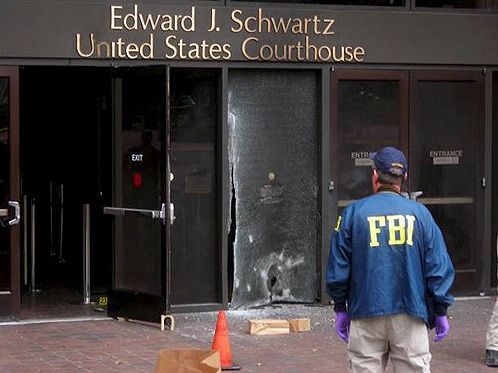
Charles Joseph Bonaparte (1851-1921), an American politician and lawyer, is primarily known for founding the precursor to the Federal Bureau of Investigation (FBI) in the United States. A descendant of the Bonaparte family, he played a crucial role in reforming federal law enforcement in the early 20th century.

Early Life and Career

Charles Bonaparte was born on June 9, 1851, in Baltimore, Maryland. A great-nephew of Napoleon Bonaparte, he was the son of Jérôme Napoléon Bonaparte and Susan May Williams. He studied at Harvard University, where he earned his law degree. As a lawyer, he quickly became an influential figure in American politics due to his family connections and his own talents.

Political Career

Bonaparte joined President Theodore Roosevelt's administration in 1905 as Secretary of the Navy. In 1906, he was appointed Attorney General of the United States. Bonaparte and Roosevelt shared a deep interest in reform and combating corruption.

Creation of the Bureau of Investigation

As Attorney General, Bonaparte identified the need for a specialized federal investigative body. At that time, the United States lacked a centralized federal police force to enforce national laws. Consequently, Bonaparte established the Bureau of Investigation (BOI) on July 26, 1908. This initiative aimed to provide federal resources to investigate violations of federal laws.

Context and Motivations

The BOI was created in response to several issues of the era, including organized crime, political corruption, and interstate law violations. Before its creation, the Department of Justice had to rely on investigators from the Secret Service to conduct investigations, which was far from ideal for effective law enforcement.

Early Years

The first recruits of the BOI included experienced agents, often from other federal services. The Bureau immediately began working on cases involving fraud, antitrust violations, and other federal crimes. Though its beginnings were modest, with a limited staff, the BOI laid the groundwork for an agency that would become one of the most significant intelligence services in the world.

Legacy

Under the leadership of J. Edgar Hoover, appointed director in 1924, the BOI was restructured and renamed the Federal Bureau of Investigation in 1935. The agency expanded significantly in size and capability, becoming a central pillar of national security and law enforcement in the United States.

Charles Joseph Bonaparte is recognized today not only for his familial heritage but also for his pivotal role in the creation of the FBI. His commitment to reform and efficient law enforcement has left an indelible mark on the American judicial system.

Légende - Photo
Ras67, Public domain, https://en.wikipedia.org/wiki/Federal_Bureau_of_Investigation#/media/File:2008_San_Diego_federal_Courthouse_bombing.jpg
Sources

2024-07-07

Fanta: Origins and History under the Nazi Regime

Fanta: Origins and History under the Nazi Regime

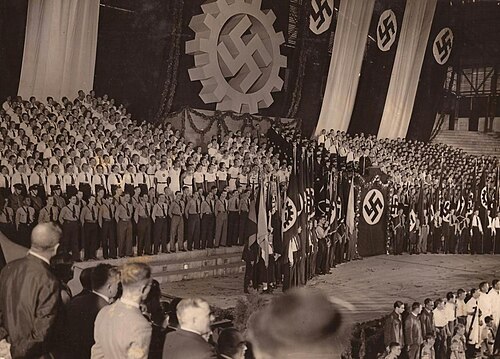
Fanta is a popular carbonated beverage known worldwide for its various flavors, especially orange. However, few people are aware of the historical origins of this drink, which date back to the era of the Third Reich in Germany, under Adolf Hitler's regime.

During World War II, trade relations between Nazi Germany and the United States were severely disrupted due to economic sanctions and trade restrictions imposed by the Allies. Coca-Cola, an extremely popular drink at the time, had been produced in Germany since the 1920s by a subsidiary of the American company Coca-Cola.

With the onset of hostilities and the intensification of sanctions, the importation of Coca-Cola syrup, necessary for producing the beverage, was cut off. Max Keith, the director of Coca-Cola GmbH in Germany, faced a significant challenge: how to continue producing beverages for the German market without the ingredients needed to make Coca-Cola.

In response to this shortage, Max Keith decided to create a new beverage using ingredients available locally in Germany. Using food by-products such as whey (a residue from cheese production) and apple fibers from cider production, Keith and his team developed a new carbonated drink they called "Fanta." The name "Fanta" is derived from "Fantasie," the German word for imagination, reflecting the ingenuity required to create the drink with the limited resources available.

Despite the wartime conditions and limited resources, Fanta achieved notable success in Germany. The drink provided a welcome alternative during a period of rationing and scarcity. Fanta quickly became popular not only in Germany but also in other European countries under Nazi control or influence.

After the defeat of Nazi Germany in 1945, Coca-Cola production resumed in Europe, and the original recipe for Fanta temporarily disappeared. However, in the 1950s, Coca-Cola relaunched Fanta with a new formula, this time with an orange flavor, in international markets. This relaunch marked the beginning of Fanta's global expansion, and today, it is available in over 190 countries and in numerous flavors.

The story of Fanta is a fascinating example of human ingenuity in the face of extreme challenges. Born out of necessity and wartime constraints, this carbonated beverage managed to survive and evolve into one of the most recognized brands in the world. Fanta's origins also highlight the profound impact of global conflicts on industry and innovation.

Légende - Photo
SKopp, CC BY 4.0, https://en.wikipedia.org/wiki/Fanta#/media/File:Fanta_Klassik_3.jpg
Sources

2024-06-23

April 6, 1652 - Michée Chauderon: the last witch executed in Geneva

April 6, 1652 - Michée Chauderon: the last witch executed in Geneva

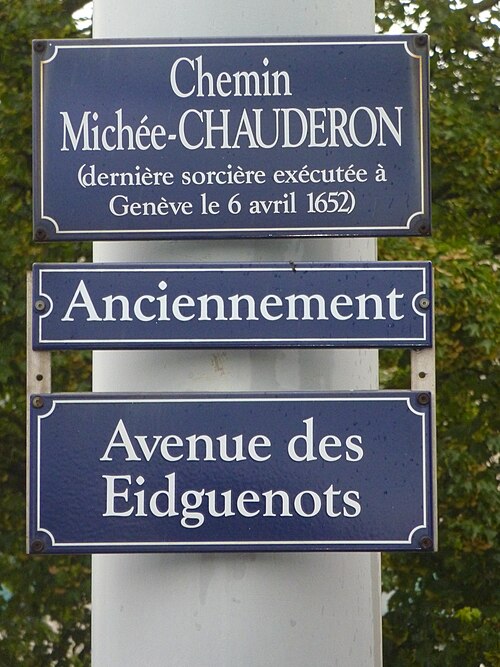
On April 6, 1652, Michée Chauderon, a 62-year-old woman, was executed in Geneva for witchcraft. This event marked the last execution for witchcraft in the city, symbolizing the end of an era of persecution driven by fear and ignorance.

Historical Context

During Michée Chauderon's time, fear of witches was widespread across Europe. Between the 15th and 18th centuries, thousands of people were accused of witchcraft and executed, often under torture or following biased trials. Geneva, a bastion of the Reformation and known for its adherence to Calvinist ideas, was not immune to this frenzy.

The Accusation

Michée Chauderon was a simple housekeeper known for her modest life. However, her skills in herbal medicine and knowledge of folk remedies quickly made her a subject of suspicion. In 1652, she was accused of witchcraft by neighbors who claimed she had cast spells causing illness and misfortune.

The accusations against her were based on superstitions and rumors. In a society lacking modern medicine, unexplained healings and illnesses were often attributed to supernatural forces. Women, particularly those living alone and on the fringes of society, were easy targets for such accusations.

The Trial

Michée Chauderon's trial was characteristic of witch trials of the time. Procedures were often swift, and confessions were obtained under torture. Michée was subjected to severe interrogations and, under pressure, eventually confessed to acts of witchcraft she likely never committed.

Despite Geneva's facade of religious rationality, the society succumbed to fear and superstition. Authorities sought to set an example, demonstrating that even in a reformed city, witchcraft would be severely punished.

The Execution

On April 6, 1652, Michée Chauderon was executed by hanging, a tragic end for a woman whose only crime was surviving in a suspicious and ignorant society. This execution marked a turning point for Geneva, which saw no more executions for witchcraft after that day.

Légende - Photo
Erdrokan, CC BY-SA 3.0, https://fr.wikipedia.org/wiki/Mich%C3%A9e_Chauderon#/media/Fichier:Chemin_Mich%C3%A9e-Chauderon,_Gen%C3%A8ve,_plaque.jpg

2024-05-30

Australia - The mystery of Somerton Man

Australia - The mystery of Somerton Man

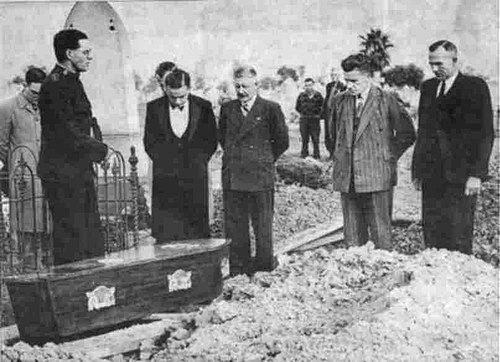
The case of the Somerton Man refers to an unsolved mystery surrounding an unidentified man found dead on Somerton Beach in Adelaide, Australia on December 1, 1948. The circumstances surrounding his death have remained a mystery to this day.

div]:bg-bg-300 [&_pre]:-mr-4 md:[&_pre]:-mr-9">
_*]:min-w-0">

The body of the well-dressed man was discovered propped up against a seawall on Somerton Beach by passersby. Although the coroner suspected poisoning, the exact cause of death was never formally established. The man carried no identification, and all labels had been carefully removed from his clothes.

The initial investigation revealed one puzzling clue: a secret pocket sewn into the man's trousers contained a scrap of paper torn from a Persian poetry book with the words Tamam Shud ("It is ended" or "Finished" in Persian) written on it. Months later, an anonymous man handed over the book itself, a rare copy of the Rubaiyat of Omar Khayyam, to police. Inside was also a handwritten code that has never been deciphered.

The Somerton Man's identity has never been conclusively established. In 2021, his remains were exhumed in the hope that DNA testing could reveal his identity, but with no definitive results. In 2010, Professor Derek Abbott from the University of Adelaide proposed he could be Carl "Charles" Webb, a 43-year-old electrical engineer from Melbourne, but this remains an unverified hypothesis.

More recently in 2023, a strange birthday message and flowers left on a sculpture of a man reignited the theory that the Somerton Man could actually be Austrian Carl Josef Halban. However, this lead remains unconfirmed as of now.

Nearly 75 years after the events, the Somerton Man case remains one of Australia's most baffling unsolved mysteries, fueling numerous theories about his identity and the reasons behind his enigmatic death.

Légende - Photo
JMK, Public domain, https://fr.wikipedia.org/wiki/Affaire_Taman_Shud#/media/Fichier:SomertonManBurial.jpg
Sources

2024-05-06

Book - Born in Blood

Book - Born in Blood


Abstract

"Born in Blood: The Lost Secrets of Freemasonry" is a book authored by John J. Robinson that delves into the enigmatic origins and history of Freemasonry. Unveiling a clandestine tradition that spanned centuries before its public emergence in London in 1717, Freemasonry had long operated in secrecy, employing mysterious symbols and rituals.

The book traces Freemasonry's global spread and its allure to figures of power and influence, including kings, emperors, and statesmen who pledged themselves to its sacred oaths. Notably, it attracted renowned revolutionaries such as George Washington, Sam Houston, Juarez, Garibaldi, and Bolivar. However, throughout history, Freemasonry faced opposition and persecution from authorities such as Hitler, Mussolini, and the Ayatollah Khomeini.

Robinson embarks on a compelling investigative journey to uncover the roots of this powerful organization, tracing its origins to the Knights Templar in Britain. Fleeing persecution by the pope and king, the Templars allegedly formed a clandestine society for mutual protection, which eventually evolved into Freemasonry.

Drawing from years of meticulous research, Robinson unravels the mysteries surrounding Freemasonry, including its secret words, symbols, and allegories whose true meanings had been obscured by time. Against the backdrop of medieval conflicts, opportunistic monarchs, scheming pontiffs, and religious persecution, the book sheds light on a crucial aspect of history that prompts a reassessment of events leading to the Protestant Reformation.

"Born in Blood" presents a captivating narrative that not only explores the origins and evolution of Freemasonry but also offers insights into the broader historical context of medieval Europe. It is a significant contribution that challenges conventional perspectives and invites readers to reconsider the intricate interplay of politics, religion, and secret societies in shaping the course of history.


Author : John J. Robinson
ISBN 10 : 1590771486
ISBN 13 : 9781590771488
Numbers of pages : 397
Publisher : M. Evans & Company
Publication date : September 16, 2009

More books on Paranormal Book